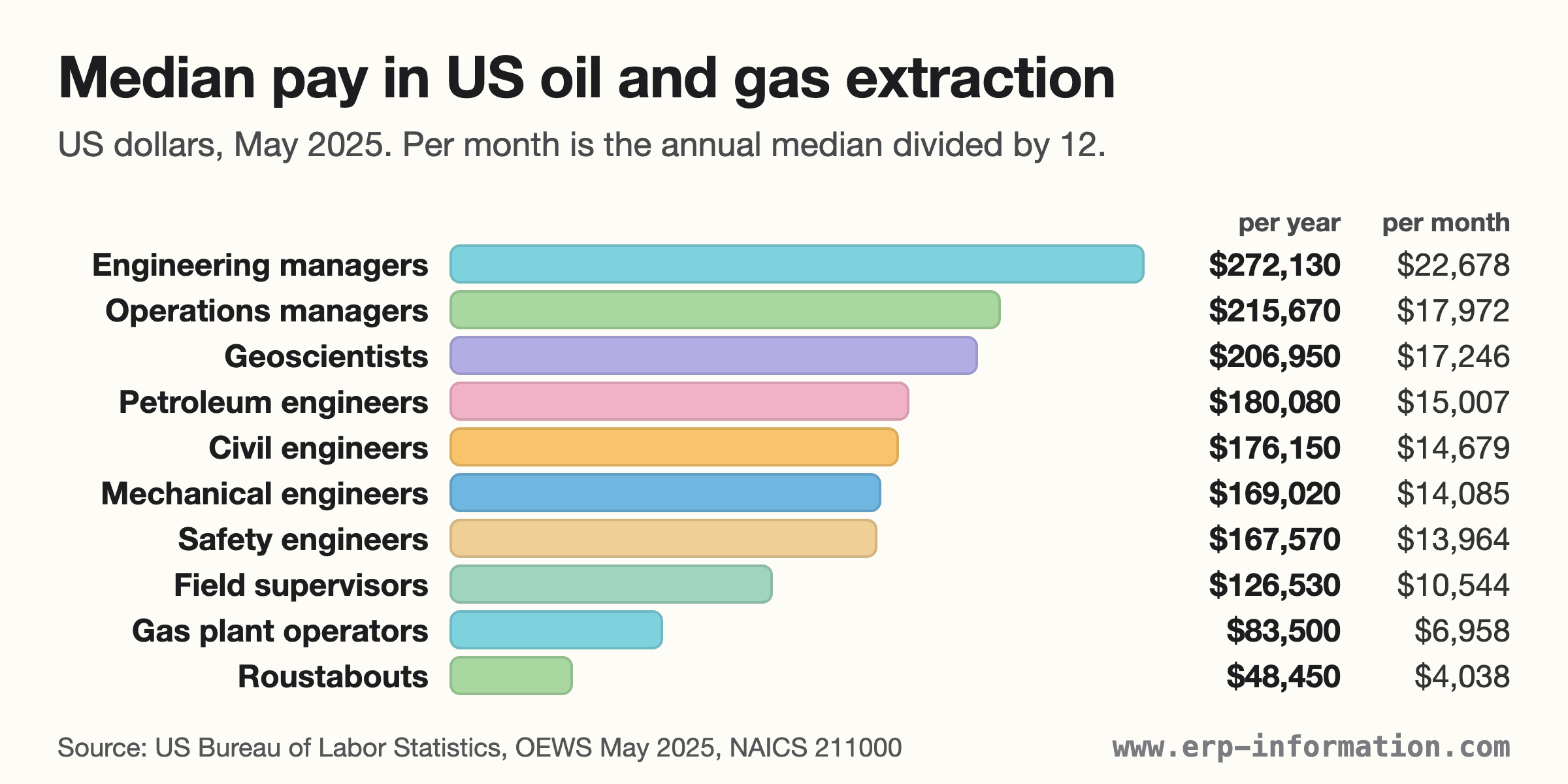
Outside corporate roles such as law and finance, the best paying jobs in oil and gas production are in engineering and earth science. In US oil and gas extraction, engineering managers earn a median $272,130 a year, geoscientists $206,950 and petroleum engineers $180,080, in May 2025 BLS data. That is about $15,000 to $22,700 a month.
In India, Indian Oil’s 2026 recruitment notice starts graduate engineers on a basic of ₹50,000 a month, about ₹18.4 lakh a year in total cost to the company.
Which oil and gas jobs pay the most?
These are the best paid engineering, science and operations jobs in US oil and gas extraction, the industry that produces crude oil and natural gas. Each has at least a few hundred workers. The median is the pay at which half the workers earn more and half earn less.
| Job | USD a year | USD a month | All US industries |
|---|---|---|---|
| Engineering managers | 272,130 | 22,678 | 171,270 |
| General and operations managers | 215,670 | 17,972 | 105,770 |
| Geoscientists | 206,950 | 17,246 | 101,920 |
| Petroleum engineers | 180,080 | 15,007 | 144,910 |
| Civil engineers | 176,150 | 14,679 | 100,840 |
| Industrial engineers | 169,250 | 14,104 | 102,440 |
| Mechanical engineers | 169,020 | 14,085 | 104,110 |
| Health and safety engineers | 167,570 | 13,964 | 115,160 |
| Electrical engineers | 163,810 | 13,651 | 120,630 |
| Supervisors of extraction workers | 126,530 | 10,544 | 79,920 |
Some corporate jobs in the industry pay even more, such as lawyers ($290,640) and financial managers ($207,440).
Oil and gas pays more for the same work. A geoscientist’s median in extraction is about double the figure across all industries, and a mechanical engineer’s is 62 percent higher.
Reservoir, drilling, production and completions engineers do not appear separately because BLS counts them all as types of petroleum engineer. Among the specialist jobs, petroleum engineers (about 5,900) and geoscientists (about 2,780) also employ the most people.
Chemical engineers barely appear in extraction itself. BLS counts about 50 there, against 21,070 across the whole economy.
What do oil field and plant workers earn?
Most jobs on a well site or at a gas plant pay less than the engineering roles. Wellhead pumpers and service unit operators are the industry’s two largest occupations, with 12,190 and 10,010 jobs.
| Job | USD a year | USD a month |
|---|---|---|
| Petroleum pump and refinery operators, gaugers | 93,160 | 7,763 |
| Derrick operators | 83,580 | 6,965 |
| Gas plant operators | 83,500 | 6,958 |
| Rotary drill operators | 76,940 | 6,412 |
| Wellhead pumpers | 76,170 | 6,348 |
| Service unit operators | 64,500 | 5,375 |
| Roustabouts | 48,450 | 4,038 |
The industry as a whole had nearly 114,000 jobs in May 2025 and an annual mean wage of $122,890.
What do oil and gas jobs pay in India?
Indian Oil, a Maharatna public sector company, publishes its entry pay. Its August 2026 notice for executives sets these starting terms:
| Entry grade | Basic pay a month | Cost to company a year |
|---|---|---|
| Grade A: graduate engineers, officers | ₹50,000 (scale to ₹1,60,000) | ₹18.4 lakh |
| Grade A0: assistant quality control officers | ₹40,000 (scale to ₹1,40,000) | ₹14.8 lakh |
| Grade E0: diploma engineers | ₹30,000 (scale to ₹1,20,000) | ₹11.1 lakh |
Cost to company is not take-home pay. ₹18.4 lakh a year works out to about ₹1.53 lakh a month before tax and deductions, and IOCL says the figure includes performance related pay. Dearness allowance, housing or HRA, medical cover and provident fund come on top of basic pay.
Actual pay, the notice adds, varies with the place of posting, the company’s results and each person’s appraisal.
To apply as a graduate engineer you need a BE or B.Tech in chemical, civil, computer science, electrical, instrumentation or mechanical engineering, with at least 65 percent marks, or 55 percent for SC, ST and PwBD candidates. The upper age limit is 26 for general and EWS candidates, with relaxation for other categories.
Selection in 2026 ran through IOCL’s own computer based test, not GATE, followed by a group discussion or task and an interview. New joiners sign a three-year service bond of ₹3 lakh, or ₹50,000 for EWS, OBC (NCL), SC, ST and PwBD candidates.
What do oil and gas jobs pay in other regions?
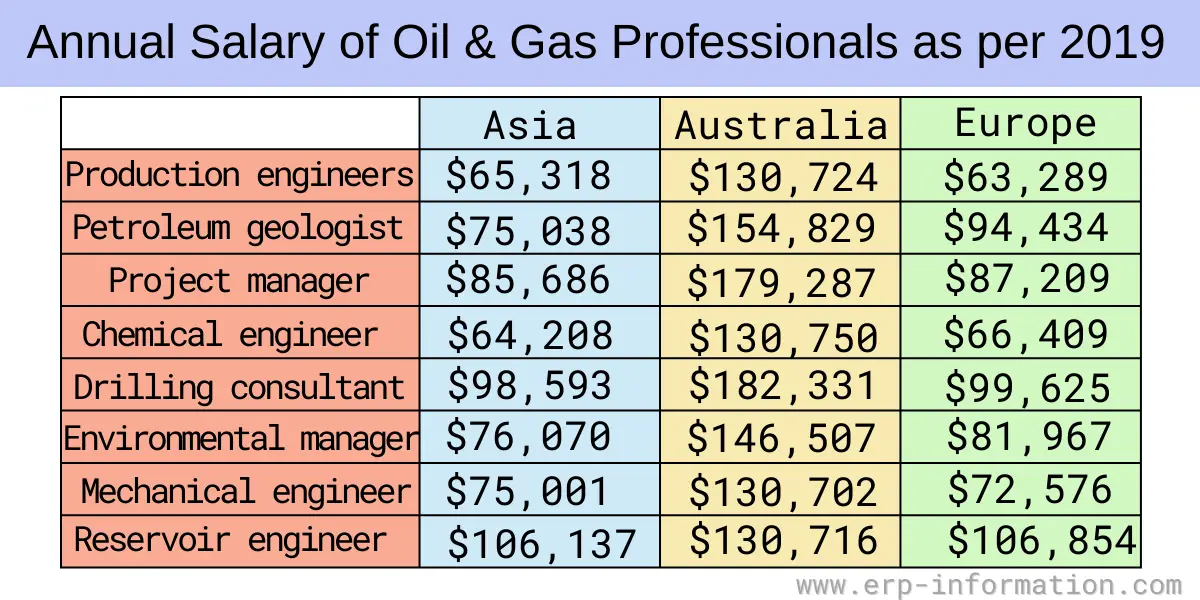
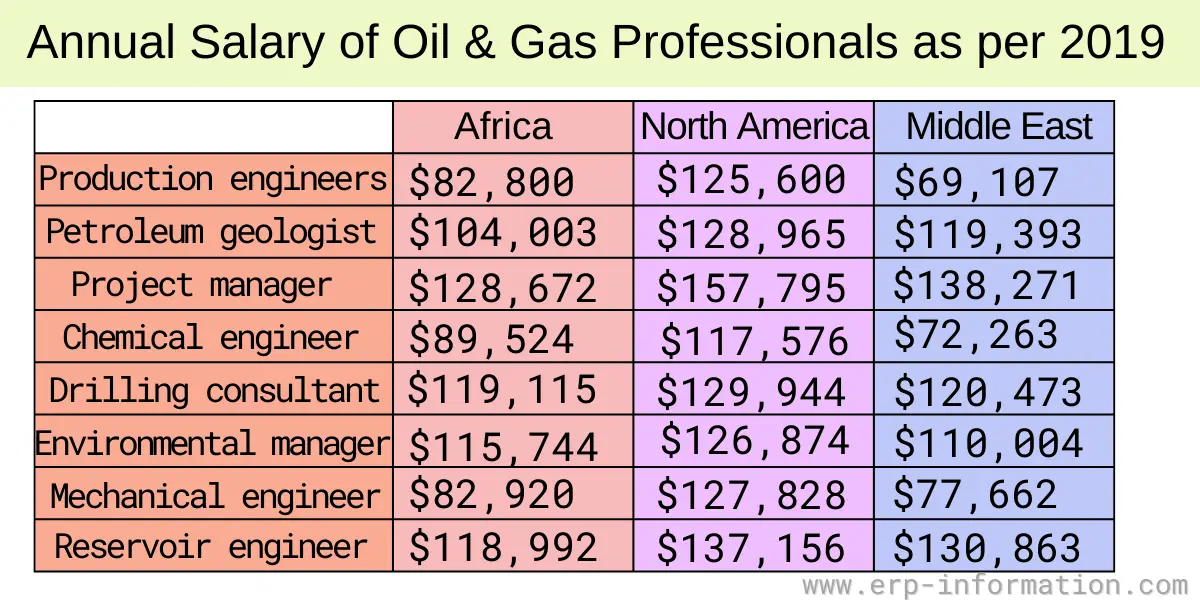
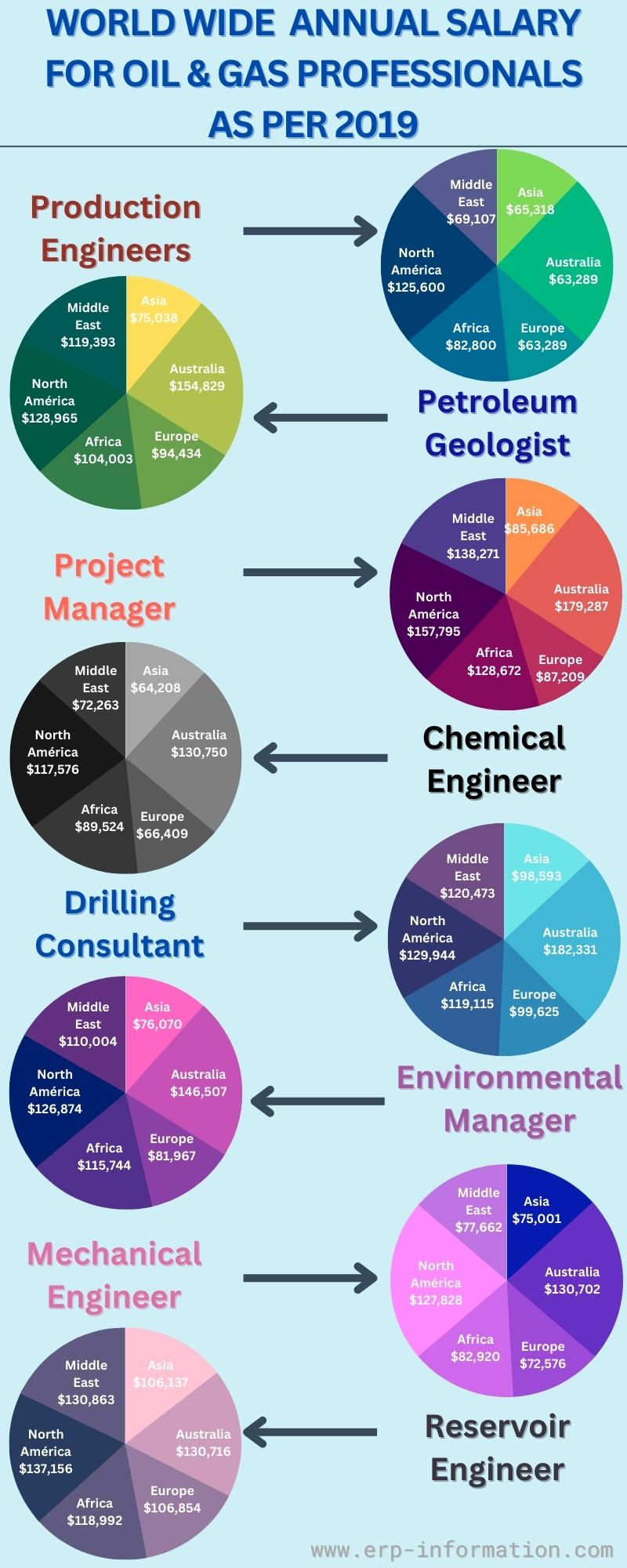
The Global Energy Talent Index 2019 compared pay by role across six regions. Its survey of 17,000 energy workers closed in September 2018, so the figures predate the pandemic and are best read as a comparison between regions, not as today’s pay.
They are US dollars a year for permanent staff with six years’ experience. In that survey Australasia paid the most for seven of these eight roles, North America led for reservoir engineers, and Asia paid the least for six of them.
Is oil and gas production a good career?
For pay, yes. The industry’s median wage, $99,390, is nearly double the $50,980 median for all US workers. For job growth, less so.
BLS projects petroleum engineering jobs to grow only 2 percent from 2025 to 2035, with about 1,000 openings a year, mostly from people retiring or moving on. It also warns that US oil and gas output, and so hiring, rises and falls with global supply, demand and the energy outlook.
If you are choosing a degree, petroleum engineering or geoscience leads to the best paid specialist jobs in the tables above. A degree in mechanical, civil or chemical engineering can also lead into petroleum engineering, and employers value internships. Experienced engineers can add a Professional Engineer license, which lets them oversee other engineers’ work.
In India, a public sector recruitment notice such as Indian Oil’s tells you the pay, eligibility and bond before you apply.
Using Google Search? Add erp-information.com as a preferred source.