Watershed is an enterprise carbon accounting and climate platform. Companies use it to measure their greenhouse-gas emissions, report them to regulators and investors, and plan and track cuts. It is one of the most prominent names in the category, used by large enterprises and financial institutions.
Watershed was founded in 2019 by three former Stripe employees and has grown into a market leader in enterprise sustainability software. This review covers what the platform does, its data and AI, pricing, how it compares to alternatives, and its honest strengths and limitations.
What is Watershed?
Watershed is a software platform for corporate carbon and climate management. It brings emissions measurement, sustainability reporting, and decarbonization into one system, and in 2026 it positions itself as a sustainability AI platform. It is built for large, complex organizations rather than small businesses.
The company, Watershed Technology, Inc., was founded in 2019 by Taylor Francis, Christian Anderson, and Avi Itskovich, who worked together at Stripe and helped build Stripe’s carbon-removal program. It is based in San Francisco, with offices worldwide, and employs close to 400 people.
| Company | Watershed Technology, Inc. |
| Founded | 2019 |
| Founders | Taylor Francis, Christian Anderson, Avi Itskovich (all formerly at Stripe) |
| Headquarters | San Francisco, with offices in London, New York, Sydney, Paris, Berlin, and Mexico City |
| Category | Enterprise carbon accounting and sustainability software |
| Funding | Roughly $225M+ raised; a $100M Series C in February 2024 |
| Valuation | $1.8 billion (2024) |
| Notable customers | Walmart, BlackRock, Airbnb, Spotify, Stripe, Shopify, FedEx, Visa |
| Best for | Large enterprises and financial institutions |
| Website | watershed.com |
Pricing
Watershed does not publish list prices; it is enterprise software sold on a custom quote. Cost depends on the size and complexity of your carbon footprint, the number of legal entities and subsidiaries, the data integrations you need, which modules you use, and the level of advisory support.
Watershed publishes no figures, but third-party estimates put a typical enterprise deal in the range of roughly $50,000 to $150,000 per year, and higher for large or complex organizations, before implementation costs. Treat those as external estimates rather than official pricing, and ask for a quote for your own situation.
The Watershed platform
Watershed organizes its product around three jobs: measure emissions, report them, and act to reduce them.
Measure
Watershed measures a company’s full carbon footprint across Scope 1 (direct emissions), Scope 2 (purchased energy), and all 15 categories of Scope 3 (the value chain, which is usually the largest and hardest part to quantify). It uses activity-based methods and a large built-in library of emissions factors, and it connects to your systems by file upload or API, so data collection is largely automated. Results appear in dashboards you can break down by business unit, region, or supplier.
Report and disclose
Watershed helps you author sustainability disclosures aligned to the major frameworks, and its AI report builder lets you ingest data once and reuse it across different reports. The goal is audit-ready, regulator- and investor-facing disclosure rather than rough estimates. For financial institutions, it also measures financed emissions, the carbon tied to loans and investments.
Act and reduce
On the reduction side, Watershed helps set science-based targets, model decarbonization plans, engage suppliers on their emissions, and procure clean power and carbon removal. It gives buyers access to carbon-removal projects and tracks their impact. Note that Watershed is a software and procurement platform, not itself a carbon-removal supplier.
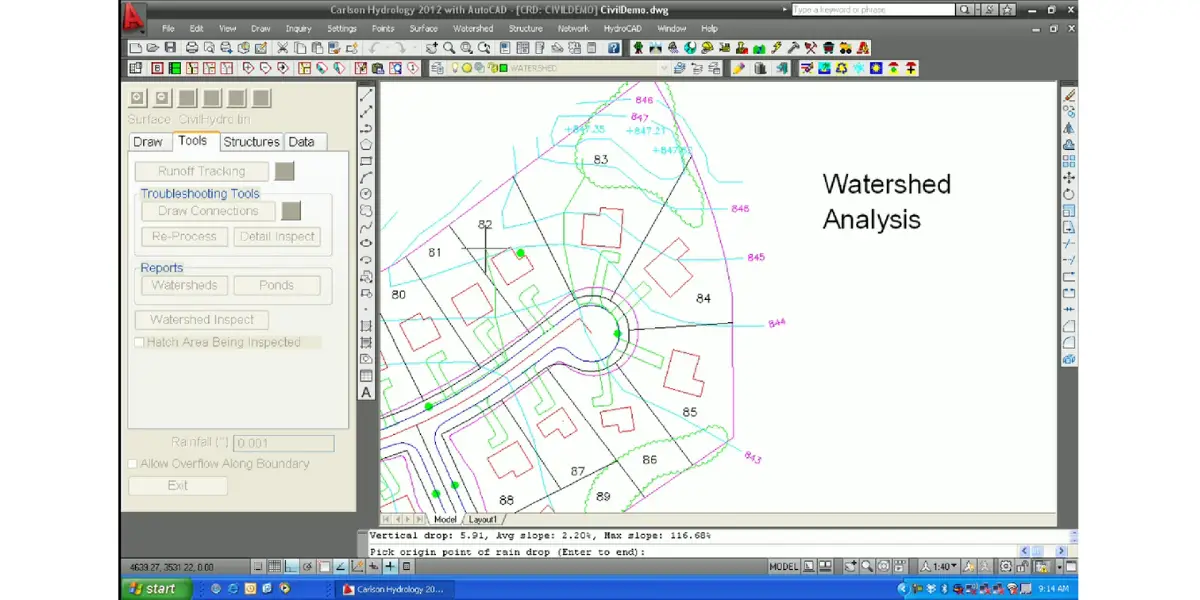
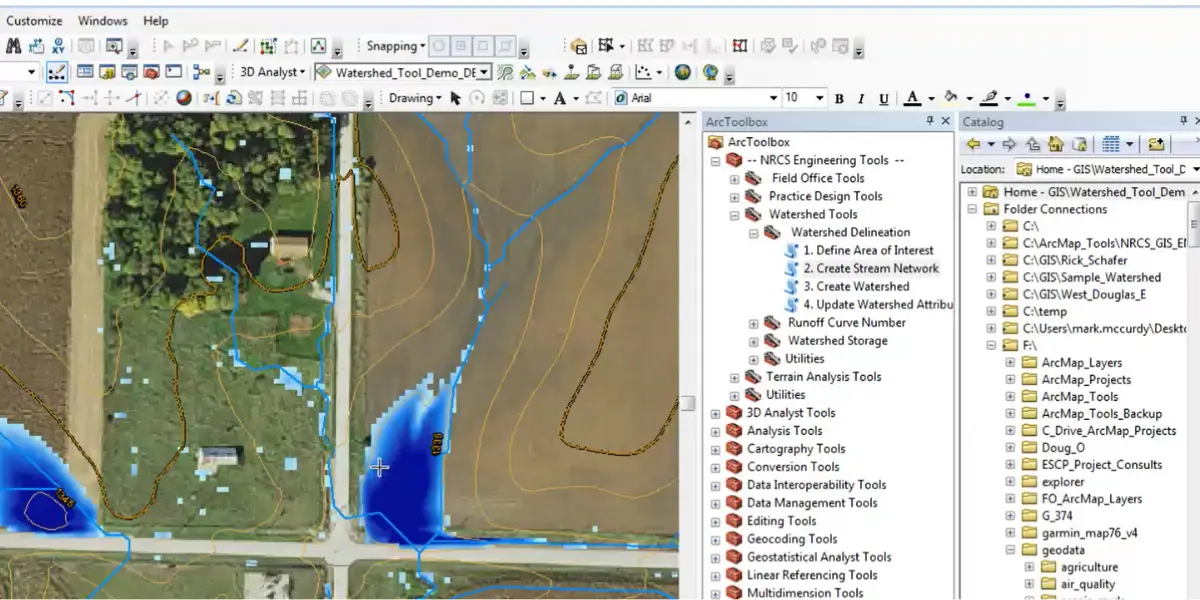
Some screenshots of Watershed
Data, AI, and reporting frameworks
Watershed’s credibility rests on its data. It draws on a large library of emissions factors anchored by CEDA (the Comprehensive Environmental Data Archive), a multi-region greenhouse-gas database it acquired in 2023 that covers about 95% of global GDP. In 2025 Watershed released a free public version, Open CEDA, at openceda.org.
AI now runs through the product. Product Footprints, launched in 2025, uses AI to break purchased goods down into their materials and processes, replacing rough spend-based Scope 3 estimates with more precise, procurement-level data. Watershed has also added AI tools for drafting and checking disclosures.
On the reporting side, Watershed supports the major frameworks a large company faces, including the GHG Protocol, the EU’s CSRD and its ESRS standards, the ISSB standards, CDP (the climate disclosure system formerly called the Carbon Disclosure Project), SASB, GRI, and US rules such as the SEC climate disclosures and California’s SB 253 and SB 261.
One caveat worth knowing in 2026: the regulatory picture is shifting. The EU’s Omnibus package, adopted in March 2026, narrowed how many companies must report under CSRD, and the US SEC climate rule was paused in 2025. The value of any reporting platform depends on which mandates actually apply to you, so check your own obligations before you buy.
Analysts rate Watershed highly: the research firm Verdantix named it a Leader in its 2026 Green Quadrant for enterprise carbon management software, one of several vendors in the leader group.
How Does Watershed Work in Financial Institutions?
Climate action powered by data
You can get a complete picture of financed carbon emissions through the latest science and data methodologies.
- Get insights from high-level data quickly.
- Develop climate change mitigation and adaptation programs for each of your portfolio companies.
- Make a plan to support your commitments to Glasglow Financial Alliance for NetZero (GFANZ).
Investor grade compliance simplified
- They can help you create a plan to stay in compliance with changing regulations.
- Guidance from climate specialists on evolving disclosure standards and best practices.
Unlock value with real decarbonization
- You can find opportunities to create value in your portfolio.
- You can look for efficiencies across companies, sectors, and vendors.
- You can also model future climate impact scenarios to see how a potential investment might be affected.
Watershed vs alternatives
Enterprise carbon accounting is a crowded market. Here is how Watershed sits next to the main alternatives.
| Tool | Focus |
|---|---|
| Watershed | Enterprise measurement, reporting, and reduction; strong data (CEDA) and AI |
| Persefoni | Enterprise carbon accounting, strong on financed emissions for finance |
| Sweep | Enterprise sustainability and ESG data management |
| Sphera | EHS and ESG or operational-risk software |
| Salesforce Net Zero Cloud | Carbon accounting inside the Salesforce ecosystem |
| Microsoft Sustainability Manager | Sustainability data on Microsoft Cloud |
| Greenly and Normative | Carbon accounting aimed more at SMBs and the mid-market |
Pros and Cons of Watershed
Pros
- Rigorous measurement across all three scopes, backed by a strong emissions-factor database (CEDA).
- Audit-ready reporting aligned to the major regulatory and investor frameworks.
- AI features that improve Scope 3 accuracy and speed up disclosures.
- Dedicated climate and data experts, and a large base of enterprise customers.
Cons
- Enterprise-only and expensive; not a fit for small or mid-size businesses on a budget.
- Quote-based pricing with no public rates, so upfront cost is hard to gauge.
- Meaningful onboarding and data-integration effort, and advanced advisory is usually an add-on.
- Its regulatory value depends on which shifting mandates actually apply to you.
Conclusion
Watershed is one of the strongest choices in enterprise carbon accounting. It combines rigorous measurement, a deep emissions database, audit-ready reporting, and AI, and it is trusted by large enterprises and financial institutions. Independent analysts rate it a leader in the category.
The trade-offs are cost and complexity: it is built for large organizations, priced accordingly, and takes real effort to implement. If you are a large company or financial institution that needs credible, regulator-grade climate reporting, Watershed belongs on your shortlist alongside rivals like Persefoni, Sweep, and Sphera. Smaller companies are usually better served by lighter, lower-cost tools.
Reference
Watershed climate guide – ISSB disclosed standards.
Frequently asked questions
What does Watershed do?
Watershed is an enterprise carbon and climate platform. It measures a company’s greenhouse-gas emissions across Scope 1, 2, and 3, helps produce audit-ready sustainability disclosures aligned to the major frameworks, and supports setting and tracking emissions-reduction plans.
How much does Watershed cost?
Watershed does not publish prices; it is enterprise software sold on a custom quote based on your footprint, entities, integrations, and modules. Third-party estimates suggest roughly $50,000 to $150,000 or more per year, but treat those as external estimates and ask Watershed for a quote.
Who founded Watershed and when?
Watershed Technology, Inc. was founded in 2019 by Taylor Francis, Christian Anderson, and Avi Itskovich, who previously worked together at Stripe. It is based in San Francisco and reached a $1.8 billion valuation in its 2024 Series C.
Who are Watershed’s competitors?
Its main competitors in enterprise carbon accounting include Persefoni, Sweep, Sphera, Salesforce Net Zero Cloud, Microsoft Sustainability Manager, and, more toward smaller companies, Greenly and Normative.
Is Watershed good for small businesses?
Not really. Watershed is built for large enterprises and financial institutions and is priced accordingly. Small and mid-size businesses are usually better served by lighter, lower-cost tools such as Greenly or Normative.