Getting to TOGAF Enterprise Architecture Practitioner costs USD 610 in exam fees, paid once, if you sit the combined OGEA-103 exam and book it directly with Pearson VUE. Sitting the same two exams separately costs USD 810. If you already hold TOGAF 9 Certified, the Bridge exam gets you there for USD 385.
Every fee below is taken from The Open Group’s published examination fee schedule applicable from 1 February 2026 (corrections applied 12 February 2026). The Open Group prices its exams in USD and can change them without notice, so treat these as current rather than permanent. Local taxes may be added at checkout.
TOGAF exam fees in 2026
There are two prices for every TOGAF exam, and the cheaper one is the one most guides leave out.
- The Exam Booking Fee is what Pearson charges when you book the exam yourself and pay by card.
- The Retail Voucher is bought from The Open Group Shop and costs USD 25 to USD 30 more per exam. It needs an approved retail voucher account and carries its own terms.
Booking directly with Pearson VUE is cheaper on every exam in the portfolio. Vouchers exist mainly so employers and training providers can buy exam sittings in bulk ahead of time.
| Exam | Code | Booking fee (Pearson VUE) | Retail voucher (Open Group Shop) |
|---|---|---|---|
| TOGAF Enterprise Architecture Part 1 | OGEA-101 | USD 405 | USD 435 |
| TOGAF Enterprise Architecture Part 2 | OGEA-102 | USD 405 | USD 435 |
| TOGAF Enterprise Architecture Combined Part 1 and Part 2 | OGEA-103 | USD 610 | USD 640 |
| TOGAF Enterprise Architecture Bridge | OGEA-10B | USD 385 | USD 415 |
| TOGAF Business Architecture Foundation | OGBA-101 | USD 405 | USD 435 |
| TOGAF 9 Part 1 | OG0-091 | USD 375 | USD 400 |
| TOGAF 9 Part 2 | OG0-092 | USD 375 | USD 400 |
| TOGAF 9 Combined Part 1 and Part 2 | OG0-093 | USD 570 | USD 595 |
| TOGAF 9 Business Architecture Part 1 | OGB-001 | USD 325 | USD 355 |
The cheapest route to each certification
The fee table only tells you the price of a sitting. What you actually want to know is the cheapest way to end up holding the credential, and on that the combined exams are worth real money.
- TOGAF Enterprise Architecture Practitioner, from scratch: USD 610. The combined OGEA-103 covers both parts in one sitting. Taking OGEA-101 and OGEA-102 separately costs USD 810, so the combined exam saves USD 200.
- Already TOGAF 9 Certified: USD 385. The OGEA-10B Bridge exam takes you to Enterprise Architecture Practitioner for USD 225 less than OGEA-103, and it is a much shorter exam. It is only open to people who already hold TOGAF 9 Certified.
- Foundation only: USD 405. OGEA-101 on its own earns TOGAF Enterprise Architecture Foundation and counts towards Practitioner later. It is the lowest entry price, but paying twice costs USD 200 more than going combined from the start.
- TOGAF 9 Certified: USD 570 via the combined OG0-093, against USD 750 for the two parts separately.
The combined exam carries one risk worth pricing in. You must pass both sections to be certified. If you fail a section you retake only that section rather than the whole thing, but you pay for that sitting again, and a failed retake at USD 405 erases the USD 200 you saved.
TOGAF 9 or the 10th Edition?
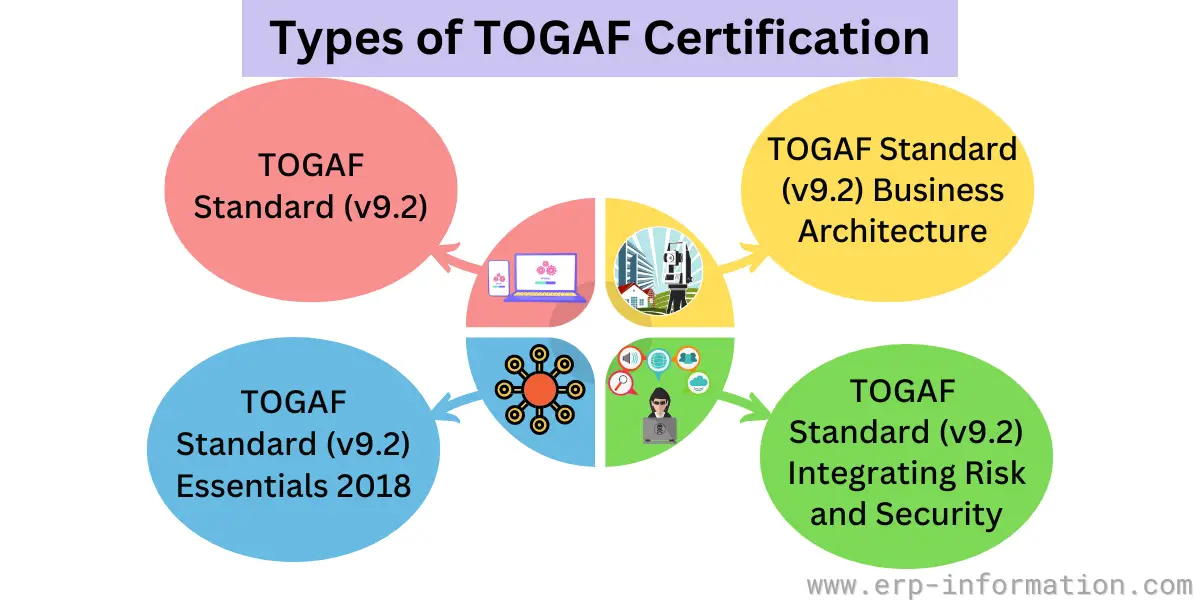
The current edition of the standard is the TOGAF Standard, 10th Edition. The Enterprise Architecture exams (OGEA-101, OGEA-102, OGEA-103) are based on it. The older TOGAF 9 exams are based on version 9.2 of the standard.
Both are still offered. The Open Group keeps TOGAF 9 in the certification portfolio because TOGAF 9 Certified is still named in job adverts, and holding it does not expire. That is the honest reason to keep it on the list, and it is why the choice is less obvious than it looks.
For a new candidate in 2026 the 10th Edition track is the sensible default. You would be paying USD 40 more on the combined route to certify against the current edition instead of a superseded one. If you already hold TOGAF 9 Certified, do not re-sit anything: the Bridge exam exists precisely for you.
The portfolio also includes a business architecture path. TOGAF Business Architecture Foundation (OGBA-101) is a separate USD 405 credential, not a step on the Enterprise Architecture ladder.
What each exam involves
Fees are easier to compare once you know what you are buying. Question counts, time limits and pass marks come from The Open Group’s TOGAF examinations datasheet.
| Code | Questions | Time | Pass mark | Book | Prerequisite |
|---|---|---|---|---|---|
| OGEA-101 | 40 simple multiple choice | 60 minutes | 60% (24/40) | Closed | None |
| OGEA-102 | 8 scenario based | 90 minutes | 60% (24/40) | Open | EA Foundation, or a Part 1 pass the same day at the same centre |
| OGEA-103 | 48 (40 + 8) | 150 minutes (60 + 90) | 60% on each section | Part 1 closed, Part 2 open | None |
| OGEA-10B | 14 (10 + 4) | 60 minutes (20 + 40) | 60% (18/30) | Section 2 open | TOGAF 9 Certified |
| OGBA-101 | 40 simple multiple choice | 60 minutes | 60% (24/40) | Closed | None |
| OG0-091 | 40 simple multiple choice | 60 minutes | 60% (24/40) | Closed | None |
| OG0-092 | 8 scenario based | 90 minutes | 60% (24/40) | Open | TOGAF 9 Foundation |
| OG0-093 | 48 (40 + 8) | 150 minutes | Part 1 55%, Part 2 60% | Part 1 closed, Part 2 open | None |
One inconsistency is worth knowing about because it is easy to revise against the wrong number. The standalone TOGAF 9 Part 1 exam passes at 60%, but the Part 1 section of the TOGAF 9 Combined exam passes at 55%. Every Enterprise Architecture exam passes at 60%.
Part 2 scoring is not a straight right or wrong either. The best answer scores 5 points, the second best 3, the third best 1, and the distracter zero. That is how 8 questions produce a mark out of 40.
What else you will pay for
The exam fee is the only number The Open Group sets. Everything else around it is priced by whoever is selling it to you, which is why published totals for TOGAF certification vary so widely.
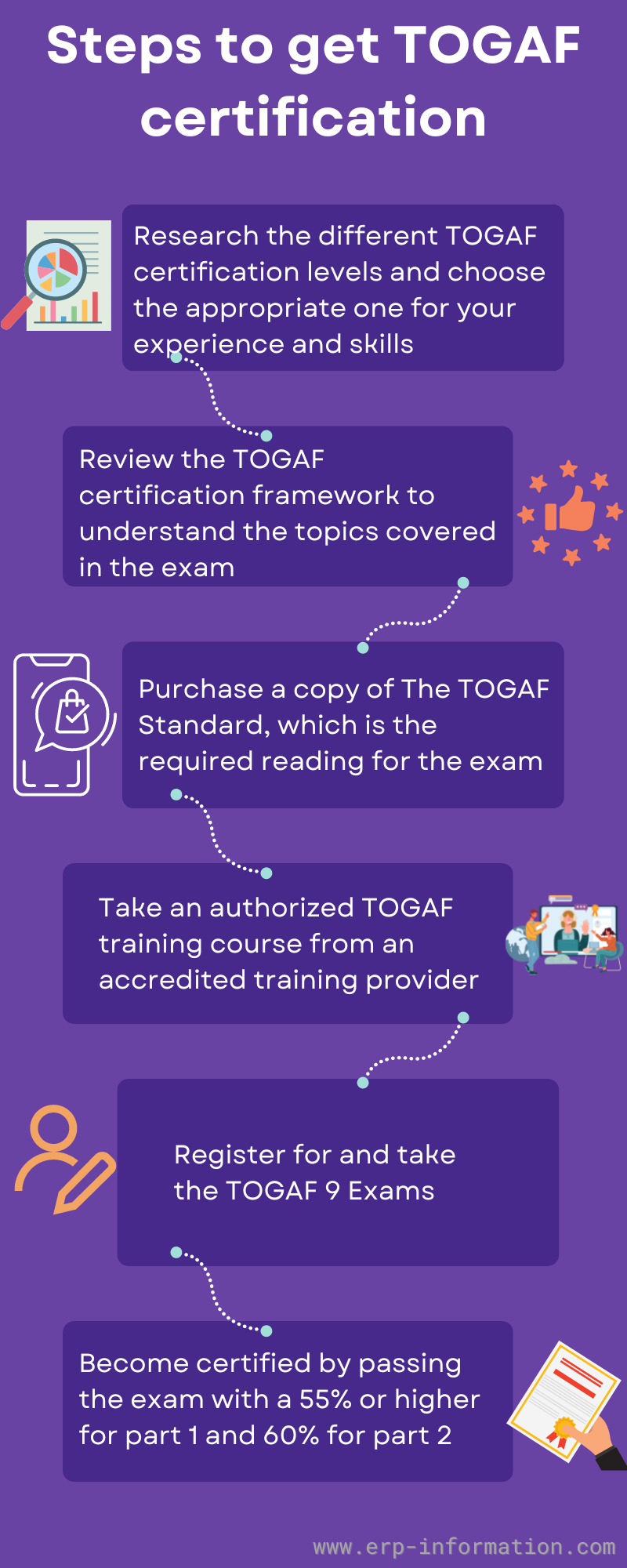
- Accredited training. Set by the training provider, not by The Open Group, and it is normally the largest line in the total. Training is not compulsory: none of the exams above list a training course as a prerequisite, and you can self-study and book the exam yourself.
- The standard itself. Sold through The Open Group Library and Shop. The Part 2 exams build in an electronic copy of the body of knowledge, so the purchase is for revision rather than for the exam room.
- Retakes. A retake is a fresh sitting at the same fee. There is no reduced retake price in the fee schedule.
- Tax. The fees are quoted in USD before local taxes, and regional pricing can move with exchange rates.
Exams are delivered at authorised test centres and remotely through Pearson VUE OnVUE, at the same fee either way.
Is it worth the money?
TOGAF is the most commonly named enterprise architecture framework in architect job adverts, and USD 610 is modest next to most enterprise IT certifications. That is the case for it, and it is a real one.
The case against is worth stating plainly, because most pages on this topic will not. TOGAF certification tests whether you know the framework, not whether you have used it. It is a screening credential: useful for getting through a filter that names TOGAF, and close to worthless on its own without architecture work to attach it to. Anyone promising a specific salary increase from a USD 610 exam is selling training.
The practical read: if job adverts you are aiming at name TOGAF, sit OGEA-103 and self-study. If they do not, the fee buys you very little.
FAQs
How much does TOGAF certification cost in total?
The exam fee alone is USD 610 for the TOGAF Enterprise Architecture Combined exam (OGEA-103) booked through Pearson VUE, which is the single payment that takes you from nothing to TOGAF Enterprise Architecture Practitioner.
If you sit the two exams separately it is USD 405 each, so USD 810.
Self-study with the official standard adds the cost of the publication only. Accredited training courses are priced by the training provider, not by The Open Group, and are the largest variable in the total.
Is there a cheaper route if I already hold TOGAF 9 Certified?
Yes. The TOGAF Enterprise Architecture Bridge exam (OGEA-10B) costs USD 385 and takes TOGAF 9 Certified holders to TOGAF Enterprise Architecture Practitioner. That is USD 225 less than the USD 610 combined exam, and the exam is shorter at 14 questions in 60 minutes.
The Bridge exam is only open to people who already hold TOGAF 9 Certified.
What score do you need to pass?
60% on each of the Enterprise Architecture exams. That is 24 out of 40 points on OGEA-101, and 24 out of 40 points on OGEA-102.
One detail catches people out. On the older TOGAF 9 Combined exam (OG0-093) the Part 1 section passes at 55%, but the standalone TOGAF 9 Part 1 exam (OG0-091) passes at 60%. The two are not the same threshold.
On the combined exams you must pass both sections. Fail one and you retake only that section.
Do the exam fees include training or the standard?
No. The fee buys the exam sitting and nothing else.
There are two ways to pay it. The Exam Booking Fee is what Pearson charges when you book directly by credit card. A Retail Voucher bought from The Open Group Shop costs USD 25 to USD 30 more per exam and is subject to approval of a retail voucher account.
Booking directly with Pearson VUE is the cheaper of the two on every TOGAF exam.
Should I take TOGAF 9 or the 10th Edition?
The 10th Edition, unless you have a specific reason not to. It is the current edition of the standard and the Enterprise Architecture exams are based on it.
The TOGAF 9 exams are still offered and still valid, and The Open Group continues to list them in the certification portfolio because TOGAF 9 remains widely named in job adverts. But a new candidate certifying in 2026 is buying a credential against a superseded edition, and the fee difference is USD 40 on the combined route.
Using Google Search? Add erp-information.com as a preferred source.