
B2B ecommerce helps businesses buy and sell things and find more customers. B2B ecommerce is an important and growing industry. It provides businesses with a number of benefits, including convenience, efficiency, reach, and cost savings.
If you are a business owner or sales professional, you should consider investing in a B2B ecommerce solution to help your business grow and succeed.
But with so many eCommerce platforms on the market, it isn’t easy to know which is right for your business.
This post will review the 10 top B2B eCommerce platforms, their key features, price, likes and dislikes, and other important information. That will help you decide which b2b platform is best for your needs.
What is the B2B eCommerce Platform?
A B2B eCommerce platform is a type of eCommerce platform that enables businesses to buy and sell products and services online. It offers product catalogs, order management, payment processing, and shipping.
Business-to-business (B2B) eCommerce platforms are different from business-to-consumer (B2C) eCommerce platforms designed for retail consumers.
B2B platforms often offer more complex features and are aimed at companies that want to manage orders and inventory internally.
B2B eCommerce solutions may also offer integration with enterprise resource planning (ERP) systems to streamline the ordering process.
Here’s a list of the ten best B2B eCommerce platforms (10 B2B eCommerce vendors).
1. Shopify
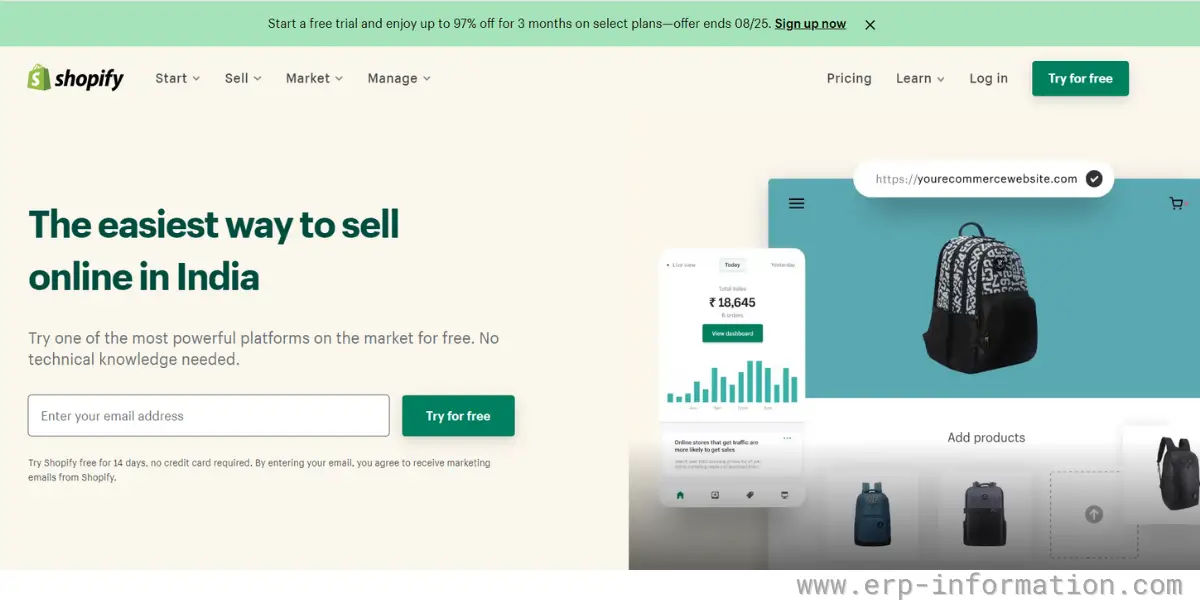
Shopify is one of the best b2b ecommerce software providers. This cloud-based, multichannel digital commerce platform with built-in shopping cart functionality allows businesses to plan, set up, and manage their online stores.
Shopify’s b2b e-commerce platform is designed for businesses that want to sell products or services online.
Features
- A dedicated B2B sales channel that allows businesses to sell products or services directly to other businesses
- Multi-user accounts so businesses can create separate logins for different employees or departments
- Integrated accounting and order management tools
- Integrated with ERP and CRM
- 100+payment providers
- Supports all international currencies and languages
- Cataloging/Categorization
- Wholesale and Multichannel Marketing
- API supported
- Custom pricing
- Drop-shipping
- Enables secured platform for online business (compliant with Level 1 PCI DSS, GDPR, Built-in SSL certificate)
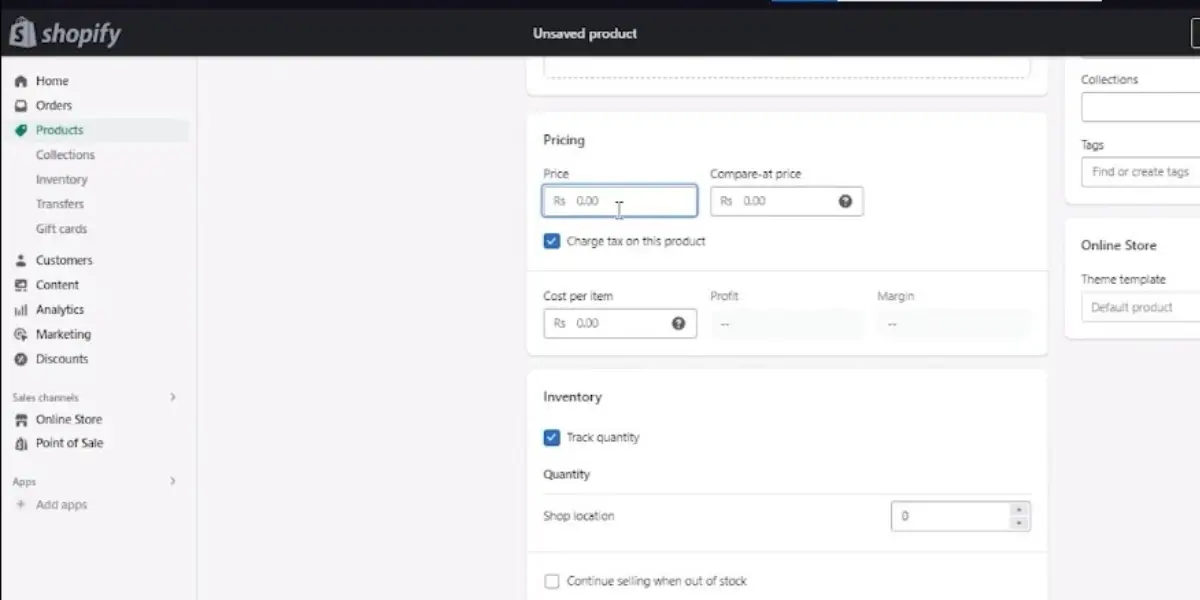
Screenshot of Shopify
Pricing
- Free trial available.
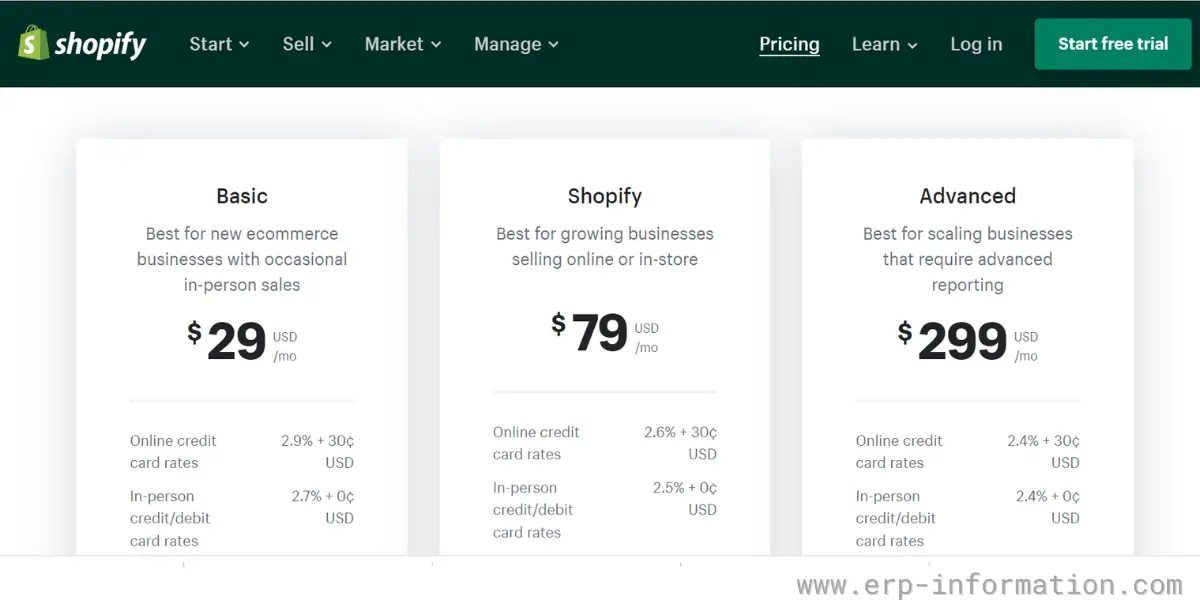
- Basic – for new stores with occasional in-person sales: $39/month billed monthly, or $29/month billed annually.
- Grow – for businesses expanding online or in-store: $105/month billed monthly, or $79/month billed annually. This tier used to be called the Shopify plan; Shopify renamed it Grow and left the price and features alone.
- Advanced – for scaling businesses that need deeper reporting: $399/month billed monthly, or $299/month billed annually.
- Plus – the enterprise tier, from roughly $2,300/month on an annual contract. This matters for B2B buyers: the full B2B toolkit, including company accounts, customer-specific catalogues and net payment terms, sits on Plus rather than on the entry plans.
Likes
- Traffic and usage can be scaled automatically by using a scalable architecture.
- It provides a quick and easy setup.
- It is the best application for multiple-site management.
Dislike
- Website updates and editing code are not as straightforward
Other Details
| Number of brands that use Shopify | 7000 |
| Updated version Shopify plus | May 2022 |
| Language | More than 15 languages, including English, French, Italian, Chinese |
| Suitable for | Branding, online presence, store setup |
| Help | Shopify Help Center |
| Customer reviews | G2: 4.4 out of 5 (4495+ reviews) |
User opinion
It is a versatile cloud-based commerce platform that helps small and medium-sized businesses design, set up, and manage their stores across various sales channels.
It provides a reliable and scalable solution using enterprise-level technology accessible to all businesses. It is a comprehensive commerce platform that enables businesses to sell online, in a physical retail location, and across various channels.
2. Oracle SuiteCommerce
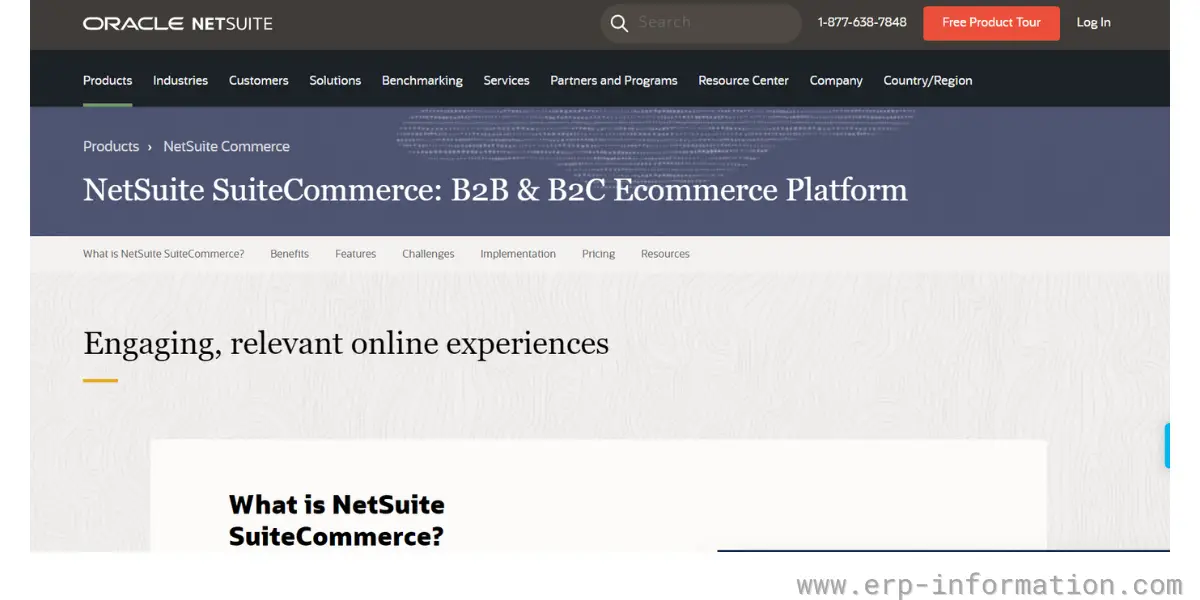
It is a complete, unified commerce platform that helps businesses increase online revenue, improve conversion rates, and reduce operational costs by providing POS solutions with cross-channel and centralized data.
Features
- Supports both B2B and B2C e-commerce
- Offers an omnichannel solution
- Centralized data management
- Supports multiple currencies and languages
- 3PL Management
- Suite-Commerce’s drag-and-drop site builder
- Pre-built starter sites and templates
- Product search API
Pricing
- Quote and subscription-based
- Starting from $40000
Likes
- It provides all the features which are necessary for e-commerce business.
- Software is customizable, flexible, and scalable.
- Handles extensive product database.
Dislike
- Implementation and maintenance cost is very high because of too many upgrades.
Other details
| Training In | Person, live, webinar, video, documentation |
| Customer support | Email, FAQ, live, chat |
| Deployment | Cloud, SaaS, web, Mac, windows, android |
| Suitable for | Mid-size and large business |
| Integrations | Cloud analytics, Affirm, NetSuite CRM, Pacejet, Hot glue |
User opinion
This comprehensive e-commerce solution can help create and manage web stores, social sites, and mobile applications. It is perfect for small to large-scale businesses that want to deliver personalized experiences to their customers at scale.
Real-time customer data can create tailored experiences that meet your buyers’ expectations.
3. BigCommerce
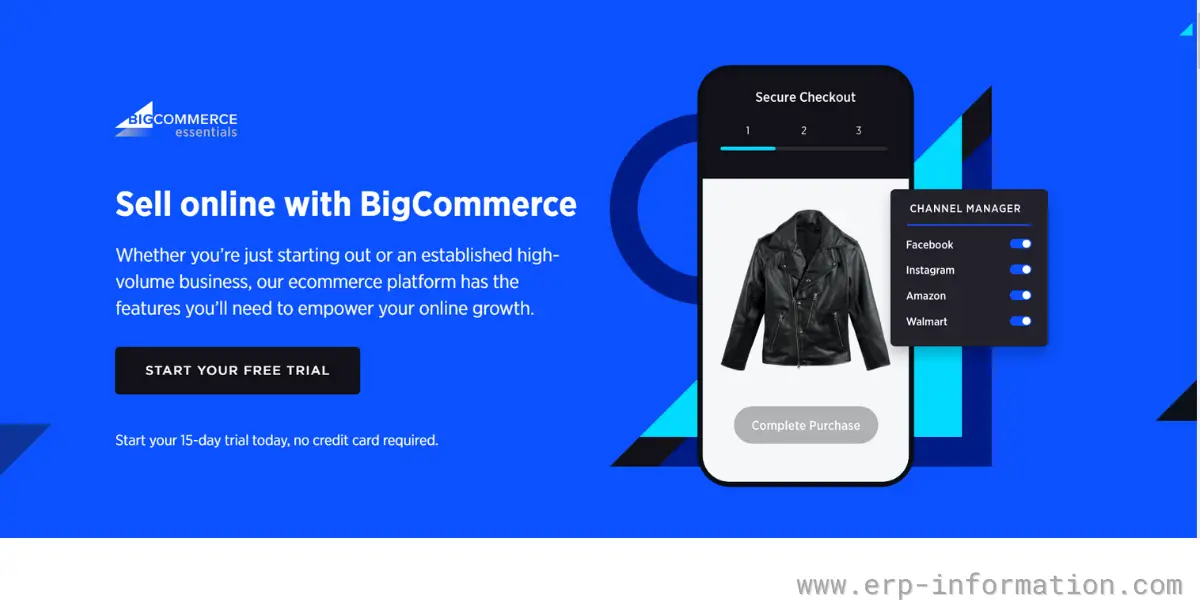
BigCommerce is a b2b e-commerce platform that helps businesses of all sizes to sell online. With customizable storefronts, secure checkout, and comprehensive reporting tools, Big-commerce makes it easy for companies to start and grow their online sales.
Hosting is provided by BigCommerce, which means you access it through a web browser and manage the store from any location.
Features
- An integrated B2C and B2B solution
- Unlimited storage
- Data, APIs, and SDKs are available for free
- Advanced report analytics
- Provides free templates
- Unlimited staff accounts
- CSS and HTML customization capabilities
- A large number of product options
- Supports multichannel, multi-currency, multi-shipping, and multi-languages
Pricing
15 days free trial available.
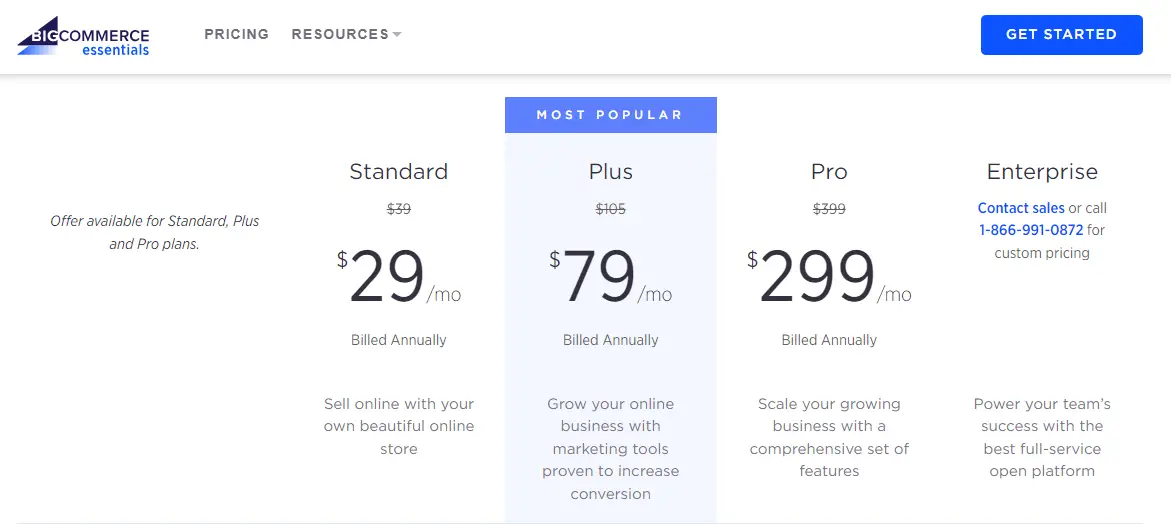
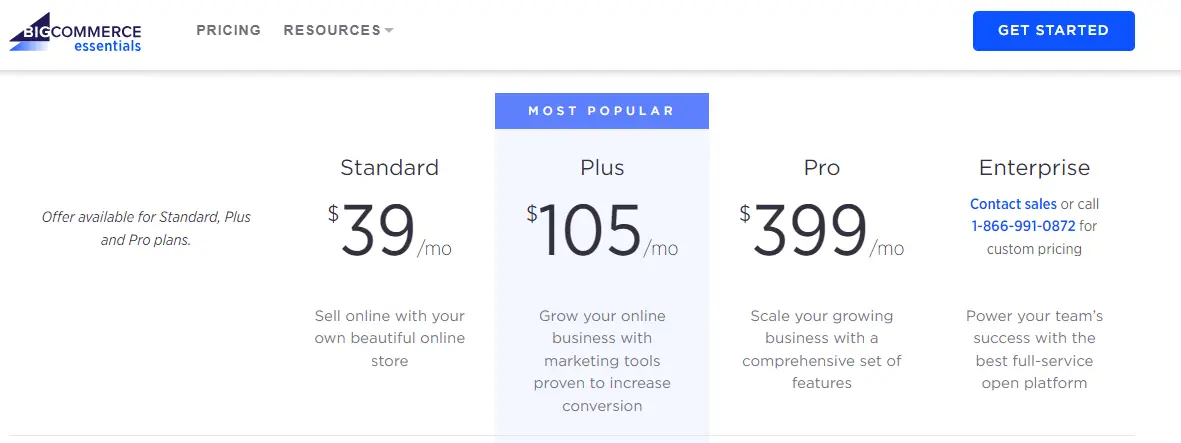
Bigcommerce offers the following plans.
- Standard: $39/month and $29/month, bills annually
- Plus: $105/month and $79/month, bills annually
- Professional: $399/month and $299/month, bills annually
- Enterprise: Contact vendor for pricing
Likes
- Fast, user-friendly, and easy to implement
- Integrations with multiple payment methods, marketplaces, and POS systems
- Requires less coding knowledge to run store
Dislikes
- Not easy to customize free themes
- Need improvement in customer service
- A rise in revenue leads to an increase in pricing plans
Supported industries
- Fashion and Apparel
- Health and Beauty
- Food and Beverage
- Manufacturing
- Automotive
Other details
| Training | Customer support live, email, phone, community forum, help center |
| Deployment | SaaS |
| Suitable for | All business types |
| Integration | Amazon, eBay, Wall mart, Hubspot |
| Number of stores | More than 60,000 stores in 120 countries |
| Number of technology | Partners 2800+ |
| Brands | Skull candy, La parla, Super dry, Ben and Jerry |
User opinion
BigCommerce empowers merchants of all sizes with sophisticated enterprise-grade functionality, customization, and performance, all with simplicity and ease of use in mind.
It is an e-commerce platform that offers a comprehensive set of selling tools without breaking the bank. BigCommerce provides a wide range of features and tools that are only sometimes available from competitors without expensive add-ons.
4. OROCommerce
OroCommerce is a B2B E-commerce platform that enables businesses of all sizes to sell products and services online.
Features
- Data security
- API
- CRM
- Catalog management
- Categorization
- Customer segmentation
- Product personalization
- Credit card payment
- Checkout process customization
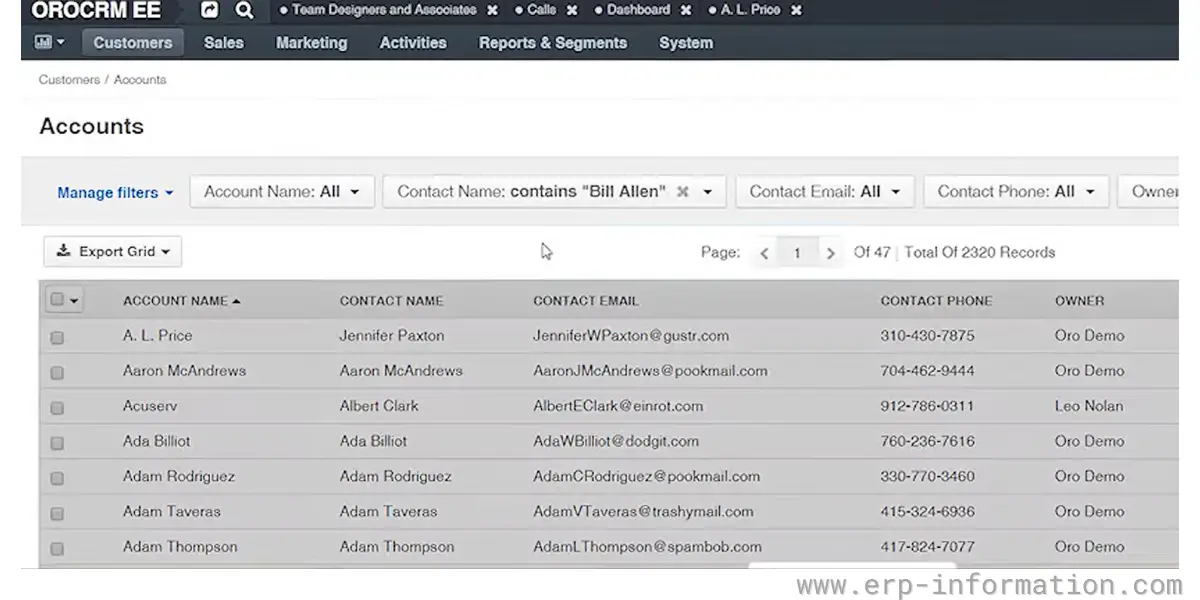
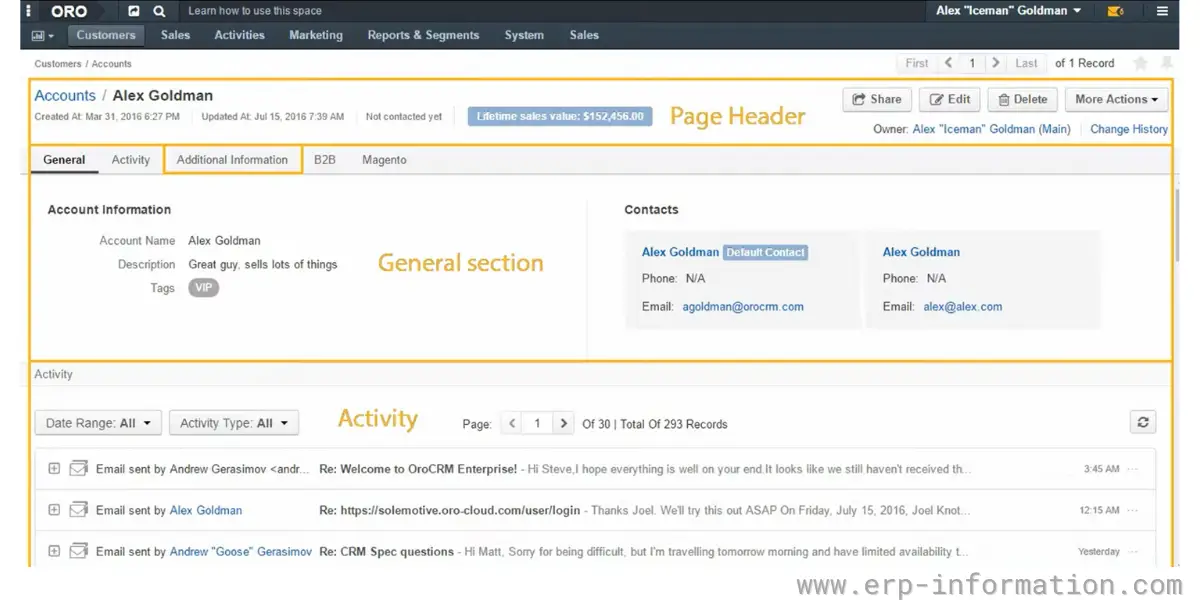
Screenshots of OroCommerce
Pricing
- A free trial and the free version are available.
Likes
- Purely B2B focused on efficient structure and seamless integration
- Enables a powerful data grid
- Transaction between two businesses is handled very well.
Dislikes
- The customization learning curve is not easy
- Working in the local environment is too slow
Supported Industries
- Chemical industry
- Electronics
- Automotive
- Medical Supplies
- Distributors
- Manufacturers
Other details
| Training in | Person, live webinar |
| Customer support | Email FAQ, knowledge base, help desk |
| Deployment | Cloud, SaaS, Web-based |
| Suitable for | Retailers, distributors, wholesalers, manufacturers |
| Business Type | Mid-size and large business |
| Language support | English, German, French, Spanish |
User opinion
It is a flexible and customizable B2B e-commerce platform. It is built from the ground up to meet manufacturers, distributors, wholesalers, retailers, and brands’ unique needs.
It is a robust set of out-of-the-box features. OroCommerce can be customized to fit any B2C, B2B, or B2B & B2C commerce need. It provides various deployment options like SaaS/cloud-based solutions or an on-premise setup.
5. CS-Cart
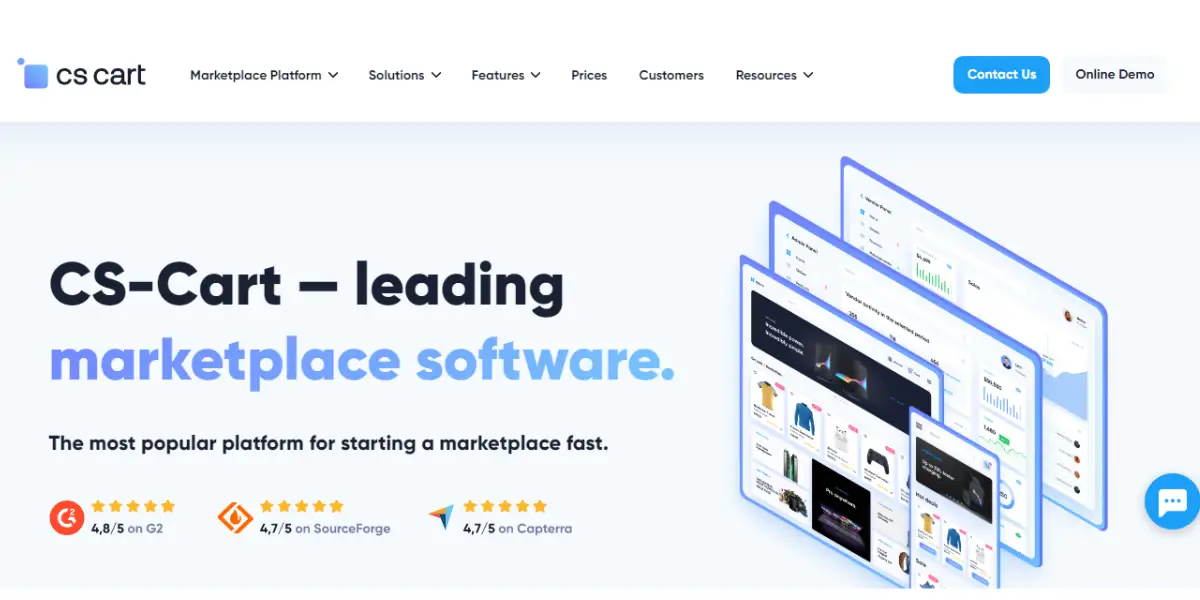
CS-Cart is an eCommerce solution for businesses of all sizes. It is a complete out-of-the-box shopping cart software that can easily customize your specific business needs.
Features
- Easy use CMS
- Provides customization with layout and theme editor
- Different administrative access levels can be assigned to workers
- Google Analytics has built-on sales reports
- Built-in sales reports integrated with Google Analytics
- Database backup and restore tool
- Multi-currency and multi-template support
Pricing
It offers different pricing models according to business requirements.
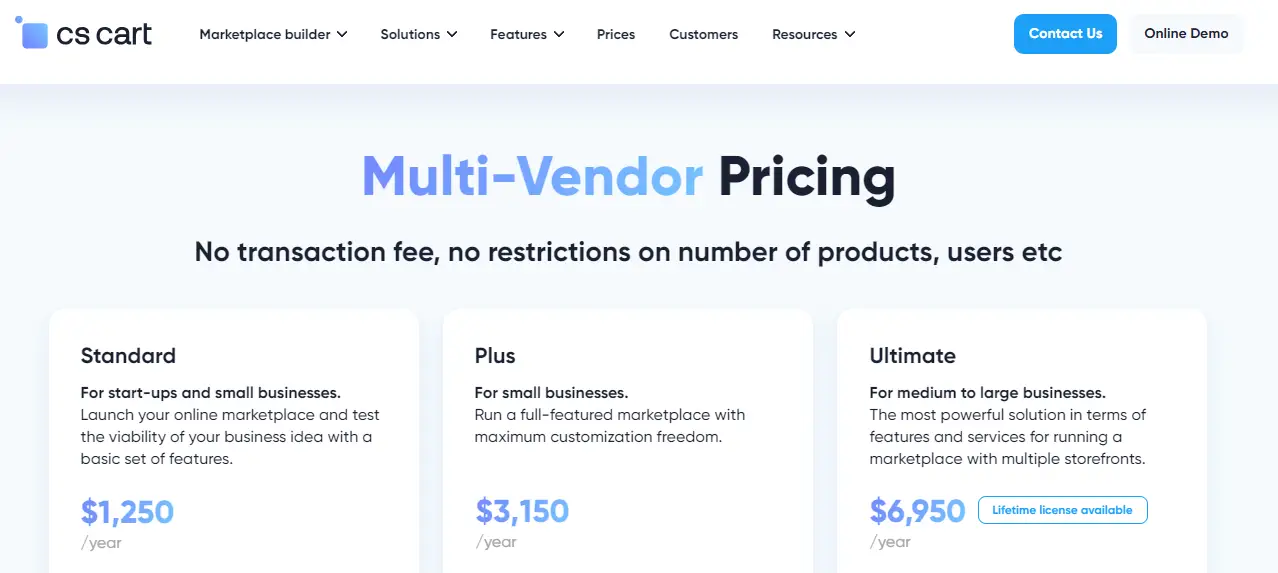
CS-Cart is self-hosted software rather than a hosted service, and its Multi-Vendor marketplace product is sold on annual subscriptions with a one-off licence also available. List prices at the time of writing:
- Standard – $725/year, aimed at start-ups and small marketplaces.
- Plus – $1,449/year, for growing marketplaces.
- Ultimate – $3,599/year, for medium to large operations.
- Unlim – a one-time licence from about $2,872, bundling several years of updates. This is the option to price up if you expect to run the platform for a long time, but remember that continued access to updates and security patches becomes a paid renewal once the included period ends.
- Because CS-Cart is self-hosted, none of the above includes servers. Add hosting to every figure here before comparing it with a SaaS platform like Shopify or BigCommerce.
Likes
- Can manage many vendor accounts and visitors with broad functionality and a high degree of customization
- Web page design helps to design a site as you want
Dislikes
- Failure in upgrade may happen
- Lack of professional assistance
Other details
| Training | Live online, documentation, videos |
| Customer support | Email, FAQ, knowledge base, help desk |
| Deployment | Cloud, SaaS, Web-based |
| Version CS-Cart Branch 4.15.1 | (June-29-2022) |
| Suitable for | Retailers, distributors, wholesalers, manufacturers |
| Business Type | Start-up to large business |
| Integration Integrated with | 340 solutions for payment, shipping, and social network operations |
| Language support | English, German, French, Spanish |
| Integration Integrated with | 340 solutions for payment, shipping, and social network operations |
User opinion
It is a Multi-Vendor marketplace platform that is a robust and user-friendly open-source shopping cart and eCommerce software. It offers lots of features out of the box, including integrations with various products.
It is a proven commercial platform code that is fully documented and constantly updated. The users can access video tutorials and courses; all functionality is tested and passes code review.
6. Pepperi
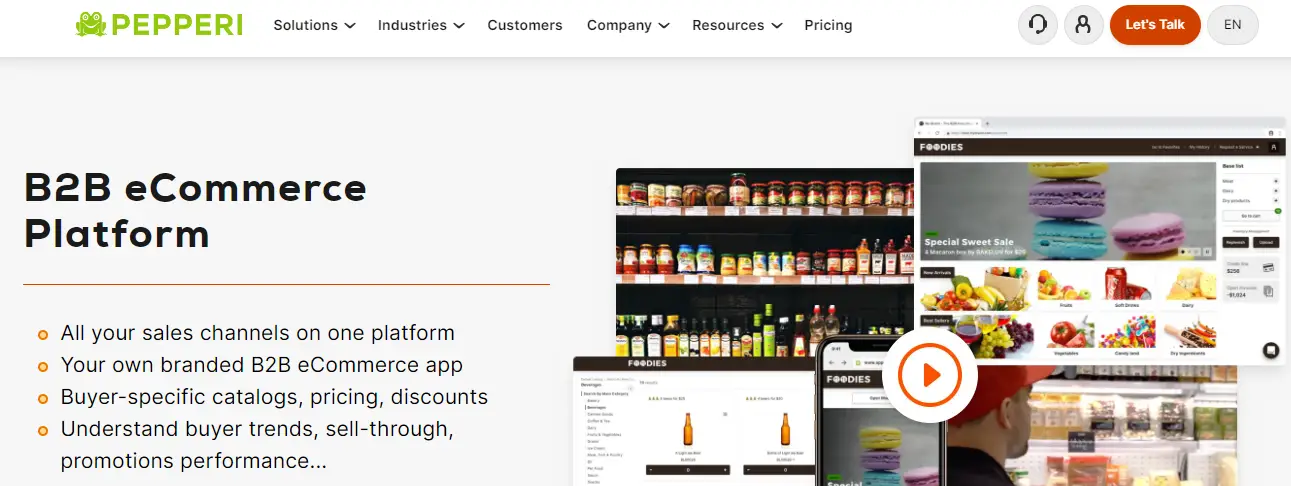
Pepperi B2B e-commerce platform is a cloud-based eCommerce solution designed specifically for businesses that sell online to other companies (B2B).
Built on a responsive web platform, Pepperi allows businesses to create their customized online storefronts and catalogs, streamline order management, automate marketing, and boost sales productivity.
Features
- Customizable and responsive web store builder – Business can create their own branded store complete with category pages, product detail pages, shipping and payment options, customer account settings, etc.
- Easy-to-use product catalog manager – Add/edit products, sync with existing inventory, manage pricing and discounts, create promotions, etc.
- Order management system – Track orders from start to finish, process payments, manage returns and refunds, etc.
- Built-in CRM system – Manage customer contact information, create customer profiles, track sales history, etc.
- Powerful marketing toolkit – Businesses can create and automate marketing campaigns, segment customers, track results, etc.
- Mobile app for sales reps – Sales reps can use the Pepperi app to access customer information, place orders, track inventory, etc., while on the go.
- Dashboard and widgets – Gives an overview of the business operations Centralized data, online/offline order, multicurrency support Omnichannel.
Pricing
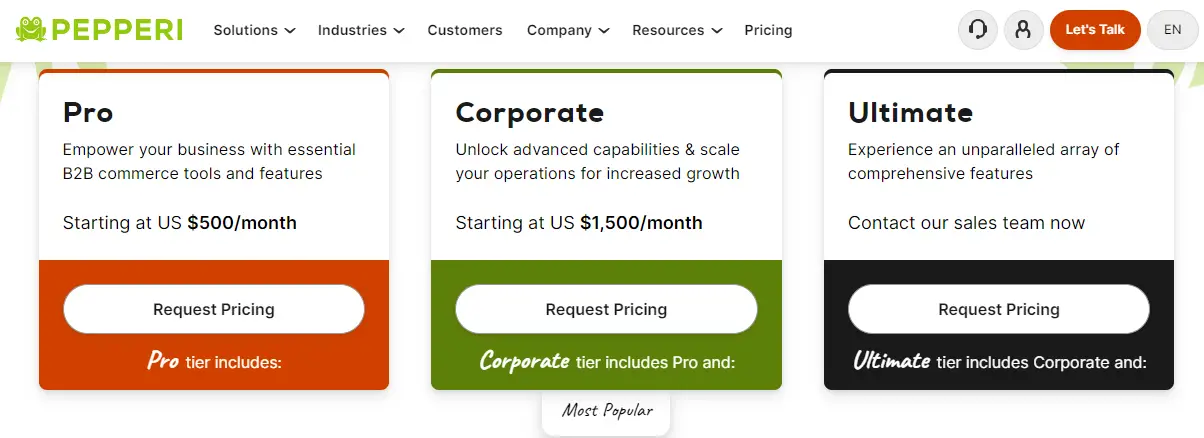
- Pepperi offers three types of pricing
- Pro– It offers $500/month
- Corporate– It offers $1500/month
- Ultimate– Contact the sales team for the pricing
Likes
- It enhances customer experience, increases sales, and saves time
- Highly configurable
- Easy and speed order placing
Dislikes
- Need improvement in performance while managing a large number of catalogs for various sizes and colors
- Use cases more than 24 use cases, including workflow, merchandise, and account management
Supported industries
- Food and Beverage
- Health and Beauty
- Jewelry and watches
- Home and gift
Other details
| Customers | More than 1000 customers in 65 countries |
| Integration options | iPaaS, Restful API, and JS client-side API |
| Customer support | Live, chat, phone, email |
| Suitable for | Brands, wholesalers, and distributors |
User opinion
It is a dynamic B2B commerce platform that enables consumer goods brands and wholesalers to streamline their omnichannel sales.
The businesses can manage all aspects of their sales process in one cohesive solution, including B2B e-commerce, Sales Force Automation, retail execution, and route accounting. Its seamless integration helps businesses sell more effectively, efficiently, and quickly.
7. WooCommerce
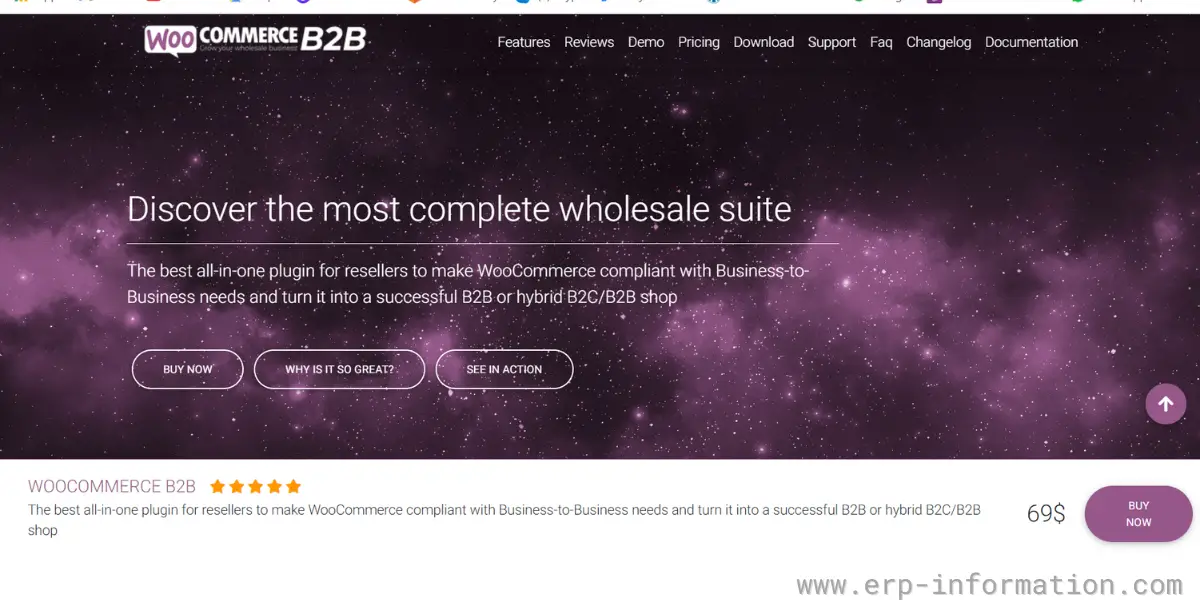
WooCommerce is the free and best eCommerce platform for small businesses. It enables business owners to create online stores to sell products and services directly to customers. WordPress powers Woo-Commerce, so it’s flexible and customizable. And it’s easy to use, so you can start selling immediately.
Features
- Secure payments, configurable shipping options
- Run store from any location using the Woo-Commerce Mobile App
- Rest API support
- Scalable and can be integrated with any software
- Various promotions and discounts
- Create customer groups and apply rules
- Guest access restriction to prevent unauthorized access
- Price, tax, and quotation management
- Search options (SKU and live search)
- Multi-language and multicurrency support
Pricing
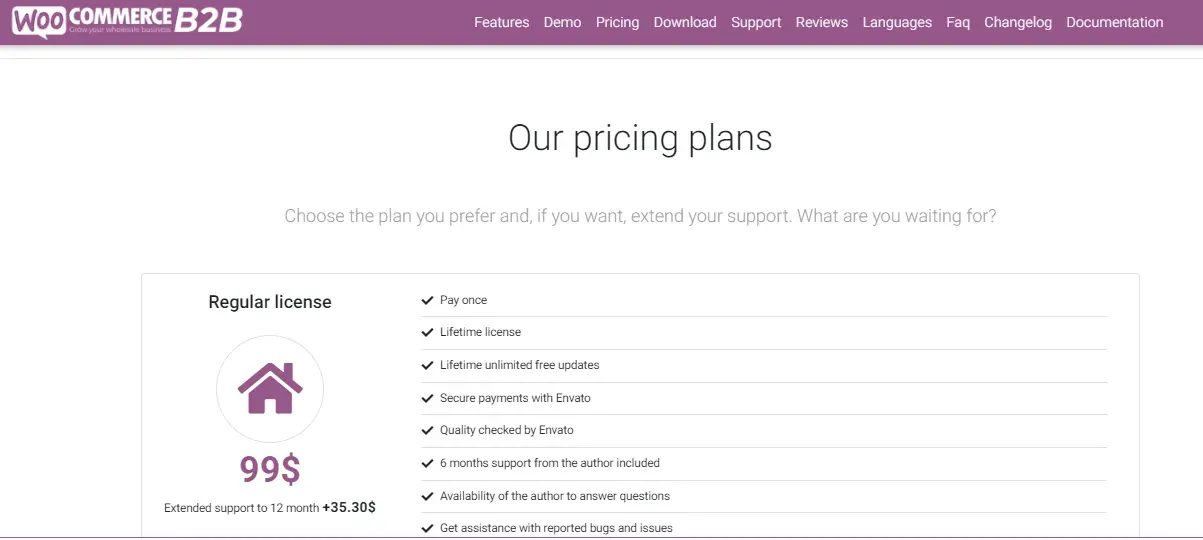
WooCommerce itself is free. It is an open-source WordPress plugin with no licence fee, no subscription and no revenue share, so the real budget sits in the things around it.
- WooCommerce core: free, permanently. There is no licence to buy and no per-order platform fee.
- Hosting: roughly $25 to $350 per month for most stores, rising with traffic and catalogue size.
- Extensions: about $29 to $299 per year each. Budget for several on a B2B store, because wholesale pricing, customer groups, quote requests and tax handling are extensions rather than core features.
- Payment processing: about 2.9% plus 30 cents per transaction through WooPayments, with alternative gateways available.
Likes
- Excellent plugin with extensive functionalities.
- An easy-to-use and reliable tool.
Dislikes
- Even though a plugin is free, it needs third-party paid plugins to improve e-commerce features.
- Needs paid IT professional help for integrations.
Other details
| Suitable for | Agencies and store owners |
| Deployment | Cloud, SaaS, Web-based |
| Supported device | Windows, Link |
| Support | FAQs/Forum, Knowledge Base, Email/Help Desk |
| Training | Documentation, Videos |
User opinion
It is a highly popular WordPress eCommerce plugin that seamlessly integrates into your self-hosted WordPress website.
It offers powerful shop facilities that can help sell anything online. The users can create a beautiful online store that offers customers a seamless shopping experience.
8. Adobe Commerce (formerly Magento)
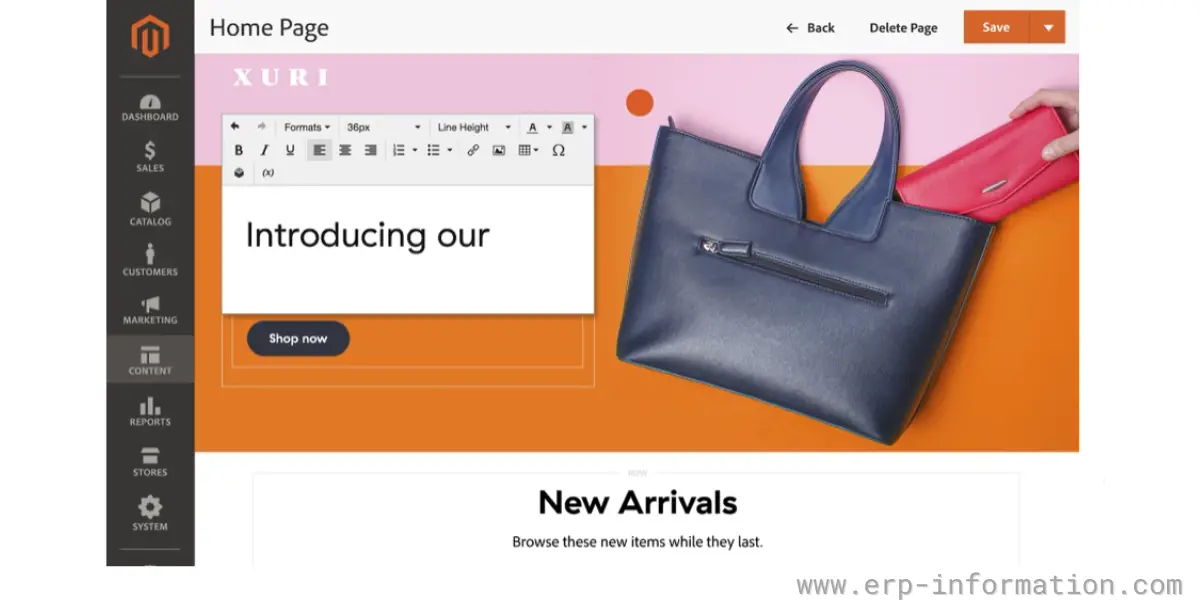
Adobe Commerce is the platform most buyers still call Magento. Adobe acquired Magento in 2018 and now sells the commercial edition as Adobe Commerce, while the free community edition continues under the name Magento Open Source. It is worth knowing which one a quote refers to, because the two are very different purchases.
It provides tools for managing products, orders, payments, and shipping and optimizing the customer experience. It also integrates with other Adobe solutions, such as Adobe Marketing Cloud and Adobe Experience Manager.
Features
- Bulk order management
- BI Dashboards
- Product catalogs, payment processing, order tracking, shipping management
- API support
- Provides product catalog and categorization
- Content and communication management
- CRM
Pricing
Adobe does not publish a price list for Adobe Commerce. The licence is quoted per customer and scales with your annual gross merchandise value, so two companies running identical software can pay very different amounts. Treat any fixed figure you see quoted online, including the ranges below, as a planning aid rather than a price.
- Adobe Commerce, self-hosted: quoted annually. Implementation partners commonly report roughly $22,000 to $125,000 per year, banded by gross merchandise value.
- Adobe Commerce Cloud: quoted annually, and higher because managed hosting and infrastructure are bundled in. Reported figures typically start near $40,000 per year.
- Magento Open Source: no licence fee at all. You pay for hosting, development and ongoing maintenance instead.
- Implementation is the line item that surprises people. On a platform in this class the first-year build frequently costs more than the licence, so ask for both numbers before you compare it with anything else on this list.
Other details
| Suitable for(Small-mid Size) | All sizes |
| Industries | Food, fashion, grocery, health, retail, FMCG, Manufacturing, Automotive, and more |
| Integrated with | Batch, Huffy, Royce union, Buzz |
| Deployment | Cloud, self-deployment |
| Integration | Adobe Commerce integrates with a wide range of systems, extensions and customisations, including the wider Adobe Experience Cloud |
| Customer support | 24×7 rep support. |
User opinion
It is a powerful platform for building multi-channel commerce experiences for B2B and B2C customers. This flexible, extensible, and scalable platform allows businesses to launch, manage, and scale their operations easily.
It Integrates with Adobe products such as Analytics, Target, Experience Manager, and Creative Cloud; Adobe Commerce allows businesses to take personalization to the next level.
9. Quick eSelling
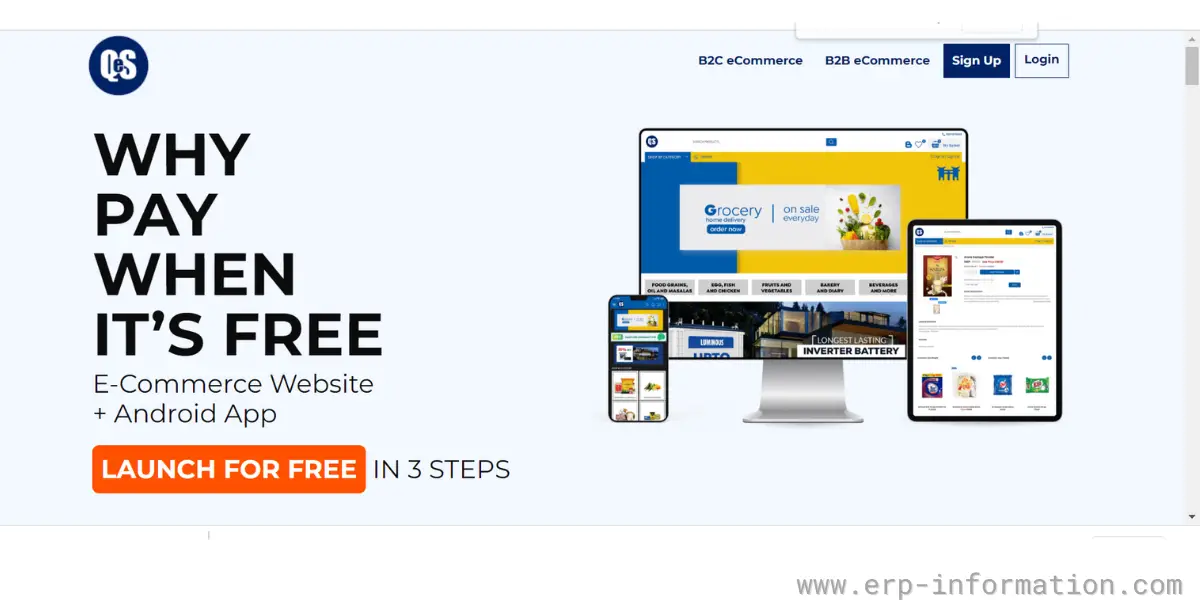
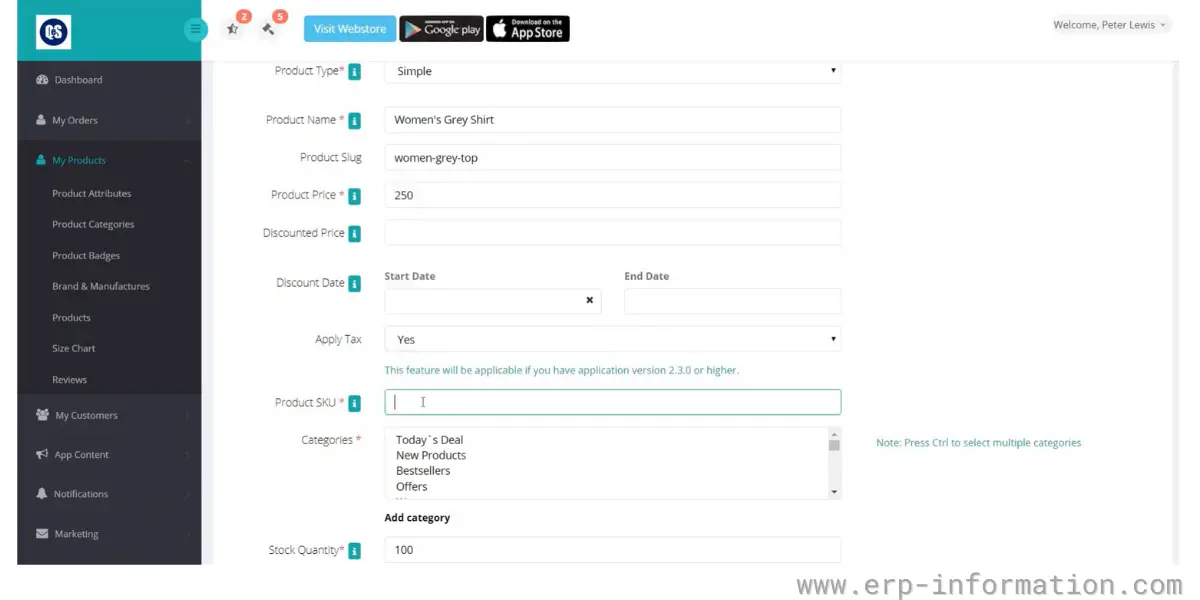
Quick eSelling Shopping Cart is a turnkey solution for businesses that want to sell products and services online.
It is an all-in-one platform that provides everything you need to create a professional online store, including a website builder, shopping cart, payment processing, and customer management tools.
Features
- Data security
- Kitting
- Multichannel marketing
- ERP integrations
- Built-in marketing tools
- High-quality e-catalog display
- All in one platform
Screenshot of Quick eSelling
Pricing
- A free trial and free version are available.
- Provides free mobile app and website setup along with required features.
Likes
- Easy to use and update application
- CRM module supports bulk uploading
- Excellent customer support
Dislikes
- The application is not readily available and needs installation
- Missing many basic features needs improvement in application development
Other details
| Training | in-person, online, documentation |
| Customer support | Online |
| Deployment | Cloud, SaaS, web-based |
| Industries | Supports more than ten industries, including Fashion, Grocery, jewelry, home decor, electronics, and food. |
| Suitable for | Wholesaler and retailer |
User opinion
It is the mobile eCommerce platform that connects manufacturers, wholesalers, & retailers with customers.
It is an all-in-one mobile eCommerce platform that streamlines the entire supply chain, saving you time and money while boosting your sales. Plus, with our free website and mobile app setup.
10. NuORDER by Lightspeed
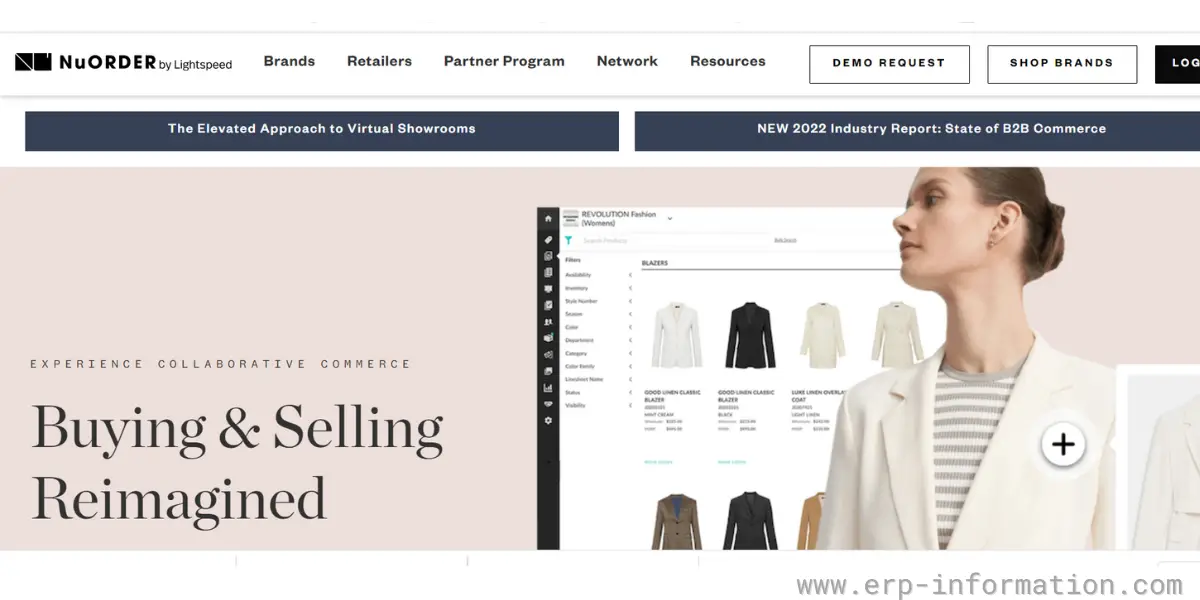
NuORDER is a cloud-based wholesale order management system for brands selling into retail. Lightspeed Commerce acquired it in 2021 for about $425 million, and it is now sold as NuORDER by Lightspeed, so expect Lightspeed contracts, branding and account management rather than a standalone NuORDER purchase.
Features
- Integration with accounting
- Product catalogs
- Customer management
- Shipping software
- Order tracking and invoicing
- Rich media support using 3D products, 360 imagery, virtual showrooms
- Customer-specific discounts, prices, and products
Pricing
- Free trial and free version are available.
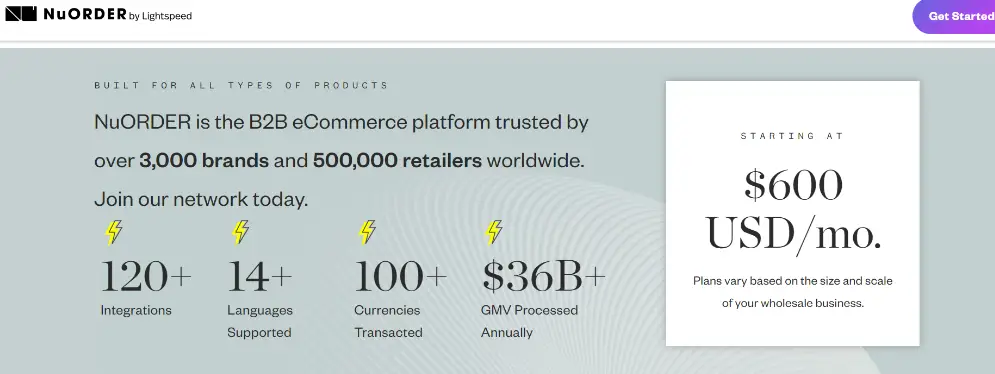
- Starting price $600/month (Plans vary depending on size and scale of business).
Likes
- Management of orders and inventory is made more accessible with this tool
- Products will be automatically matched to photos through Dropbox integration
Dislikes
- A limited number of customization are available
- Standard reports need to be improved
Other details
| Integration | Integrated more than 120 tools along with many ERP, PLM, POS, and CRM systems |
| Used by | 500,000 retailers and 3,000 brands worldwide |
| Suitable for | All sizes of business |
| Deployment | Cloud, SaaS, Web-based |
| Customer support | Email, helpdesk, phone, chat |
| Training | In-person, live, webinar, and videos |
User opinion
It is the leading B2B eCommerce solution that empowers brands with the necessary tools to conduct business online.
It is a large wholesale channel for branded manufacturers that can showcase their products in virtual showrooms through digital catalogs, lookbooks, and line sheets for an engaging buying experience.
How a B2B eCommerce Platform Connects to Your ERP
This is the question that decides most B2B platform selections, and it is the one demos tend to skate over. In B2B, the storefront is rarely the system of record. Your contract pricing, credit limits, stock positions and customer accounts already live in an ERP system. The website is a window onto that data. If the window and the data disagree, customers see prices they cannot get and stock that is not there, and your team goes back to taking orders by email.
So the useful question is not whether a platform integrates with ERP, because every vendor on this list will say yes. It is which specific records sync, in which direction, and how often.
What actually has to sync
- Products and catalogue data, ERP to store. Usually the easiest piece, and the one vendors demo.
- Customer-specific contract pricing, ERP to store. This is the hard one. B2B buyers do not see list prices, they see their negotiated price, which may vary by product, volume break and contract date. A platform that can only import a single price per product will not work, however good the rest of it looks.
- Stock availability, ERP to store. Decide whether you need live lookups or a periodic refresh is enough. Live is more expensive and not always necessary.
- Credit limits and account status, ERP to store. If you sell on account, the storefront needs to know when a customer is over their limit or on hold before it accepts an order.
- Orders, store to ERP. The direction that carries the money. Confirm what happens when the ERP rejects an order that the storefront already accepted.
- Invoices, payment status and order history, ERP to store. Self-service access to these is the feature that actually reduces calls to your sales desk, and it is often scoped out of phase one to save money.
The three routes, and what each one costs you
- Same vendor as the ERP. The integration is built and supported by one company. Oracle SuiteCommerce with NetSuite is the example on this list. Least integration risk, least flexibility, and you are committed to that vendor’s roadmap.
- A prebuilt connector. A third party maintains a supported link between your platform and your ERP. Ask how the connector is versioned, who fixes it when your ERP updates, and whether the licence is annual, because that cost recurs forever.
- Custom middleware against the APIs. The most flexible and the most expensive to own. Reasonable when your pricing rules are genuinely unusual, and a mistake when they merely feel unusual.
ERP vendors that sell their own B2B storefront
The ten platforms above are the ones most small and mid-sized businesses shortlist. If you already run a large ERP, there is a parallel set of options that rarely appears on best-of lists but belongs on yours, because the integration work is largely done for you:
- SAP Commerce Cloud, for SAP S/4HANA sites. Strong in manufacturing and distribution, which is where complex product configuration and contract pricing are most common.
- Microsoft Dynamics 365 Commerce, where Dynamics 365 is already the back office.
- Salesforce B2B Commerce, which makes most sense when Salesforce already holds your customer data and service history.
- Oracle SuiteCommerce, covered at number two above, for NetSuite sites.
These are enterprise purchases and none of them publishes list pricing. They are worth a quote only if the matching ERP is already in place; bought on their own, they are usually the most expensive way to solve this problem. If you are still deciding which back-office system you are standardising on, settle that first, because it constrains this choice more than any storefront feature will. Our guides to ERP modules and ERP implementation cover that groundwork.
B2B eCommerce Trends
B2B e-commerce has become a mainstream way to sell goods and services, and the scale is easy to understate. US B2B ecommerce sales were projected to pass $2 trillion in 2024, and the direction of travel since has been consistently upward.
As a result, manufacturers and distributors find themselves in a position where they must adapt and modernize their business strategies to effectively engage with the increasing number of customers who prefer digital interactions.
Despite the persistent challenges of inflation, supply chain disruptions, and a labor shortage, U.S. manufacturers and distributors accomplished a remarkable feat in 2022.
They succeeded in boosting their collective B2B sales for the year. These total sales amounted to a staggering $14.86 trillion, showcasing a substantial growth of 14.5% compared to the previous year, which stood at $12.98 trillion.
This remarkable upswing in sales reflects their resilience and their ability to adapt, even when facing formidable obstacles.
FAQs
What are the features needed for a B2B platform?
Many features can make a B2B e-commerce platform successful. Some of the key features include:
* A comprehensive product catalog that can be searched and filtered by category, supplier, price, and other criteria.
* Easy-to-use shopping cart and checkout process that allows customers to purchase products in quantities as small as one unit.
* A secure payment gateway that accepts major credit cards and allows customers to pay for products online via invoice or purchase order.
* Flexible shipping options allow businesses to choose from various delivery methods, including next-day shipping and international shipping.
* A robust order management system that enables businesses to track their products.
Conclusion
The above listed are the 10 best B2B eCommerce platforms you can use to sell your products online. Each platform has its features, prices, and integrations that make it unique.
Choose on fit rather than on feature count. If you are a smaller seller who wants to be trading quickly, Shopify and BigCommerce get you there with the least engineering. If your pricing rules are complex and you have development resource, Adobe Commerce and OroCommerce give you room to model them properly. If your back office already runs on NetSuite, SAP or Dynamics, start with that vendor’s own storefront and make the alternatives justify the integration work. And if you sell wholesale into retail, NuORDER by Lightspeed is built for that motion specifically.
One practical note on the prices in this article: several of these vendors quote rather than publish, and the ones that publish change their plans more often than buyers expect. Treat every figure here as a starting point for a quote, and confirm the current number with the vendor before you build a business case on it.
Reference