ServiceNow and Remedy are two of the best-known IT service management (ITSM) platforms, but they are in very different places today. ServiceNow is the market leader, a broad, cloud-only platform. Remedy is now a legacy product: BMC has moved its ITSM to BMC Helix ITSM, which it calls the next generation of Remedy.
This review compares ServiceNow with BMC’s current product on the things that matter in 2026: deployment, platform breadth, AI, pricing, and who each one fits. Where it helps, it notes what changed from classic Remedy.
Click here for similar kinds of Cloud ERP Software
ServiceNow current release: Australia, generally available May 2026. ServiceNow ships two releases a year; after finishing the A-to-Z city-name cycle with Zurich in 2025, it restarted with country names (Australia, then Brazil).
BMC: Remedy is now legacy. BMC’s current ITSM product is BMC Helix ITSM (latest version 25.3.02, September 2025), which BMC positions as the next generation of Remedy.
ServiceNow vs BMC Helix (Remedy) at a glance
| ServiceNow | BMC Helix ITSM (formerly Remedy) | |
|---|---|---|
| Vendor | ServiceNow, Inc. (NYSE: NOW), Santa Clara | BMC Helix (majority stake acquired by Montagu in 2026) |
| Deployment | Cloud-only SaaS, dedicated instances | SaaS, or on-premises and hybrid |
| Platform scope | Broad: ITSM, ITOM, HR, CSM, SecOps, AI agents | Focused: ITSM, ITOM, AIOps |
| Generative and agentic AI | Now Assist plus AI Agents | BMC HelixGPT, Helix AIOps, AI agents |
| Latest release | Australia (May 2026) | Helix ITSM 25.3.02 (September 2025) |
| Gartner AI in ITSM (2025) | Leader | Visionary |
| Pricing | Quote-based, premium | Quote-based, often lower total cost |
| Best for | One broad platform across many teams | IT-ops-heavy, hybrid or on-prem, cost-sensitive |
ServiceNow vs Remedy
What is ServiceNow?
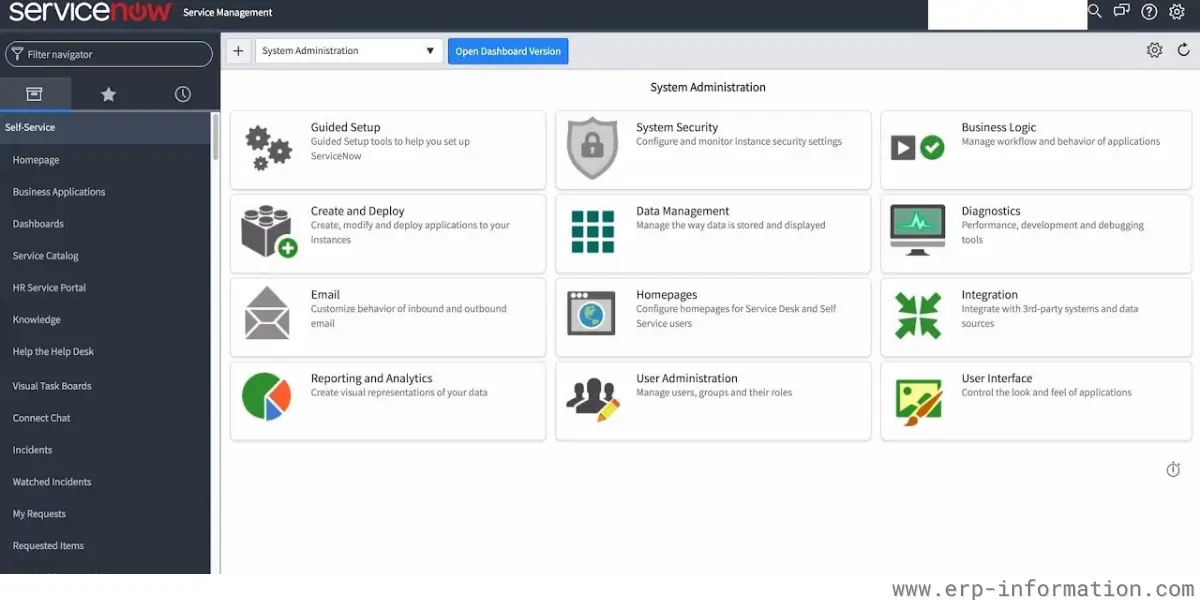
ServiceNow is the market leader in ITSM. It is built on the Now Platform and delivered only in the cloud, and it reaches far beyond IT: the same platform runs IT operations, HR, customer service, and security workflows. That breadth and a large partner ecosystem are its main strengths.

ServiceNow, Inc. (NYSE: NOW) is based in Santa Clara, California, was founded in 2004 by Fred Luddy, and is led by CEO Bill McDermott. It is a premium product, priced accordingly, and holds a large share of the ITSM market.
What is Remedy?
Remedy is BMC’s long-established ITSM product, with a heritage going back to the Remedy Action Request System. Remedy Corporation was acquired by BMC in 2002, and for years Remedy ITSM was a leading enterprise help-desk platform.
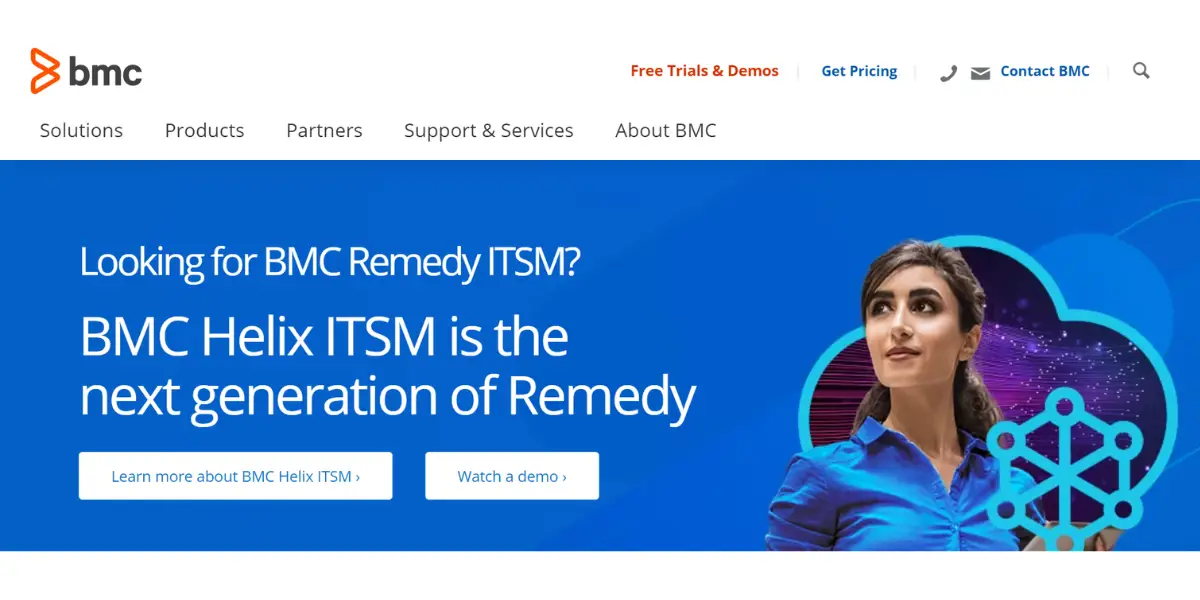
The important update: Remedy is now legacy, and BMC Helix ITSM is its successor. BMC explicitly calls BMC Helix ITSM the next generation of Remedy and points Remedy on-premises customers to move up to it. BMC Helix runs as a cloud SaaS and also has an on-premises edition, so the deployment flexibility Remedy customers valued carries over.
One note for vendor due diligence: BMC separated its ITSM and operations business (BMC Helix) from its mainframe and automation business in 2024, and in June 2026 the private-equity firm Montagu agreed to take a majority stake in BMC Helix, making it an independent company.
Let us start comparing ServiceNow and Remedy.
Features
ServiceNow
- Change management
- Predictive intelligence machine learning
- Customer service management
- Field service management
- Workforce and process optimization
- IT operations management
- IT service management
- Resource and demand management
- Enterprise asset management
- Governance, Risk, and Compliance
BMC Helix ITSM
- Incident and problem management
- Knowledge management
- Smart reporting
- BMC Helix multi-cloud service management
- Change management
- Release management
- Asset management
- BMC Helix digital workplace
- Configuration management
- Service request management
- Service level management
Deployment
ServiceNow is cloud-only. It runs as a SaaS that ServiceNow hosts and operates, and each customer gets dedicated application and database instances. There is no on-premises option, which can matter for organizations with data-sovereignty or air-gapped requirements.
BMC Helix ITSM offers more deployment choice: a cloud SaaS plus an on-premises and hybrid edition (Helix ITSM OnPrem). Classic Remedy was primarily on-premises, and that flexibility now lives in Helix. Deployment freedom is one of BMC’s clearest advantages over ServiceNow.
Delivery Model
Both are delivered primarily as cloud software, but they differ in scope. ServiceNow is more than an application: the Now Platform is a low-code platform that customers and partners build custom apps on. That is a big reason for its large marketplace of pre-built applications.
BMC Helix is delivered as SaaS (or on-premises) and is more focused on IT: service management, operations management, and AIOps, rather than a general-purpose application platform. Classic Remedy, by contrast, was traditionally installed and run on the customer’s own servers.
Third-party Integration
ServiceNow offers strong support for third-party integration, providing extensive tools and APIs to make integration straightforward.
While BMC Remedy supports third-party integrations, it may not emphasize integration to the same extent as ServiceNow, potentially requiring more custom development or third-party solutions.
Artificial intelligence
AI is now the main battleground, and both platforms have moved to agentic AI, meaning assistants that can take actions and not just answer questions.
ServiceNow brands its generative AI as Now Assist and has pushed hard into AI agents, with an AI Agent Orchestrator and AI Agent Studio for building and coordinating agents across workflows. Gartner named ServiceNow a Leader in its September 2025 Magic Quadrant for AI Applications in ITSM.
BMC Helix offers BMC HelixGPT (generative AI for natural-language search and resolution) alongside its established Helix AIOps, plus agentic AI agents and a no-code HelixGPT Agent Builder that lets you choose the underlying language model. Gartner placed BMC Helix as a Visionary in the same report.
Pricing
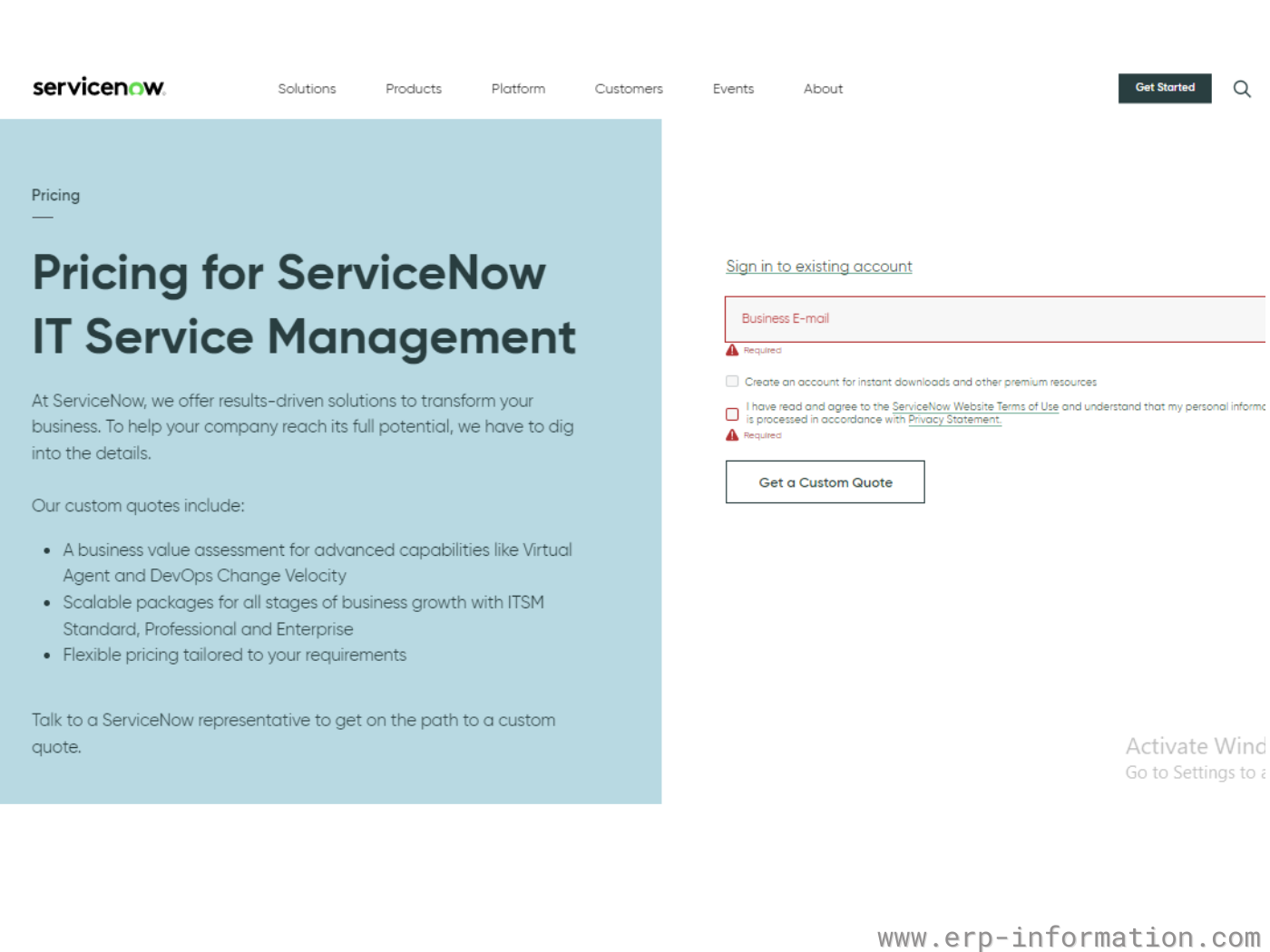
Neither vendor publishes list prices; both are quote-based enterprise deals. ServiceNow is generally priced per fulfiller (agent) subscription and is widely regarded as premium, with costs that climb as you add users and modules.
BMC Helix is also quote-based and per-agent, but it is often positioned as a lower total cost of ownership than ServiceNow. For either one, you contact the vendor or a partner for a tailored quote based on your users and modules.
Configuration and Accessibility
ServiceNow
- ServiceNow is a highly configurable solution. It enables customers to have a flexible configuration with simple tools. That means that businesses can tailor the solution to their specific needs.
Remedy
- The remedy is also a highly configurable solution. However, You should note that its configuration can be complex. With remedy software, you need BMC Change Advisory Board approval to do the configuration as per your needs.
Reporting and Analytics
ServiceNow provides advanced reporting and analytics features. It offers a wide range of reports and dashboards that can be customized to meet the specific needs of businesses. But it is a little bit complex to work with.
Remedy also offers reporting and analytics features. However, its reporting capabilities are not as advanced as ServiceNow’s. But it is easy to use.
Customer Support
ServiceNow
Remedy
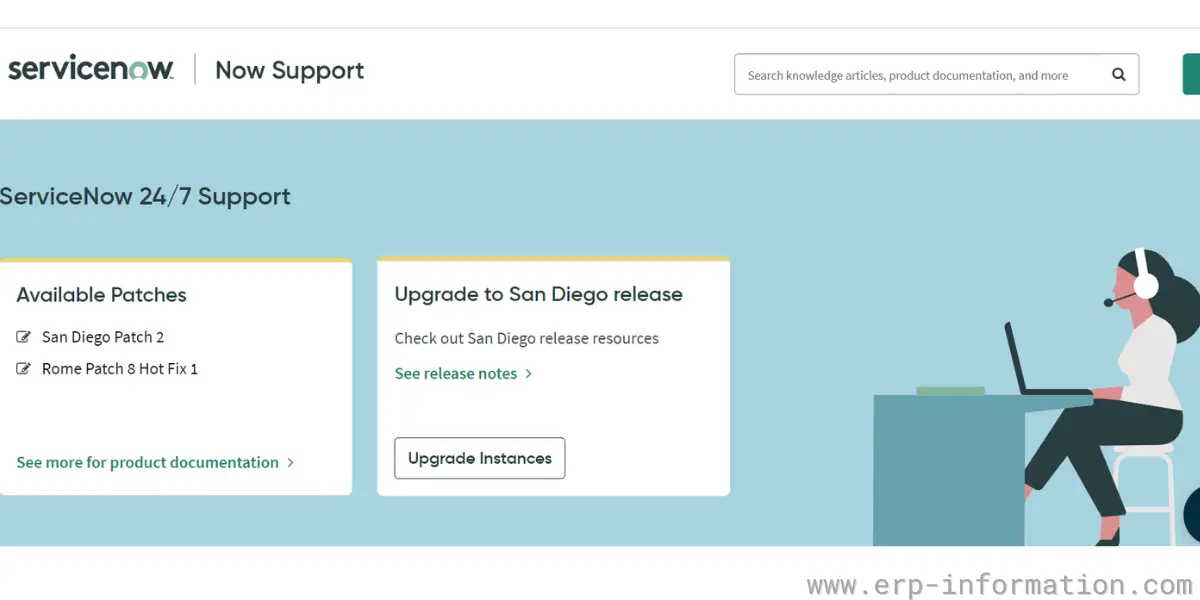
ServiceNow provides 24×7 support with a dedicated customer success management team. It also includes product documentation and community support.
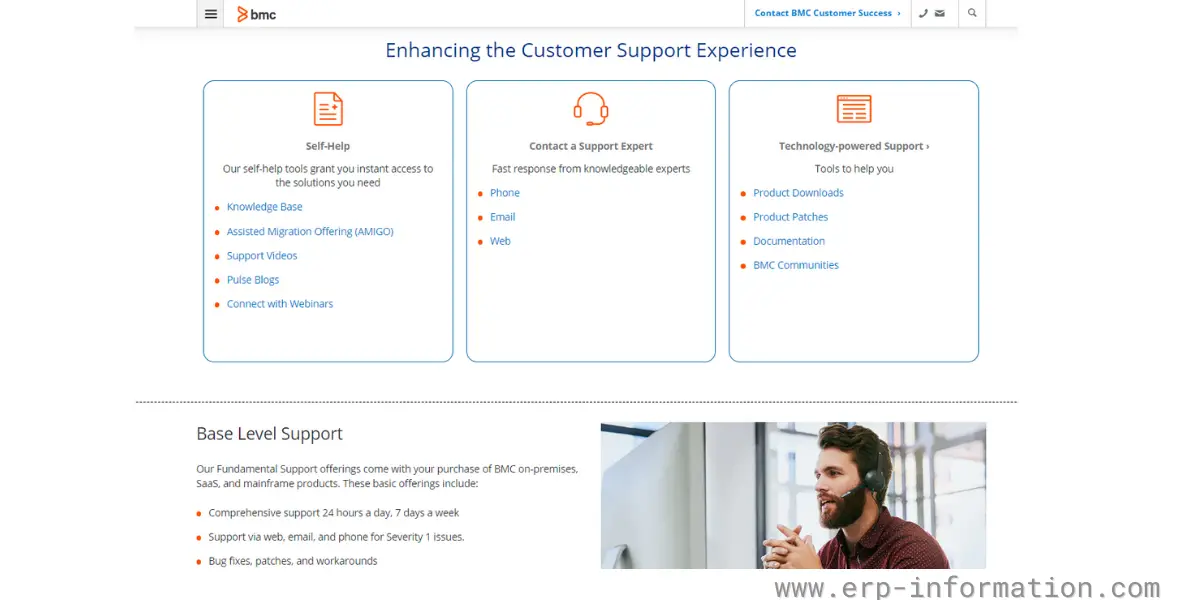
Remedy provides 24×7 support with multiple channels, including email, phone, and web. In addition, it improves customer support with self-help. You will get help through webinars, support videos, and blogs.
Maturity and History
BMC is an older and more established platform with a long history in ITSM, while ServiceNow is newer but quickly gaining popularity.
Customization and Complexity
Both platforms allow for customization, but BMC is considered more complex and suited for large enterprises, while ServiceNow has a simpler approach and provides customization.
Community and Ecosystem
ServiceNow has a larger user community and marketplace for pre-built applications and integrations compared to BMC.
Pros and Cons of ServiceNow and BMC Remedy
Pros of ServiceNow
- User-Friendly Interface
- Cloud-Based Efficiency
- Rapid Development
- Strong ITSM Capabilities
- Integration Expertise
- Thriving Community and Marketplace
Cons of ServiceNow
- Cost Considerations
- Complexity Challenge
- Learning Curve
Pros of ServiceNow
1. User-Friendly Interface: ServiceNow boasts an intuitive and user-friendly interface, catering to IT professionals and end-users alike.
2. Cloud-Based Efficiency: Being cloud-based, it offers scalability, minimal infrastructure requirements, and accessibility from anywhere with an internet connection.
3. Rapid Development: ServiceNow’s low-code/no-code platform enables swift application development and customization, reducing deployment time.
4. Strong ITSM Capabilities: It excels in critical ITSM functions, encompassing incident management, problem management, change management, and asset management.
5. Integration Expertise: ServiceNow offers strong integration capabilities, connecting reliably with third-party tools and systems.
6. Thriving Community and Marketplace: It hosts a vibrant user community and an extensive marketplace featuring pre-built applications and integrations.
Cons of ServiceNow
1. Cost Considerations: ServiceNow’s excellence comes at a price, which can be relatively high, especially for smaller organizations or those with budget constraints.
2. Complexity Challenge: While it provides extensive customization options, the complexity can be overwhelming for some users.
3. Learning Curve: Due to its feature-rich nature, there might be a steeper learning curve, particularly for newcomers to ITSM platforms.
Pros and Cons of BMC Remedy
Pros of BMC Remedy
- Established Pedigree
- Comprehensive ITSM Suite
- Tailored Customization
- Strong Integration
- Hybrid Deployment Flexibility
Cons of BMC Remedy
- Complexity Challenge
- Cost Considerations
- Legacy Interface
- Resource-Intensive
Pros of BMC Remedy
1. Established Pedigree: BMC Remedy boasts a rich heritage in the ITSM domain, cementing its status as a mature and well-recognized platform.
2. Comprehensive ITSM Suite: It presents a comprehensive suite of ITSM features and modules, ideally suited for large enterprises grappling with complex requirements.
3. Tailored Customization: BMC Remedy excels in offering extensive customization capabilities, enabling organizations to fine-tune the platform according to their unique demands.
4. Strong Integration: It integrates well with various other BMC products, which proves advantageous for organizations leveraging multiple BMC solutions.
5. Hybrid Deployment Flexibility: Organizations have the flexibility to opt for on-premises or cloud deployment options, allowing them to tailor infrastructure management to their needs.
Cons of BMC Remedy
1. Complexity Challenge: The depth and intricacy of BMC Remedy can pose challenges for smaller organizations or those seeking a simpler ITSM solution.
2. Cost Considerations: Similar to ServiceNow, BMC Remedy can be financially demanding, both in terms of licensing and implementation.
3. Legacy Interface: Some users may perceive the user interface and overall experience as having a more “legacy” feel compared to modern platforms.
4. Resource-Intensive: Implementing and maintaining BMC Remedy often necessitates dedicated IT resources and expertise.
Conclusion
ServiceNow and BMC Helix, the successor to Remedy, are both capable ITSM platforms, but they suit different buyers. ServiceNow fits organizations that want one broad, cloud-only platform across IT, HR, and more, with the deepest AI and the largest ecosystem, and can pay a premium for it. BMC Helix fits IT-operations-heavy and large-infrastructure shops that want strong AIOps, deployment flexibility including on-premises, and typically a lower total cost.
If you run classic Remedy today, the real question is not Remedy versus ServiceNow but whether to migrate up to BMC Helix or switch to ServiceNow. Weigh deployment needs, platform breadth, AI, and budget before you decide.
References:
- Official Website of ServiceNow
- Official Documentation of ServiceNow
- Official Website of BMC Helix ITSM
- Official Documentation of Remedy
Frequently asked questions
Is Remedy still available, or is it BMC Helix now?
Remedy is now a legacy product. BMC positions BMC Helix ITSM as the next generation of Remedy and encourages Remedy on-premises customers to migrate to it. BMC Helix runs as a cloud SaaS and also has an on-premises edition.
What is the difference between ServiceNow and BMC Helix?
ServiceNow is a cloud-only platform that spans IT, HR, customer service, and security, with the largest ecosystem and a premium price. BMC Helix is more focused on IT service and operations management, offers SaaS or on-premises deployment, and is often positioned at a lower total cost.
Which is better, ServiceNow or Remedy?
Neither is better for everyone. Choose ServiceNow if you want one broad platform across many teams, the deepest AI, and a large marketplace, and can pay a premium. Choose BMC Helix if you are IT-operations-heavy, need on-premises or hybrid deployment, and want a lower total cost.
Is ServiceNow cloud-only?
Yes. ServiceNow is delivered only as a cloud SaaS, with no on-premises option. If you require an on-premises or air-gapped deployment, BMC Helix ITSM is the more flexible choice.
Who owns ServiceNow and BMC Helix?
ServiceNow, Inc. is a public company (NYSE: NOW) based in Santa Clara, California. BMC Helix is being carved out from BMC Software: in June 2026 the private-equity firm Montagu agreed to take a majority stake, making BMC Helix an independent company.