
Effectively managing customer orders is vital for sustaining customer satisfaction and ensuring seamless business operations.
You place an order when you order something from a store, restaurant, or online. The item or items you ordered are then processed and hopefully delivered according to your expectations.
The distinction that trips people up: a customer order is what the seller receives and fulfils. The buyer’s version of the same transaction is a purchase order, and the seller’s own confirmation of it is a sales order. Getting those three straight makes the rest of the process easy to follow.
What is a Customer Order?
A customer order is a written document that specifies the details of a customer’s purchase, including the items requested, the total amount to be paid, the payment due date, and the quantity of products to be delivered.
It is mainly used in business to help customers get their products. It enables the company to create a system to ensure that what they get from suppliers is what they want and order. There are two types of it: purchase orders and sales orders.
Both are commitments, and the difference between them is simply which side of the transaction raised the document. A purchase order is raised by the buyer and states what it agrees to buy and on what terms. A sales order is raised by the seller in response, confirming acceptance and driving fulfilment on the seller’s side. They are two views of one agreement.
The non-binding document people often have in mind here is the quotation, which comes earlier: the seller states price, availability and terms, and the buyer is free to walk away or shop elsewhere. A quotation commits nobody. Once the buyer accepts by issuing a purchase order, the commitment begins.
| Document | Raised by | Binding? | Sequence |
|---|---|---|---|
| Quotation | Seller | No, it is an offer | First |
| Purchase order | Buyer | Yes, once accepted | Second |
| Sales order | Seller | Yes, it confirms the sale | Third |
For both orders, specific details need to be included so there’s no confusion down the line about who owes money to whom when it comes to delivery time frames or pricing adjustments.
More details
It enlists detailed instructions about the finished goods as ordered by the buyer. That removes all confusion and allows the organization to provide for the buyer’s needs strictly.
In business, there is no scope for carelessness. Thousands can be lost over a misunderstanding or lack of far-sightedness. Here, it is like a legal document that serves as crucial evidence.
Once accepted, the order becomes part of the transaction record between buyer and seller. That does not make it irreversible: orders are amended and cancelled routinely, and what governs whether that is possible is the agreed terms, not the existence of the document. What changes on acceptance is that a cancellation now has consequences, such as restocking or cancellation charges, or none at all if the order has not yet entered production.
The seller’s obligation is to supply what the order specifies, in the specified quantity and condition, by the agreed date, following any instructions it carries. Where the order cannot be met in full, that is a conversation to have before the due date rather than a shortfall to discover at delivery.
It is also added to the record book of all transactions done by a company. This can also be used to predict the market demand of the company. In addition, this helps in developing proper inventory management techniques.
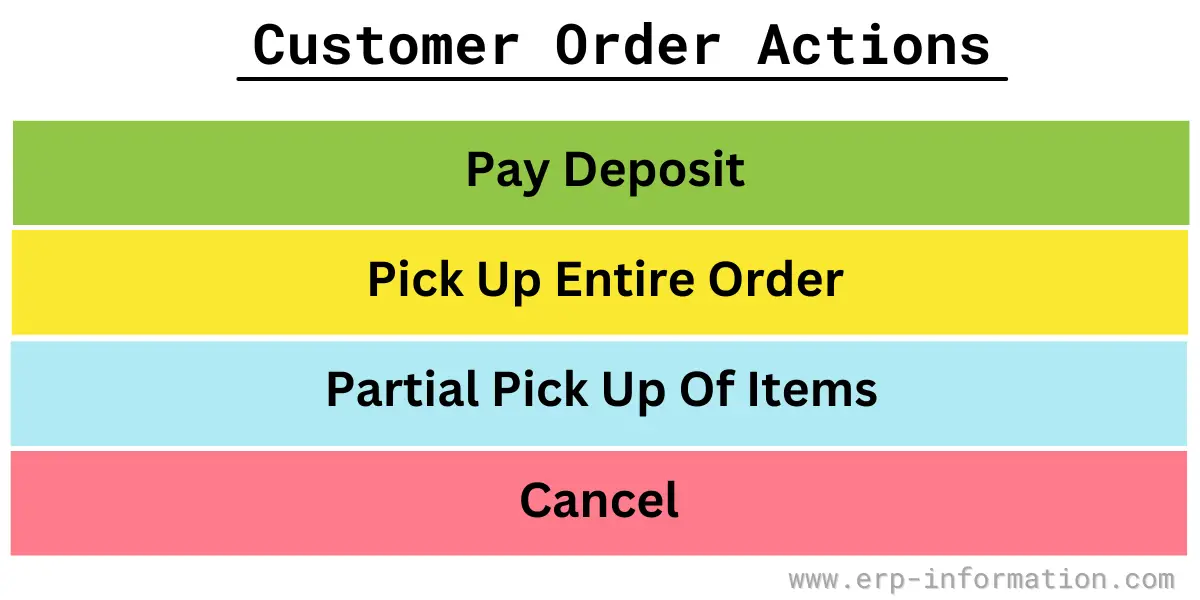
Uses
Some of the uses are as follows.
- It can help businesses drive sales and revenue by allowing customers to purchase goods or services.
- Orders can also be used as a tool for tracking inventory levels and forecasting demand, as well as helping to ensure the timely delivery of goods and services.
- It can also measure customer satisfaction and loyalty, allowing businesses to better understand their customers’ needs and preferences.
- Finally, it can provide valuable insights into market trends and opportunities, which can inform business decisions.
Steps of Customer Order Processing
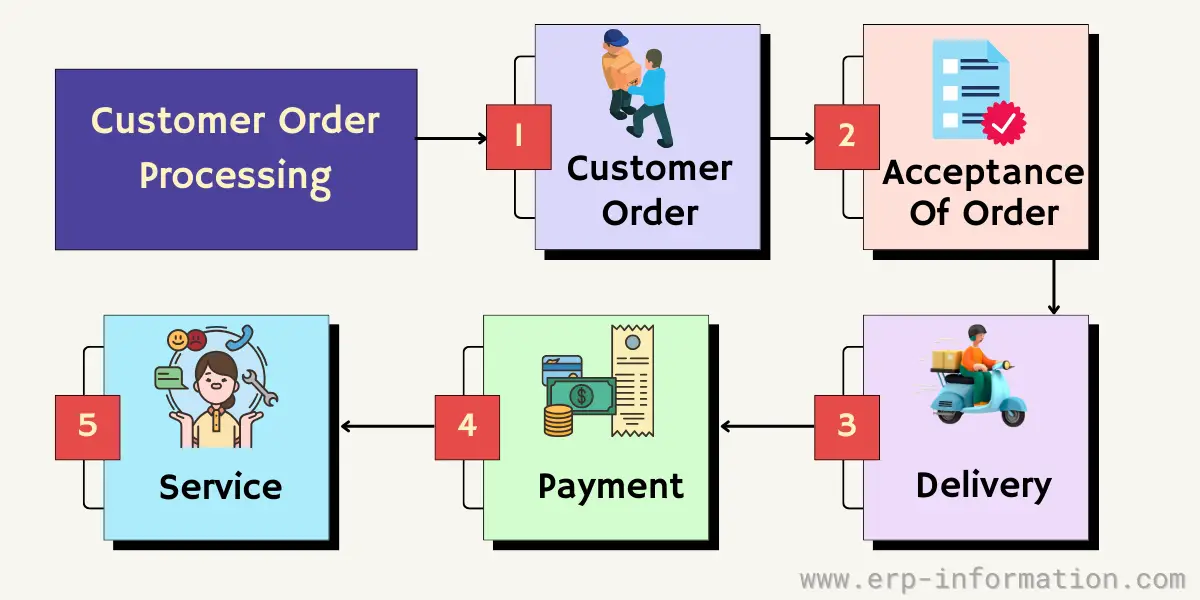
1. Customer order
At this stage, the customer browses through the products enlisted by the company, and upon liking, one places an order. But, of course, the customer might also be custom-made, so the detailed description provided by the customer is to be regarded with precision.
2. Acceptance of order
The customer order must be accepted by the company to enter into a transactional relationship. That would let the customer know a few things, like delivery date and shipment details.
3. Delivery
The company organizes all items per instructions and manages all packaging and transfer-related issues with expertise. Now it is time to deliver the shipment to the proper location. An on-time delivery helps increase customer service and achieves customer trust, which is also very important.
4. Payment
The payment might be immediately followed by the shipment, or it might have been done in advance. In either case, no more negotiations can be done, and the customer must pay the entire amount mentioned in the customer order.
5. Service
Some organizations do not cut off all ties with the customer after selling the product. Instead, they provide servicing and maintenance of the sold products for maybe six months, one year, or till the guarantee period.
What is Customer Order Management?
The customer order management process is the procedure that can be followed to keep track of all the customer orders by filling up customer order forms.
It helps track their delivery time and whether the shipment has reached its destination. That also keeps a tab on the company’s transaction history, which helps predict the company’s successful functioning.
The customer order processing system has become essential, especially for managing, collecting, and processing customer orders.
Targets of management
- Tracking new orders and deliveries each month
- Creating order acknowledgments that can be sent to the customers
- Tracking old orders and keeping track of unfulfilled orders to clear out the backlogs. It is necessary for maintaining a good customer service level.
Hence, a company must maintain customer orders sincerely and prioritize open orders.
Customer Order Form
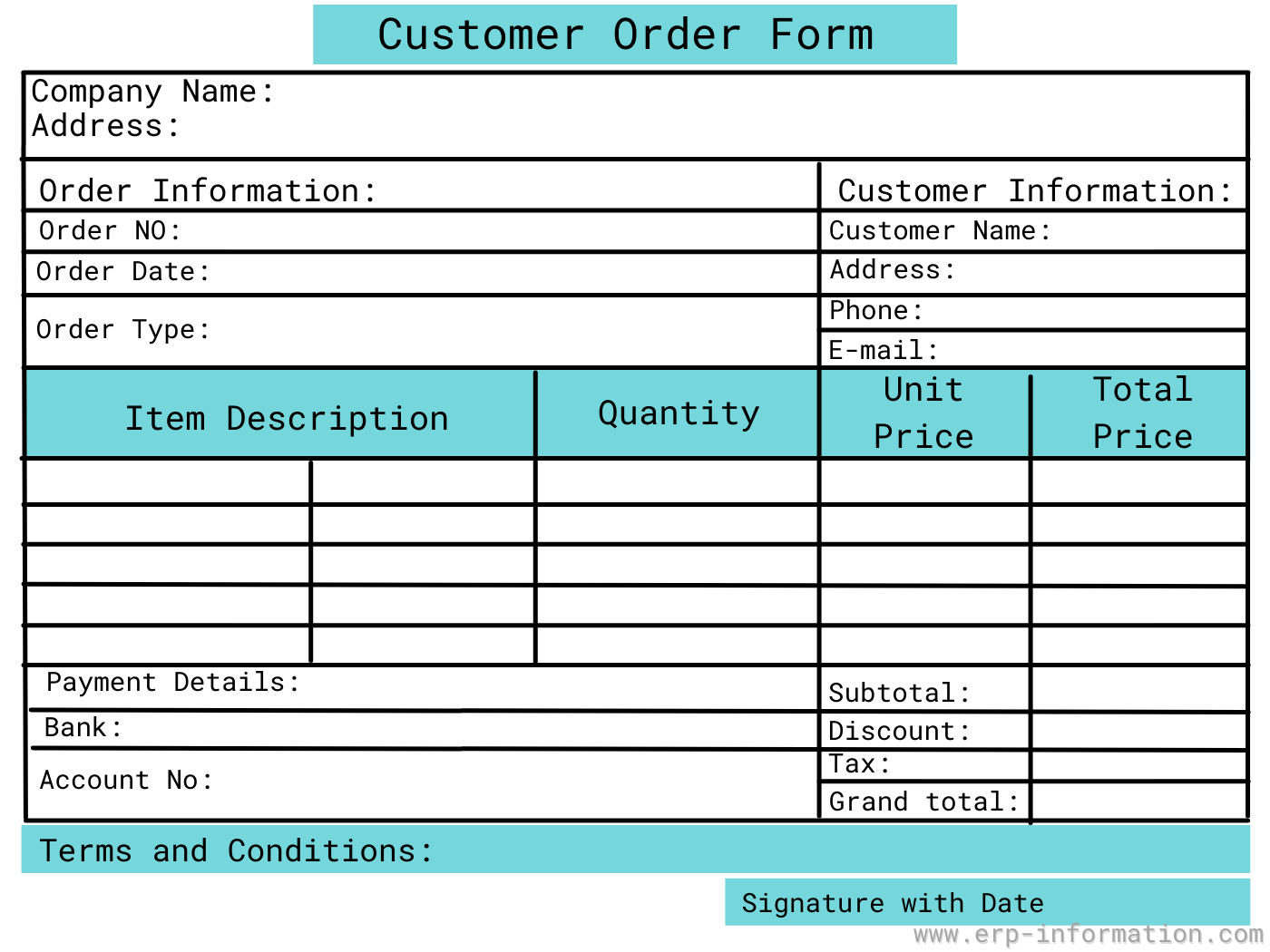
A Customer Order Form is a commercial document that enables the purchaser to communicate with the seller and maker which article or merchandise is desired and for what specific purpose.
The top of the page includes contact information, such as name and phone number, email address, and mailing address. However, the main content is the list of items the customer orders.
A sample customer order template or customer order sheet is shown below.
FAQs
How to take orders from customers?
To take orders from customers, you need good customer service skills and an understanding of the products or services offered. Ask the questions to the customer to get clarity on what he wants.
Once the order has been taken, it should be carefully entered into an order system, and confirmation should be sent to the customer. Do follow-ups with customers to ensure that they are satisfied with their purchase.
What is the customer order process?
When a customer places an order, the order goes through several steps before completion. The first step in the customer ordering process is to receive the order, including filling it with what was ordered.
The order is then picked, packed and despatched, and the customer is given tracking or a confirmed delivery date. The cycle closes on delivery and invoicing, and in many businesses on an after-sales step such as installation, servicing or a returns window.
What is the importance of order processing?
Order processing is crucial for businesses. It involves the receiving, verifying, and managing of customer orders. Proper order processing is necessary to ensure that the right items are sent on time to satisfy customers.
That helps to increase customer satisfaction and loyalty, reducing the risk of complaints and refunds, and efficient order processing results in improved profitability for businesses as it helps save time and money.
What is customer order used for?
It is used to track a customer’s purchases and requests. It is typically created when an order is placed and contains details such as the requested items, the quantity desired, the payment method, delivery information, and other important details.
The customer order is received by the seller, who fulfils it from stock or by triggering production or procurement where the item is not on hand. Once the goods arrive, the customer checks them against the order before the invoice is settled.
What is customer order cycle time?
The customer order cycle time is when a customer initiates an order and when they receive the product or service. This cycle time can be affected by several factors, including the supplier’s lead time, the product’s production time, and the shipping time.
Businesses must optimize their supply chain and process flow to reduce customer order cycle time. Doing so can minimize delays and ensure that orders are fulfilled quickly.
Reducing cycle time is essential for staying competitive. Businesses can gain a significant advantage over their rivals by offering fast and efficient service.
What is the difference between a purchase order and a customer order?
A customer order is created when an order is placed and contains details such as what items were requested, the quantity desired, and the payment method.
A purchase order is made by a company when buying goods or services from a supplier; it includes how much goods are ordered, the price of each item, any relevant discounts or taxes, freight costs, delivery dates, and payment terms.
The customer order will be sent to the supplier for fulfillment, while the purchase order serves as a contract between the buyer and seller.
Conclusion
A customer order is a formal order from the customer that provides details of the amount and due date for a customer’s requirement of products.
For example, it states the amount of money to be paid, the due date on which the funds can be expected, and the quantity of product delivered.
The document specifies all orders made by customers, such as how much they will pay or what day they need to arrive. It also includes information about who should provide this service if not you.
This written piece has many benefits, including communicating with your clients more efficiently and getting them ahead.
Hence, you have time to prepare for their request and increase trust between both parties because there are fewer verbal communication misunderstandings.