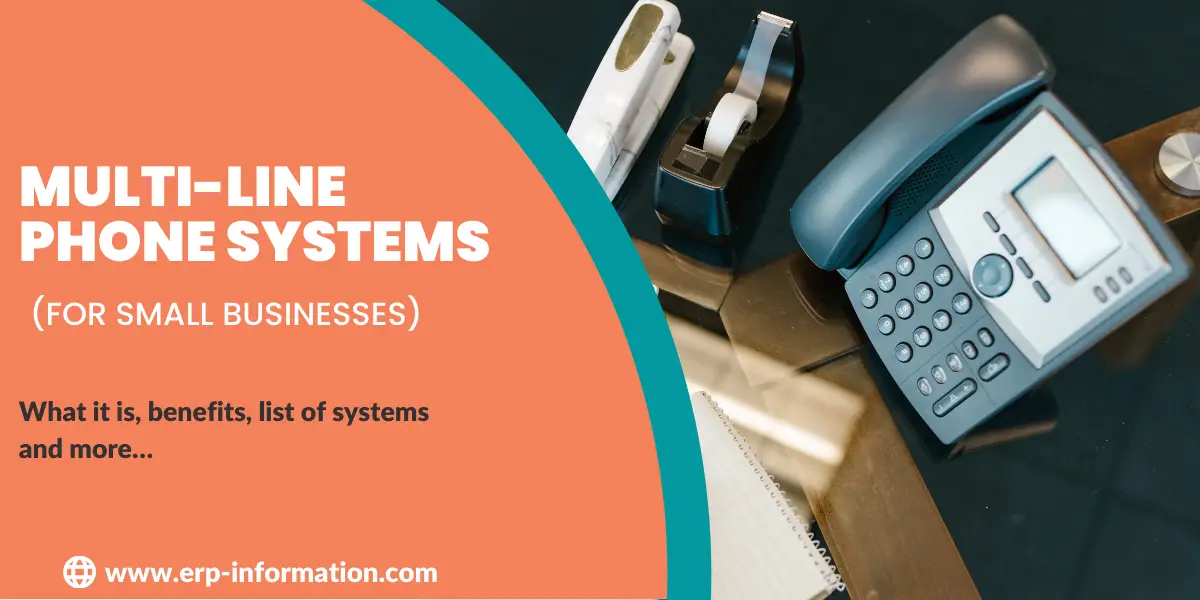
A multi-line phone system lets one desk phone make and take calls on two or more phone lines. For a small business in 2026 the choice is between analog 2-line and 4-line phones, which need one copper line from the phone company per line key, and a cloud phone service with IP desk phones. Copper lines are being retired, so check yours before you buy.
Checked 3 October 2026 against the AT&T Telephone Store, VTech, Panasonic, XBLUE and Nextiva product pages and user manuals, AT&T’s SEC filings, FCC orders and notices, and Verizon’s network-change notices. Prices are the makers’ own list prices in US dollars. Four of the ten phones on our 2024 version of this page are no longer sold by their makers, and two could not be checked at all; they are listed at the end with what to buy instead.
| If you need | Our pick | Lines | Maker’s price | Why |
|---|---|---|---|---|
| 4 lines at the lowest cost | VTech CM18445 | 4 | $164.95 console | Up to 10 stations; all 4 lines work in a power cut with AA batteries |
| 4 lines, mostly cordless | AT&T SynJ SB67138 | 4 | $569.95 base | Up to 11 users, cordless range up to half a mile |
| 4 lines from Panasonic | Panasonic KX-TGW420 | 4 | $193.99 base | Up to 9 extensions |
| 2 lines, corded | AT&T ML17939 | 2 | $104.95 | Works on line 1 even with no power and no batteries |
| 2 lines, cordless | AT&T TL88102 | 2 | $149.95 | Expands to 12 handsets |
| 2 lines, corded base plus cordless | Panasonic KX-TG9582 | 2 | $251.99 | 100 minutes of talk time in a power cut |
| 5 to 8 phone-company lines | XBLUE QB1 or QB2 | 4 or 8 | From $899.99 bundle | An on-premise phone system with IP desk phones |
| No copper lines at all | Nextiva with the X-835 | Per user | $15 a user a month, $120 a phone | Cloud service; needs internet, not phone lines |
What is a multi-line phone system?
A multi-line phone system is a set of desk phones and handsets that share two or more outside phone lines, with a key for each line, hold, transfer between extensions and usually an intercom. Two words cause most of the confusion when buying one:
- A line is a connection to the phone company with its own number. Each analog line carries one call at a time, so a 4-line system can hold four outside calls at once.
- An extension (AT&T and VTech call them stations or users) is a phone in your office that shares those lines. VTech’s CM18445 takes four lines and up to ten stations; AT&T’s SynJ takes four lines and up to 11 users.
Small businesses buy one of three kinds of system:
| Type | How it connects | Lines | Examples on this page |
|---|---|---|---|
| Analog multi-line phones (no control box) | The main phone plugs into the analog phone jacks; extra handsets and desk phones link to it wirelessly | 2 or 4 | VTech CM18445, AT&T SynJ, Panasonic KX-TGW420 |
| On-premise phone system | A control unit takes the phone-company lines and runs IP desk phones on your network | 4 to 8 landlines, plus internet lines | XBLUE QB1 and QB2 |
| Cloud phone service | IP desk phones and apps connect to the provider over the internet | Priced per user, not per line | Nextiva |
No maker in this guide sells a 3-line phone. A business with three lines buys a 4-line system and leaves one line key unused; VTech’s CM18445 works with anywhere from one to four lines.
Will your analog phone lines keep working?
Maybe not for long, and this is the first thing to check before buying an analog 2-line or 4-line phone. Those phones need analog lines (often called POTS, plain old telephone service) delivered over copper, and the big US phone companies are retiring copper.
- AT&T told investors in its December 2024 announcement that it is working to exit its copper network across the large majority of its wireline footprint by the end of 2029. At the same investor day, Susan Johnson, AT&T’s head of wireline transformation, set the end of 2027 for areas with no planned fiber, and said California is not included.
- Business lines are included. An FCC public notice of 11 May 2026 lists AT&T applications to discontinue business POTS lines (its Business Local Exchange Access Line Service) in parts of 39 wire centers across 11 states: Alabama, Arkansas, Florida, Indiana, Kansas, Missouri, Ohio, Oklahoma, South Carolina, Texas and Wisconsin, on or after 14 July 2026.
- Verizon filed a notice on 8 September 2026 to retire the copper at all remaining locations in 211 wire centers in Virginia on or after 10 December 2026, and warned it may move customers off copper well before that date.
- The FCC is making it easier. Its Network and Services Modernization Order (FCC 26-19), adopted on 26 March 2026, grants carriers blanket authority to grandfather legacy copper voice service, meaning they can stop selling it to new customers. Its core rule changes take effect on 15 October 2026.
The numbers show how fast this is moving. AT&T’s annual report counts 2.1 million switched access lines at the end of 2025, down from 2.7 million a year earlier, a 22% fall. AT&T’s April 2026 customer notice puts it bluntly for customers who do not move:
This means it will stop working and the service will be disconnected.
AT&T, Keeping Customers Connected with Reliable, High-Speed Connectivity, 28 April 2026
The FCC’s consumer guide tells anyone still on a copper line to contact the provider and confirm what type of service they have, whether upgrades are planned and whether new equipment will be needed. Ask that before you spend $500 or more on analog phones, and ask how long the phone company will keep selling you analog lines at your address.
Can you use an analog multi-line phone on VoIP?
Yes, through an analog telephone adapter (ATA), which turns a VoIP line into an analog phone jack. Each FXS port on the adapter gives one line, so a 2-line phone needs a 2-port adapter and a 4-line phone needs two of them. Examples: Grandstream’s HT802 has two FXS ports and supports two SIP accounts, and Cisco’s ATA 192 has two FXS ports, which Cisco says can be set up as two separate SIP registrations. Nextiva sells the ATA 192 for $160.
Two cautions. Nextiva’s setup guide says the adapter is intended for an analog telephone, not a fax machine, paging system or door system. And AT&T’s own manual for its 1080 4-line phone warns that VoIP or cable phone service, through the router the system uses, can interfere with system communication. The phone makers do not document multi-line features such as line-status lights over an ATA, so try one line before converting all four.
How many lines do you need?
Count the calls you need to handle at the same moment, not your staff. A shop where one person answers the phone and another places orders needs two lines. An office where four people can be on outside calls at once needs four. Beyond four lines, analog desk phones stop: the next step is an on-premise system such as XBLUE’s QB2 (8 landlines), or a cloud service, which charges per user and does not limit lines the same way.
Power-outage behaviour differs more between models than any feature on the spec sheet. From each maker’s manual:
| Model | Lines | In a power cut |
|---|---|---|
| VTech CM18445 | 4 | All 4 lines work if four AA batteries are installed in the console |
| AT&T SynJ (SB671x8 manual) | 4 | With four AA batteries in the base, all lines work |
| Panasonic KX-TGW420 | 4 | Five AAA alkaline batteries (not supplied) give about 1 hour of continuous use |
| AT&T ML17939 | 2 | With three AA batteries, everything but the display light works; with none, line 1 still works from the handset |
| Panasonic KX-TG9582 | 2 | Supplied batteries give 100 minutes of continuous talk |
| AT&T TL88102 | 2 | Handsets cannot make calls if the base loses power |
The best multi-line phone systems you can buy in 2026
Every phone below was on sale in its maker’s own store on 3 October 2026, at the price shown. We grouped them by line count.
1. VTech CM18445: best value 4-line system
The CM18445 is a corded 4-line console with an answering system and an auto attendant on each line. Only the console plugs into the phone lines; extra desk phones (CM18245, $109.95) and handsets (CM18045, $94.95) link to it wirelessly on DECT 6.0, up to ten stations in all. It has kept the same $164.95 price on VTech’s store since our 2024 check.
| Spec | VTech CM18445 |
|---|---|
| Lines | 1 to 4 |
| Stations | Up to 10 (console plus 9 desk phones or handsets) |
| Power cut | All 4 lines with four AA batteries installed |
| Price | $164.95 console |

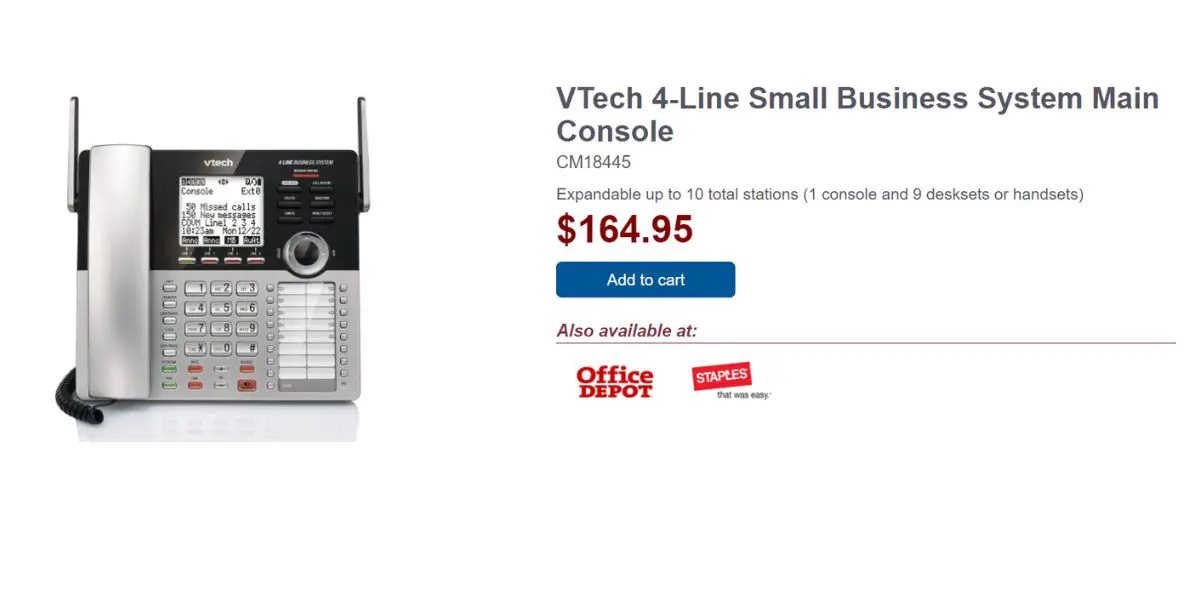
Best for an office of up to ten people on four analog lines that wants the lowest total cost. A console plus four desk phones costs $604.75 at VTech’s list prices.
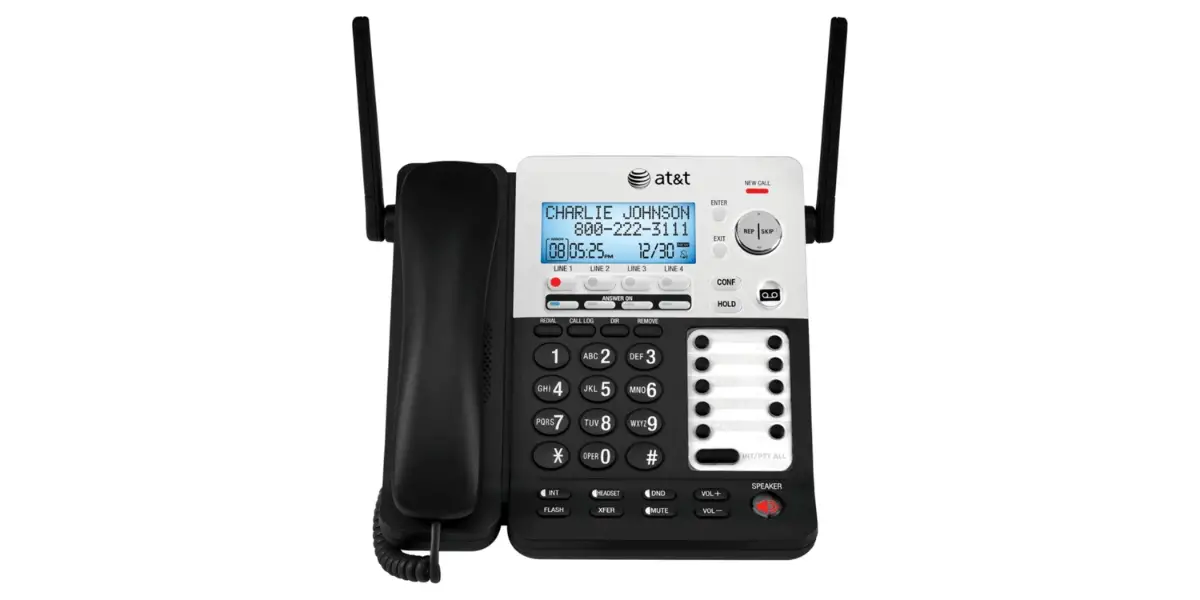
2. AT&T SynJ SB67138: best cordless 4-line system
The SB67138 is the current base of AT&T’s SynJ system, which supports four analog lines and up to 11 users. The base is corded and comes with a cordless handset; extra cordless desk phones (SB67148, $159.95) and handsets (SB67108, $149.95) have a range of up to half a mile. It replaces the SB67158 that our earlier list recommended, which AT&T no longer sells.
| Spec | AT&T SynJ SB67138 |
|---|---|
| Lines | 4 analog lines |
| Users | Up to 11 |
| Power cut | All lines work with four AA batteries in the base (SynJ manual) |
| Price | $569.95 base; $1,019.80 with three extra handsets |
Best for warehouses, shops and offices where people move around. It costs more than VTech for the same four lines.
3. Panasonic KX-TGW420: 4 lines from Panasonic
Panasonic’s KX-TGW420 base station connects up to four telephone lines and up to nine extensions in total, using the KX-TGWA41 cordless handset ($87.99) and the KX-TGWA40 corded desk extension, which Panasonic’s shop listed as unavailable on 3 October 2026.
| Spec | Panasonic KX-TGW420 |
|---|---|
| Lines | 4 |
| Extensions | Up to 9 |
| Power cut | About 1 hour of continuous use on five AAA alkaline batteries (not supplied) |
| Price | $193.99 base |
Best for businesses that already use Panasonic phones. Check that the extension model you want is in stock before you commit.
4. AT&T ML17939: best corded 2-line phone
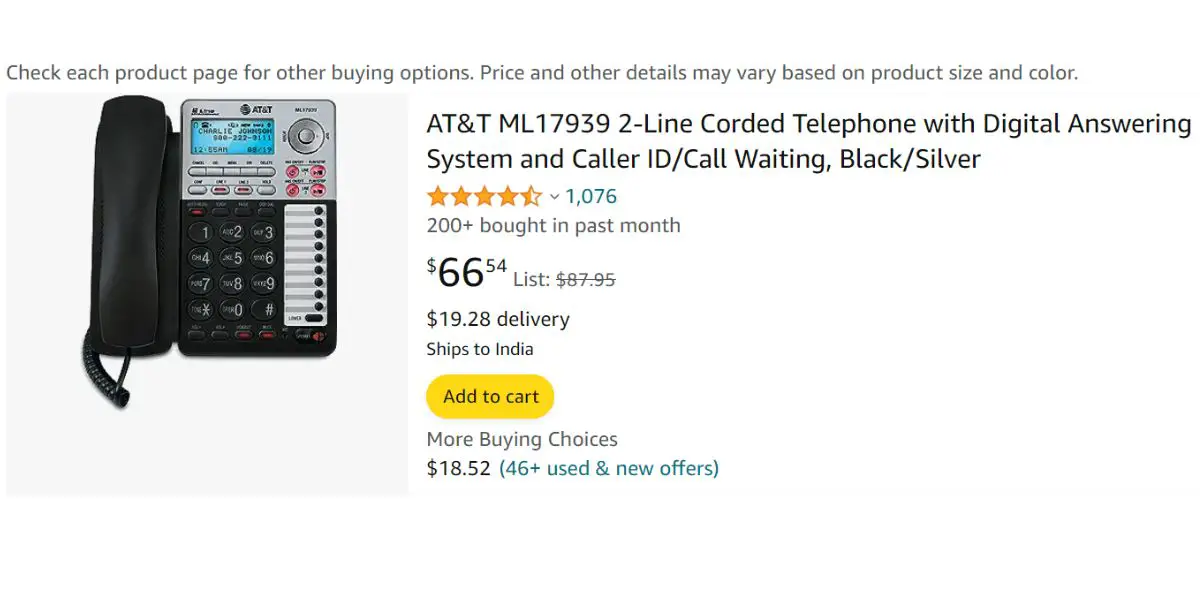
The ML17939 is a corded 2-line speakerphone with caller ID, call waiting and a digital answering system. It does not expand, which keeps it simple. Its standout feature is line power: even with no electricity and no batteries, line 1 still works from the handset.
| Spec | AT&T ML17939 |
|---|---|
| Lines | 2 |
| Expansion | None |
| Power cut | All functions except the display light with three AA batteries; line 1 from the handset with none |
| Price | $104.95 at AT&T |
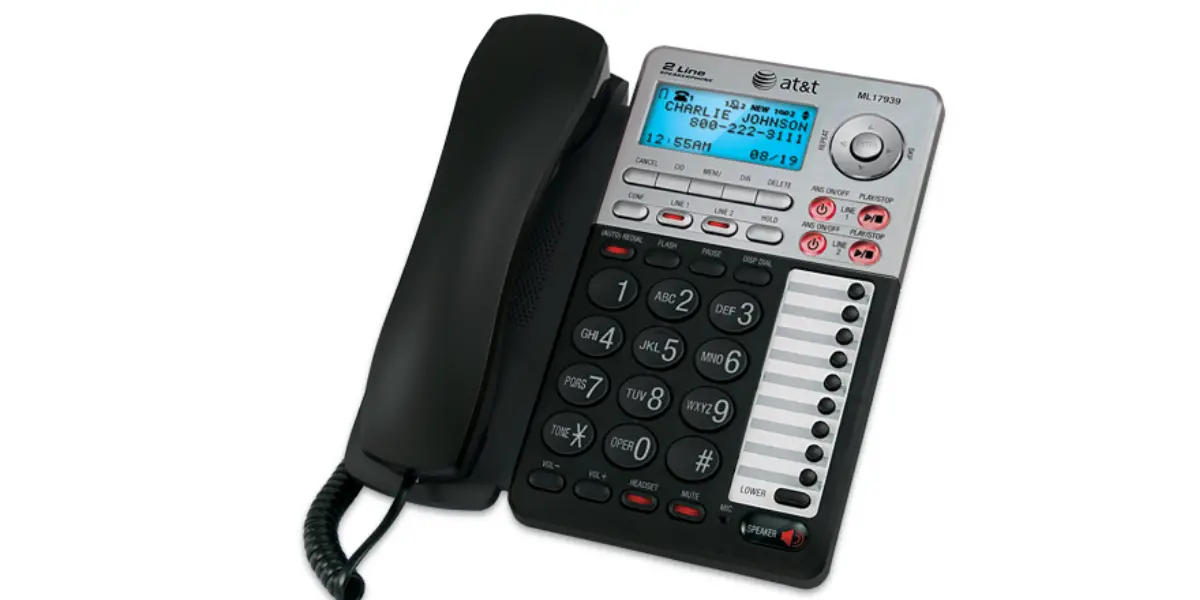
Best for a reception desk or a one-person office with two lines.
5. AT&T TL88102: best cordless 2-line phone
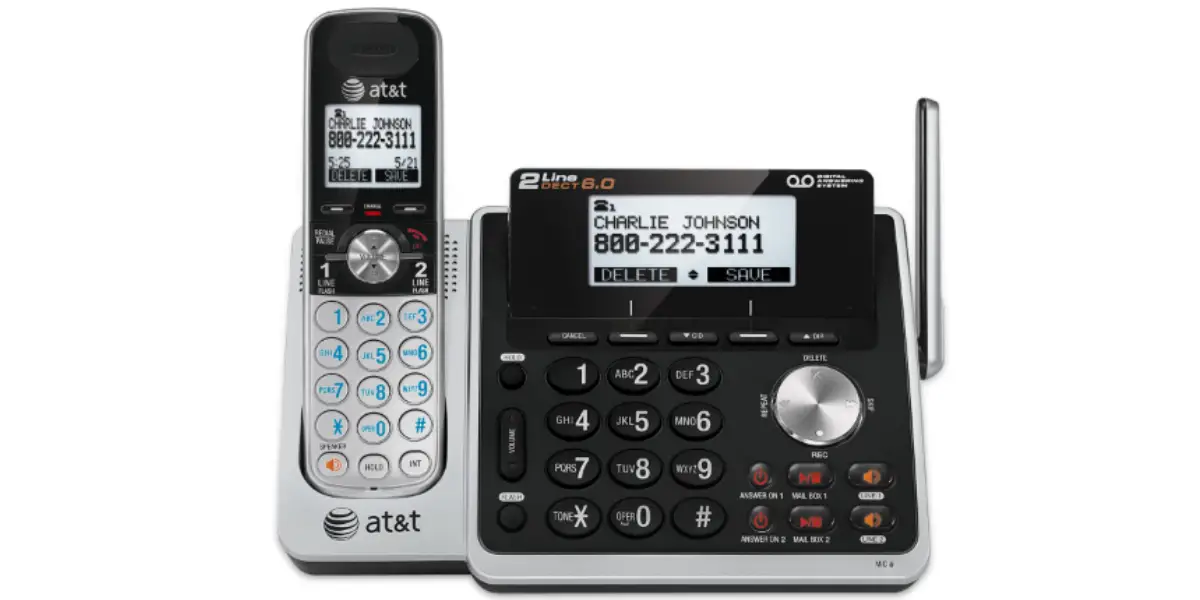
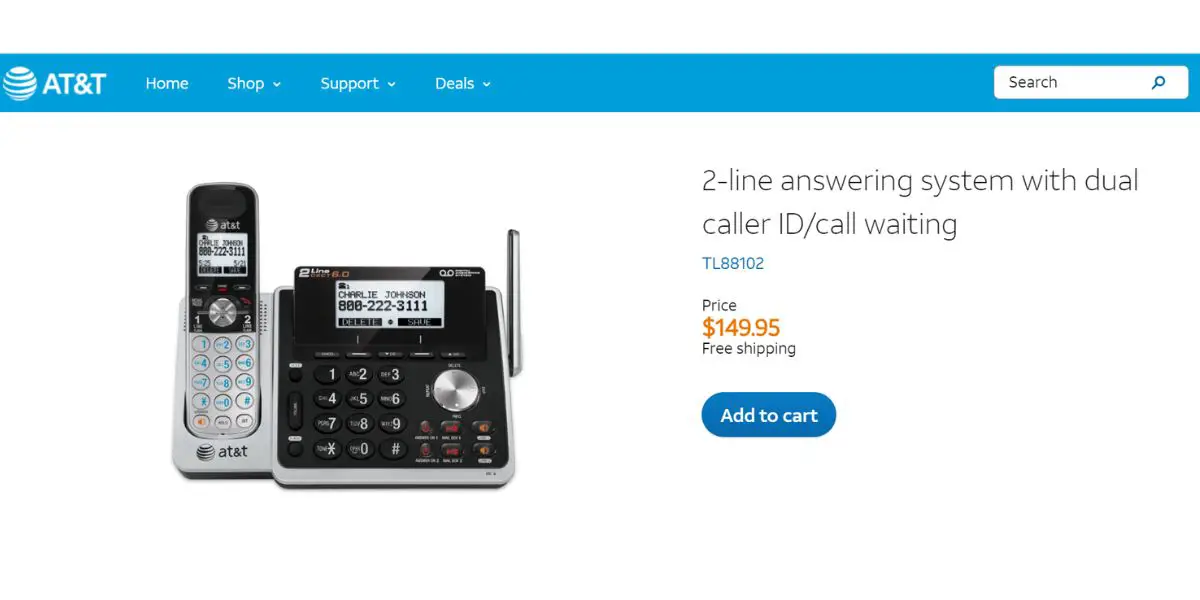
The TL88102 is a 2-line DECT 6.0 cordless phone with an answering system and a speakerphone on the base. It expands to 12 handsets with the TL88002 accessory handset. Its weak point is power: AT&T’s manual says calls cannot be made from the handset if the base loses power.
| Spec | AT&T TL88102 |
|---|---|
| Lines | 2 |
| Handsets | Up to 12 |
| Power cut | Handsets cannot make calls |
| Price | $149.95 at AT&T |
Best for a small office that wants cordless handsets on two lines and keeps a corded phone for outages.
6. Panasonic KX-TG9582: 2 lines, corded and cordless
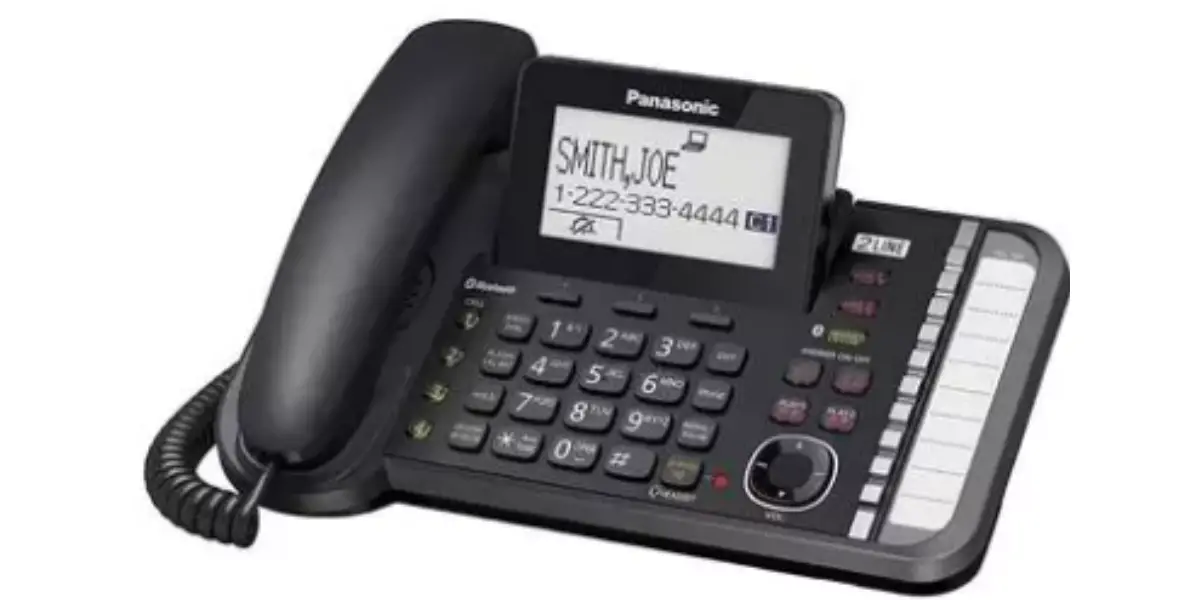
Our earlier list called this the KX TG958; the real models are the KX-TG9582 (two cordless handsets) and the KX-TG9581 (one). Panasonic still lists both as current. The base has a corded handset, the system expands to 12 handsets, and its supplied batteries keep it running for 100 minutes of talk in a power cut.
| Spec | Panasonic KX-TG9582 |
|---|---|
| Lines | 2 |
| Handsets | Up to 12 |
| Power cut | 100 minutes of continuous talk on the supplied batteries |
| Price | $251.99 (KX-TG9581: $193.99, listed unavailable) |
Best for a two-line office that wants both a corded base and cordless handsets in one box.
7. XBLUE QB1 and QB2: for more than four lines
XBLUE’s QB systems are on-premise phone systems with XBLUE IP desk phones. The QB1 takes 4 phone-company landlines, 10 XBLUE internet phone lines and 20 IP phones; the QB2 takes 8 landlines, 25 XBLUE lines and 50 phones, and XBLUE says expandability is the only difference. A QB1 with three IP8g phones costs $899.99 and a QB2 with four IP8g phones $1,199.99. The QB replaces the X16 system on our earlier list: XBLUE now labels the X16 Plus page Discontinued.
Best for a business that needs five to eight lines and wants to keep its own phone system rather than pay per user.
8. Nextiva with the X-835: no copper lines at all
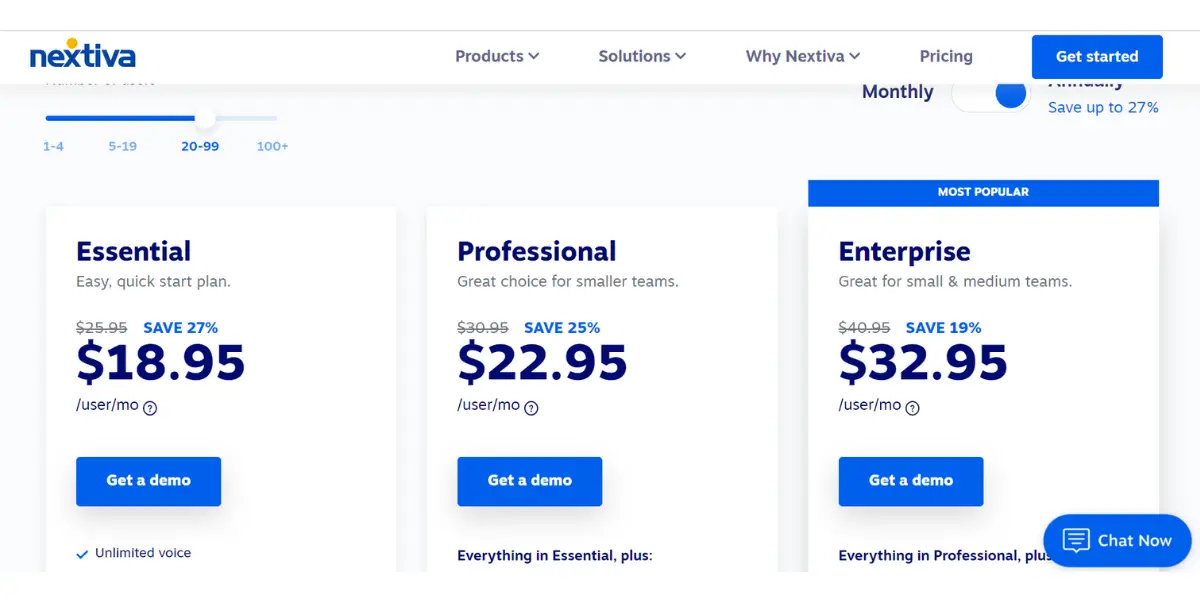
If your copper lines are going, a cloud phone service replaces both the lines and the box. Nextiva’s small-business prices on 3 October 2026, per user per month:
| Plan | Paid annually | Paid monthly |
|---|---|---|
| Core | $15 | $23 |
| Engage | $25 | $50 |
| Scale | $75 | $75 |
The annual prices need a 12-month term and apply to new small-business customers with 1 to 100 employees. Nextiva’s twelve-line X-835 desk phone costs $120 (or $3 a month). The X-885 on our earlier list is no longer in Nextiva’s desk-phone catalog.
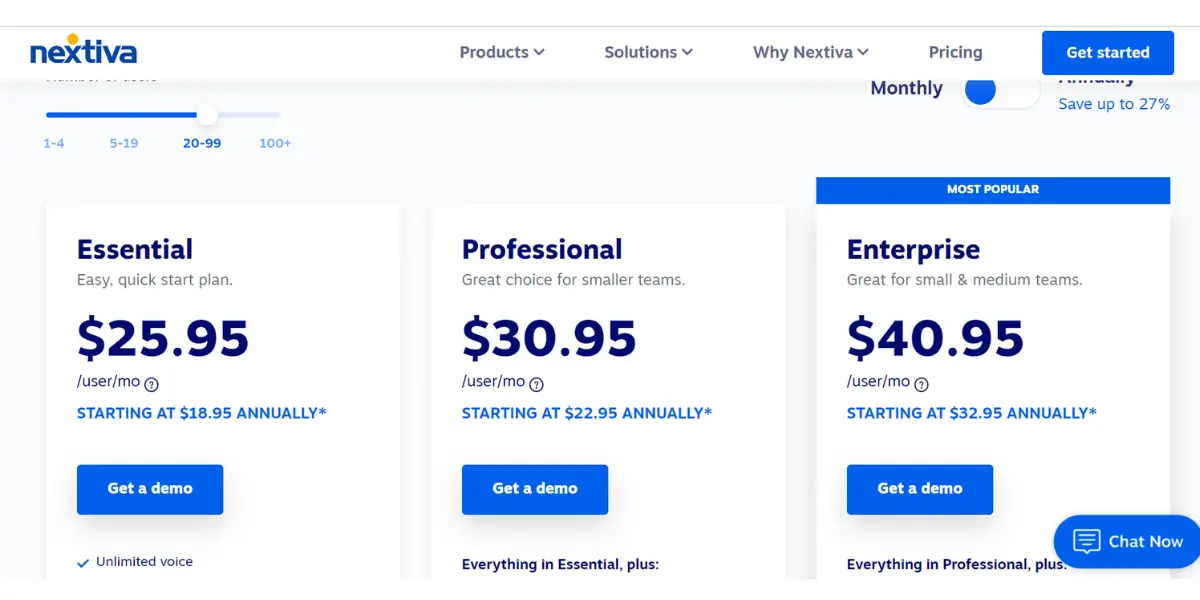
Best for a business with reliable internet that would rather pay a monthly fee than buy and maintain hardware. Five users on Core cost $75 a month on an annual term ($115 month to month), plus $600 for five X-835 phones.
What does a multi-line phone system cost?
Three ways to give five people four lines, at list prices on 3 October 2026:
| Setup | One-time hardware | Every month |
|---|---|---|
| VTech CM18445 console plus four CM18245 desk phones, on four analog lines | $604.75 | Four analog lines at your phone company’s rate |
| The same VTech phones on VoIP through two Cisco ATA 192 adapters | $924.75 | VoIP service for four lines |
| Nextiva Core for five users with five X-835 phones | $600 | $75 on an annual term, or $115 month to month |
Line prices vary by carrier and address and no carrier publishes one national rate, so we have left them out. That is also the question to put to your phone company, along with how long it will keep selling analog lines where you are.
Phones from our earlier list that are no longer sold
Our 2024 version of this page recommended ten phones. On 3 October 2026 four had gone from their makers’ stores, and two could not be checked because RCA’s business-phone websites no longer exist. If you already own one, it still works on the lines it was built for; these are the replacements:
| Model on our earlier list | Status on 3 October 2026 | Buy instead |
|---|---|---|
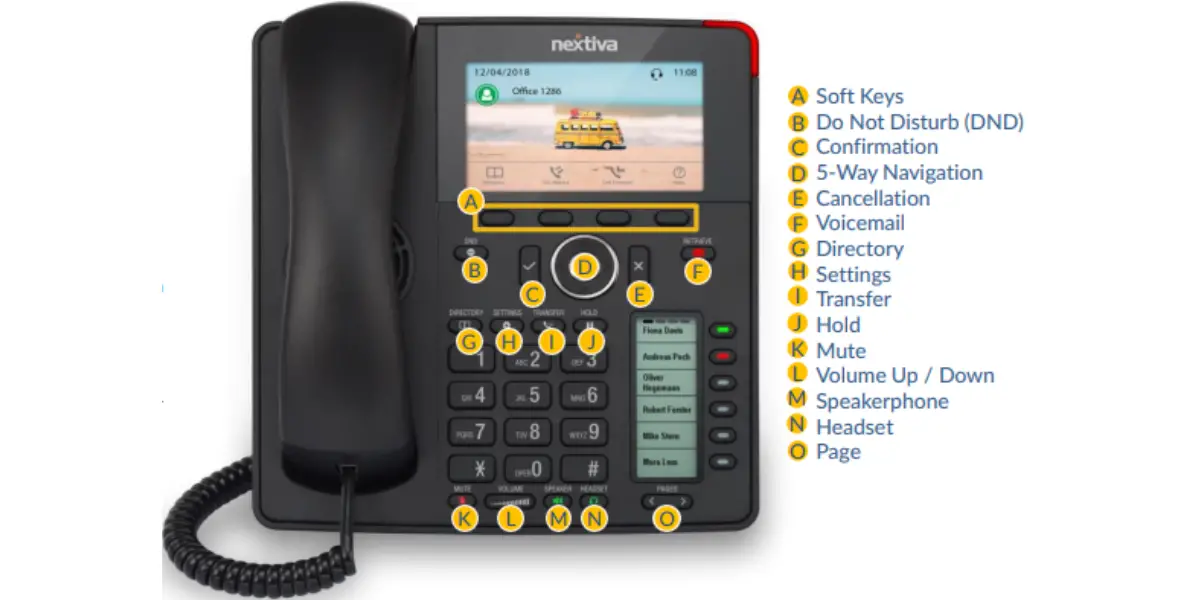
| Nextiva X-885 | Not in Nextiva’s desk-phone catalog (it is a SIP phone for Nextiva service, not an analog phone) | Nextiva X-835 |
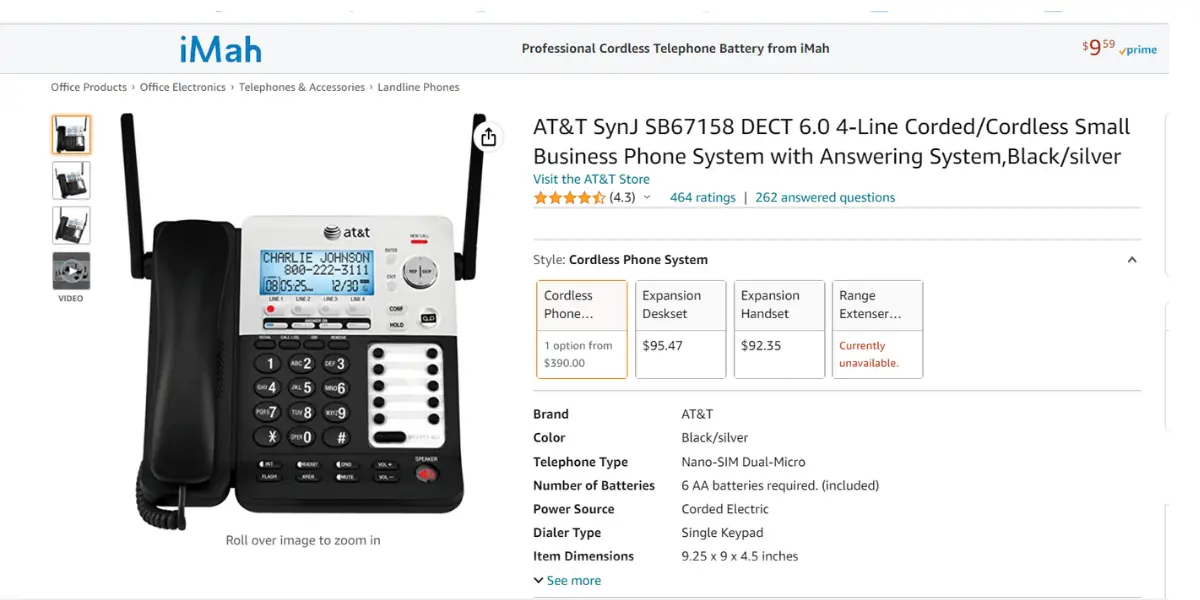
| AT&T SynJ SB67158 | Not in AT&T’s store | AT&T SynJ SB67138 |
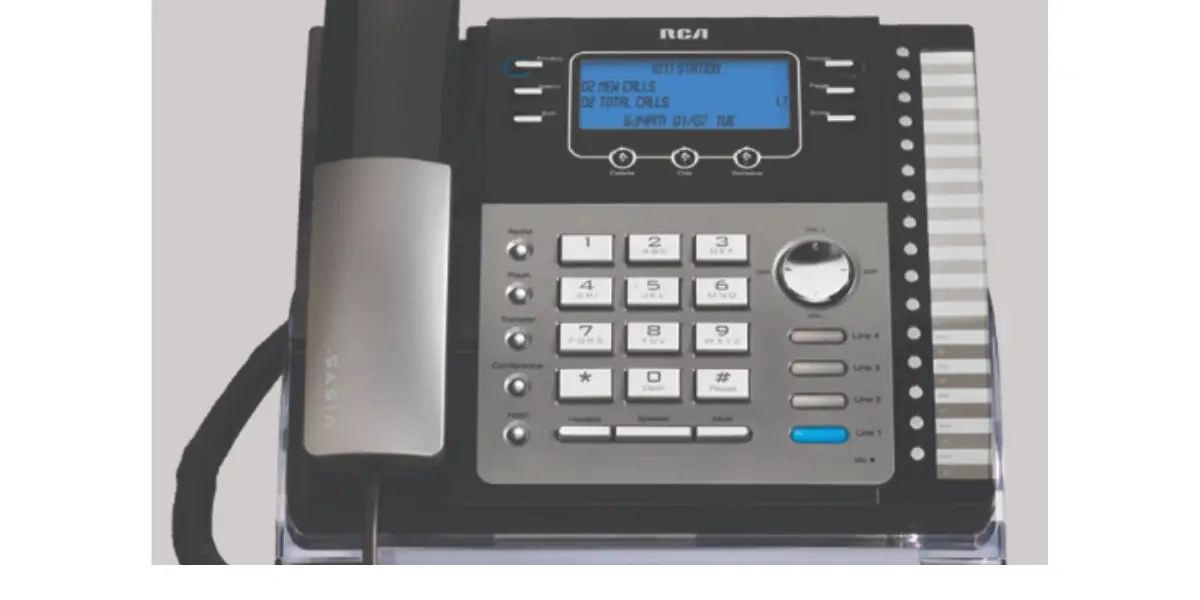
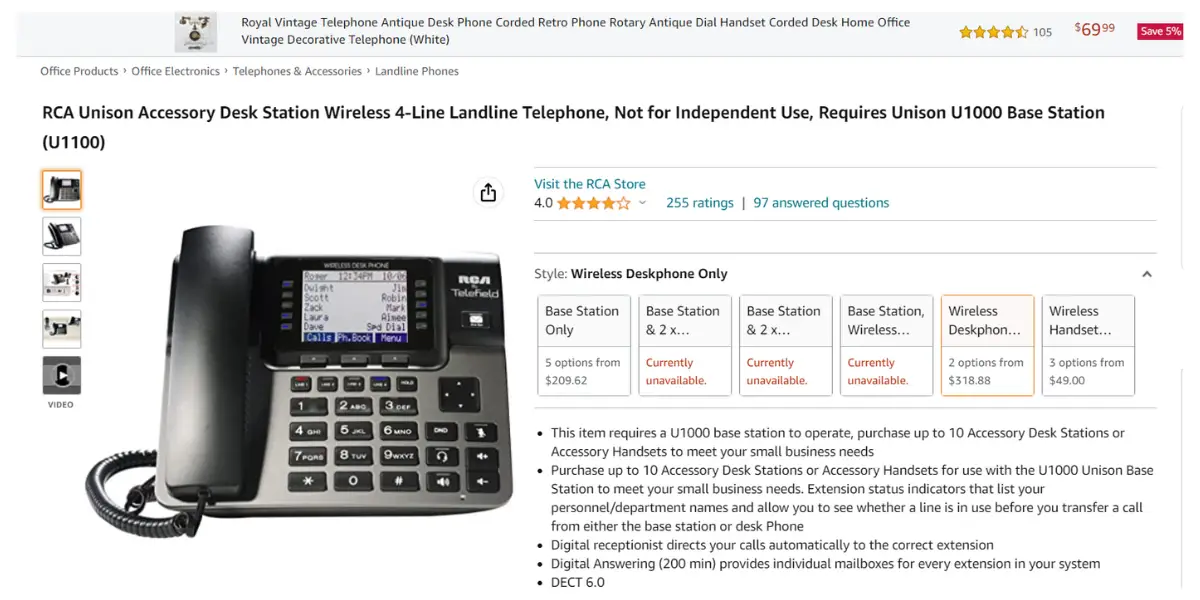
| RCA 25425RE1 | Cannot be checked: the RCA business-phone sites are gone | VTech CM18445 |
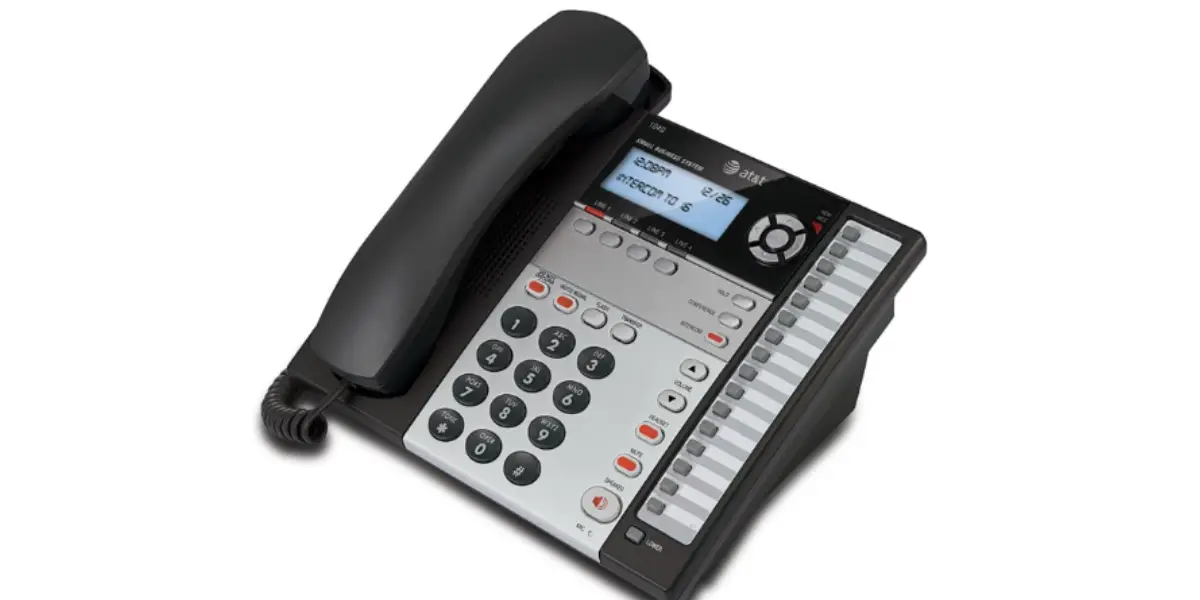
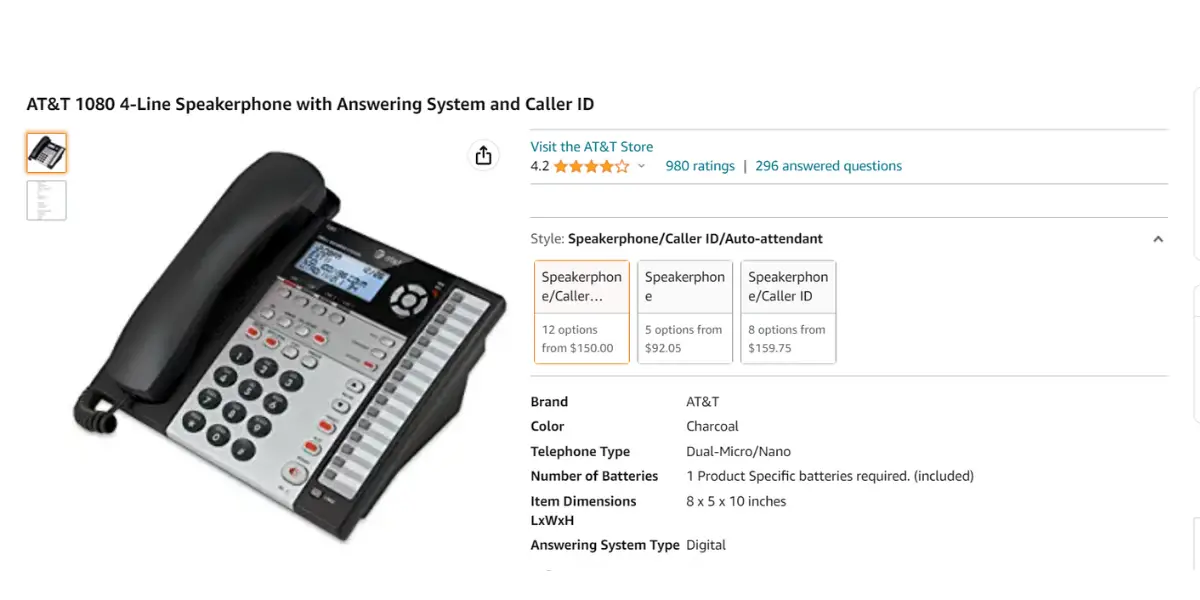
| AT&T 1080 | Not in AT&T’s store; its 4-line category shows no results | VTech CM18445 |
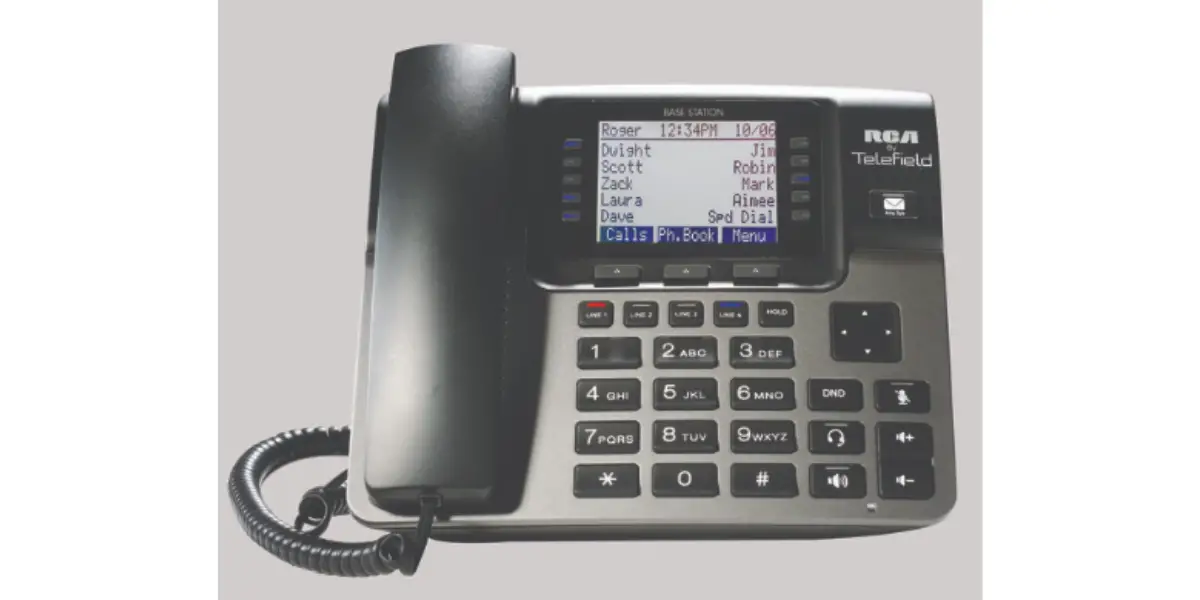
| RCA U1000 Unison | Cannot be checked | AT&T SynJ SB67138 |
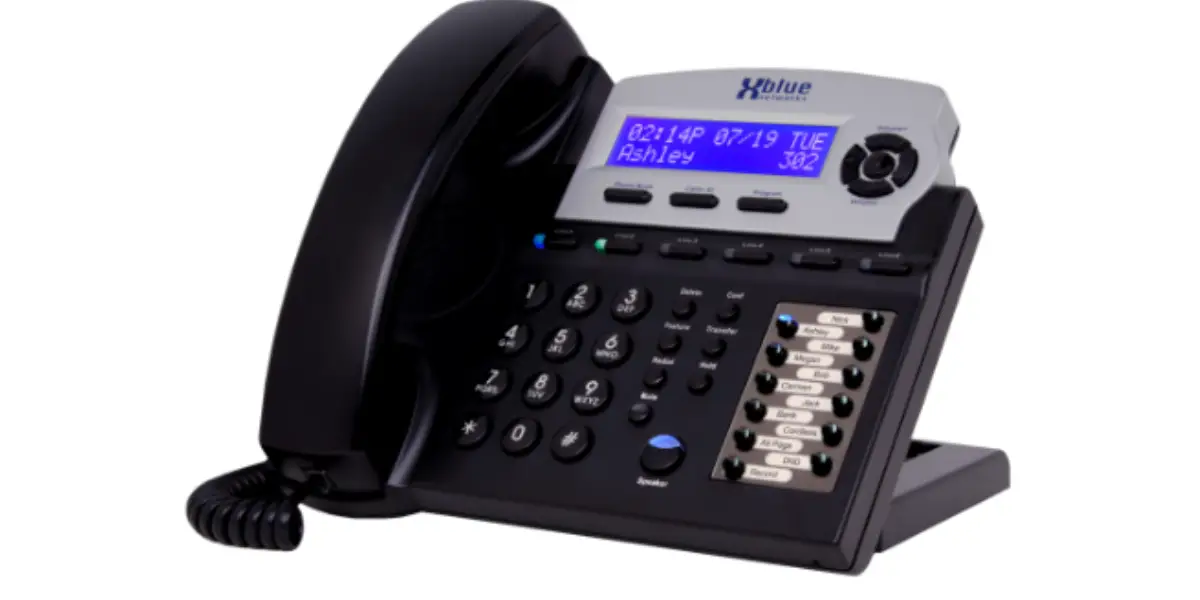
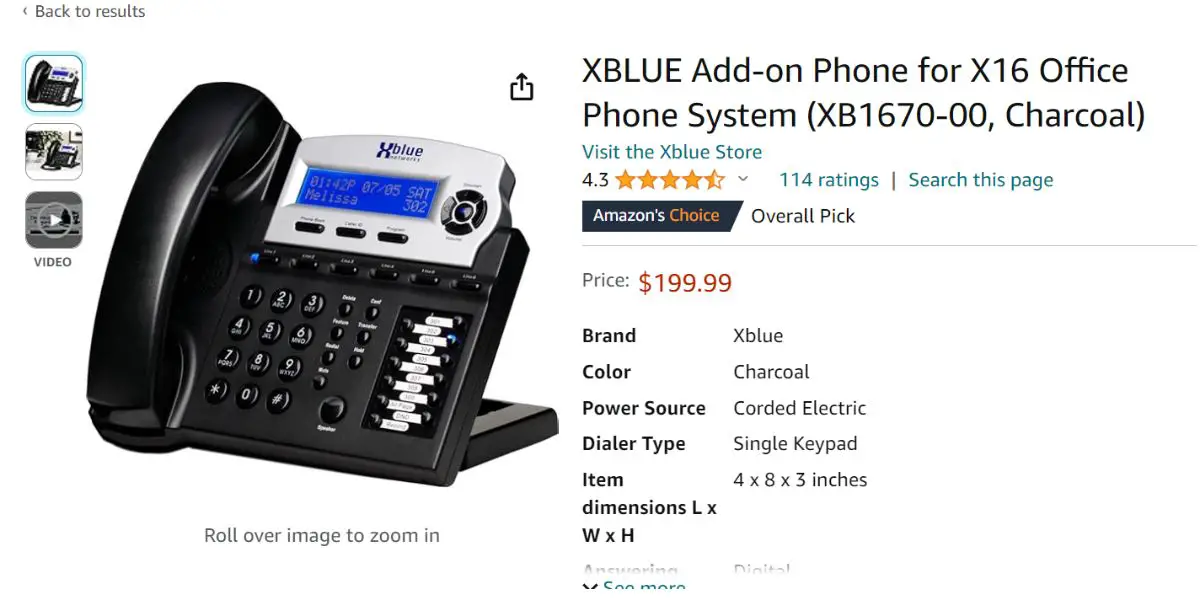
| XBLUE X16 | Not publicly sold; the X16 Plus is marked Discontinued | XBLUE QB1 |
Two corrections to our earlier version. The AT&T 1080 is a corded phone, not a DECT 6.0 cordless one; AT&T’s manual expands it to 16 extensions using 1040, 1070 and 1080 phones. And the $199.99 we gave for the XBLUE X16 was the price of a single add-on phone, not a four-phone bundle.
FAQs
What should you look for in a multi-line phone system?
Start with the number of phone lines, not the number of people: a 4-line analog phone needs four analog lines from the phone company, while a cloud service is priced per user. Then check how many extensions the system supports, whether all lines keep working in a power cut, whether the maker still sells the model, and whether your phone company plans to retire your copper lines.
Is there a 3-line phone system for small business?
Not from AT&T, VTech or Panasonic, whose stores list only 2-line and 4-line business phones on 3 October 2026. Buy a 4-line system and connect three lines; the fourth line key simply stays idle. VTech’s CM18445, for example, works with anywhere from one to four lines.
Do multi-line phones work with VoIP?
Not directly. The AT&T, VTech and Panasonic multi-line phones plug into analog phone jacks. To use one on a VoIP service you need an analog telephone adapter with one FXS port per line, such as the 2-port Cisco ATA 192, which Nextiva sells for $160. AT&T’s own 1080 manual warns that VoIP or cable phone service can interfere with its system, so test before you commit.
Will a multi-line phone work in a power outage?
It depends on the model and on batteries you add. VTech’s CM18445 console keeps all four lines working with four AA batteries installed, and AT&T’s ML17939 still works on line 1 with no batteries at all. AT&T’s TL88102 cordless handsets cannot make calls when the base loses power. If your lines move to VoIP or fiber, the FCC warns the phone may not work in an outage without backup power.
Is AT&T discontinuing business landlines?
Across most of its footprint, yes. AT&T told investors in December 2024 that it expects to stop providing copper-based services across the vast majority of its footprint by the end of 2029, and by the end of 2027 in areas without planned fiber; California is not included. In May 2026 the FCC published AT&T applications to discontinue business POTS lines in parts of 39 wire centers in 11 states, on or after 14 July 2026.
What is the difference between a phone line and an extension?
A line is a connection to the phone company with its own number, and it carries one call at a time. An extension is a desk phone or handset in your office that shares those lines. VTech’s CM18445 handles four lines and up to ten stations, so ten people share at most four outside calls at once.
How we checked this page
On 3 October 2026 we read the AT&T Telephone Store (run by AT&T’s phone licensee), VTech’s and Panasonic’s online stores and Panasonic’s product-status pages, XBLUE’s product and bundle pages, and Nextiva’s pricing, desk-phone and adapter pages, using a full browser where prices load by script. We searched each maker’s store for every model on our 2024 list and confirmed the search works by finding models that are on sale. We read the user manuals for the SynJ, 1080, ML17939, TL88102, CM18445, KX-TGW420 and KX-TG958x for line counts and power-cut behaviour; AT&T’s December 2024 announcement, investor-day transcript and 2025 annual report; FCC public notice DA 26-459, order FCC 26-19 and its Federal Register notices, and the FCC’s consumer guide; and Verizon’s Virginia copper notice. Prices are list prices before tax and shipping. We did not test the phones, and we did not obtain line prices from any carrier.
Conclusion
For four analog lines, VTech’s CM18445 is the best value, and AT&T’s SynJ is the better choice if most of your people need to move around. For two lines, AT&T’s ML17939 is the safest desk phone because it works without power. But before buying any analog phone, ask your phone company how long it will keep your copper lines: AT&T plans to leave copper across most of its footprint by 2029 and has applied to discontinue business lines in 39 wire centers. If the answer is not long, a cloud service such as Nextiva, or analog phones behind ATAs, will last longer. To compare buying phones outright with paying a monthly service over several years, use our total cost of ownership calculator.
References
- VTech CM18445 main console and VTech business phones
- AT&T SynJ SB67138, SynJ accessories, TL88102, ML17939 and 4-line phones
- AT&T SynJ user manual, AT&T 1080 user manual and AT&T ML17939 user manual
- Panasonic KX-TGW420, KX-TG958x series, KX-TG9582 product status and KX-TG958x manual
- XBLUE QB system bundles and XBLUE X16 Plus
- Nextiva pricing, Nextiva desk phones, Nextiva VoIP adapters, Nextiva ATA setup and Nextiva X-885 specification sheet
- Grandstream HT802 and Cisco ATA 192 data sheet
- AT&T press release, 3 December 2024, AT&T Investor Day transcript, AT&T 2025 Form 10-K and AT&T customer notice, 28 April 2026
- FCC public notice DA 26-459, FCC 26-19, FCC press release, 26 March 2026, Federal Register, 1 October 2026 and FCC consumer guide to tech transitions
- Verizon Virginia copper retirement notice, 8 September 2026
Using Google Search? Add erp-information.com as a preferred source.