Router software is not one product category. The phrase covers four unrelated things: the firmware running on the router itself, a software router that turns an ordinary server into a routing appliance, a vendor cloud controller that manages one brand of hardware, and a router management platform that monitors routers from many vendors at once. Buying from the wrong class is the most common mistake on this topic.
This page separates the four classes, names the products in each with the versions and prices their vendors publish today, and says plainly where a vendor discloses no price at all. Every figure below was checked against the vendor’s own page on 3 September 2026. Start with the table in the next section if you are not yet sure which class you need.
One correction first, because it is repeated everywhere: router firmware is not permanent and it is not read only. It sits in rewritable flash memory. That is precisely why vendors ship firmware updates, and why independent firmware can replace the manufacturer image on many consumer routers.
How does the software work in the router?
- Firmware is the operating system of the router. It runs the routing, NAT, firewall, and Wi-Fi functions, and it presents the web interface you log into.
- It is stored in rewritable flash memory, not burned in permanently. Vendors ship updates to that flash, and third-party images can overwrite it on supported hardware.
- Replacing the stock image with independent firmware is supported on many models and unsupported on many others. Support is tied to the exact hardware revision, not the model name on the box.
- Out-of-date firmware is the usual way into a home network. Whether the router is cheap or expensive matters far less than whether its firmware is current and still receiving updates.
Note: Every week, there are new threats that try to attack home Wi-Fi networks. If your router is not up to date, it is like a door open for hackers, and you might not even know it. There are other ways to protect your network, but if you ensure your router has the latest firmware version installed, you will be safer from serious threats.
Which kind of router software do you actually need?
Work out which row you are in before you compare any products. The four classes solve different problems, and almost none of the tools in one row competes with the tools in another.
| What you are trying to do | The class you need | Examples | Where it runs |
|---|---|---|---|
| Replace or update the software running on the router itself | Router firmware or router OS | OpenWrt, DD-WRT, FreshTomato, Asuswrt-Merlin, MikroTik RouterOS | On the router |
| Turn a server or virtual machine into a router | Software router | VyOS, pfSense, OPNsense, Cisco Catalyst 8000V | On your own x86 hardware or a VM |
| Centrally configure the gear you already bought from one vendor | Vendor cloud controller | Cisco Meraki, Ubiquiti UniFi, TP-Link Omada, Cisco Catalyst Center | Vendor cloud, or self-hosted |
| Watch routers from several vendors and get alerted when one breaks | Router management platform | SolarWinds NPM, PRTG, ManageEngine OpManager, Datadog, LogicMonitor | Alongside your network |
Three further meanings turn up in search results and are worth naming so you can rule them out. Windows hotspot utilities share a laptop connection and do no routing in any meaningful sense. Vendor admin apps such as the NETGEAR Nighthawk app just open your own router’s settings page. Routing daemons such as FRRouting and BIRD speak BGP and OSPF but are components you run inside a Linux box, not complete router operating systems. VyOS, for example, uses FRRouting as its control plane.
Router firmware and router operating systems
Router firmware is the operating system on the router itself. Independent firmware can replace the manufacturer image on supported hardware, which is how an ageing consumer router gains features and a longer security life. Support depends on the exact hardware revision, not the model name printed on the box, so check your revision before you download anything.
| Firmware | Current release | Licence | Price | Worth knowing |
|---|---|---|---|---|
| OpenWrt | 25.12.5, released 1 July 2026 | GPL-2.0-only | Free | 1,932 device build profiles in this release, up from 1,538 in the 23.05 series |
| DD-WRT | Rolling build 08-31-2026-r66073 | Open source, per the vendor; source published via public SVN | Free for private use. A Professional Activation is $22 and a Superchannel Activation is $11 | Its last release in the stable tree dates from 2008, so the dated rolling builds are what people actually run. The vendor claims more than 200 supported devices |
| FreshTomato | 2026.3, June 2026 | GPL | Free | Broadcom chipsets only, with 119 device and revision rows in the compatibility table. AX builds are no longer developed |
| Asuswrt-Merlin | 3006.102.8_4 and 3004.388.12_2, both 20 August 2026 | GPL-2.0 plus proprietary vendor components | Free | ASUS hardware only, 19 models currently supported. The proprietary parts are licensed for original ASUS devices only |
| MikroTik RouterOS | 7.24.1, 21 August 2026 (long-term 7.21.5) | Proprietary | Level 4 $45, Level 5 $95, Level 6 $250. Level 1 is free | Licences never expire and include unlimited upgrades. It also installs on generic x86, which is why it straddles this class and the next |
| Cisco IOS XE | 17.18.x | Proprietary | Not disclosed. Quoted per device through Cisco or a partner | Smart Licensing Using Policy has been the model since IOS XE Amsterdam 17.3.2a |
Software routers: turning a server into a router
A software router is a routing operating system you install on ordinary server hardware or a virtual machine. Two licensing claims about this class are repeated constantly and both are now wrong, in opposite directions.
pfSense Plus is no longer free for home and lab use. Netgate withdrew the free Home+Lab download on 26 October 2023. Existing installations keep running, but updates require a support subscription. pfSense CE remains free and still receives updates and security patches.
VyOS is not paid-only. Two of its three release channels, the rolling release and VyOS Stream, are free public downloads. Only the LTS images are gated, and even those are free for contributors, non-profits, educational institutions and emergency services.
| Product | Current release | Cost | Worth knowing |
|---|---|---|---|
| VyOS | 1.5.0 “Circinus” LTS, 31 March 2026 | Rolling and Stream builds are free. LTS access is by subscription or a free contributor, non-profit, education or emergency-service grant. VyOS does not currently publish its subscription prices in a form we could reach | An optional VPP dataplane the project says can run up to 15 times faster than the Linux kernel path. FRRouting supplies the control plane |
| pfSense CE | 2.9.0, 20 August 2026 | Free and open source | Currently newer than pfSense Plus by a week, and built on the same FreeBSD base commit |
| pfSense Plus | 26.07, 13 August 2026 | $129 a year with TAC Lite, $399 with TAC Pro, $799 with TAC Enterprise. Appliances start at $225 and cloud instances at $0.08 an hour | Adds OpenVPN Data Channel Offload, Intel QuickAssist, ZFS boot environments and layer 2 filtering |
| OPNsense | 26.7.3, 27 August 2026 | Community edition free under a 2-clause BSD licence. Business edition is EUR 149 a year for one installation | BGP and OSPF arrive through the FRR plugin rather than the base system. The business edition deliberately lags the community one |
| Cisco Catalyst 8000V | IOS XE 26.1.x, first release 3 June 2026 | Not disclosed. Licensed by feature package, throughput tier and a 3, 5 or 7 year term | One image runs either in SD-WAN controller mode or autonomous routing mode. Cisco publishes tier bandwidth figures in more than one form and they do not agree, so confirm the tier you need in the current ordering guide |
Vendor cloud controllers
A vendor cloud controller manages the hardware you bought from that same vendor. The question that separates them is not the feature list, it is what happens when you stop paying.
| Controller | Cost | What happens when the licence lapses | Manages routers? |
|---|---|---|---|
| Cisco Meraki | Not disclosed. The public cost calculator has been retired | Depends on the licensing model. Under the older Co-Termination and Per-Device models the device shuts down and stops forwarding traffic after a 30 day grace period. Under the newer Subscription model it keeps forwarding traffic but you lose configuration, monitoring, firmware updates and support | Yes. The MX family is Cisco’s security and SD-WAN gateway line, capped at 2 MX per network |
| Ubiquiti UniFi | The software is free with no per-device licences. Official hosting is optional from $29 a month, and a CloudKey+ is a $199 one-off | There is no licence to lapse | Yes. The gateway line does BGP and OSPF dynamic routing |
| TP-Link Omada | The self-hosted Software Controller and Cloud Essentials are free. The Cloud-Based Controller is licensed per device and TP-Link does not publish the price | The device continues to operate with its last applied settings, and you lose management and monitoring | Yes. The OC400 hardware controller is specified for up to 100 Omada routers |
| Cisco Catalyst Center | Not disclosed. Formerly called Cisco DNA Center, renamed in June 2023 | Entitlement sits on the managed devices, in Essentials and Advantage tiers over 3, 5 or 7 year terms | Yes, and most explicitly of the four. Cisco’s own scale table has a row labelled switch, router, wireless controller |
Ubiquiti is unusually direct about the pricing model the other three use. Asked in its own documentation whether a Cloud Gateway needs fees or licences, the company answers: “Absolutely not. We disagree with the current IT industry trend of charging steep licensing fees for cloud platforms or recurring device licenses to unlock or use advanced security features.”
Best Software for Router
The ten platforms below are router management platforms, the fourth class in the table above. They watch routers and other devices across vendors and alert you when something breaks. They do not run on the router and they will not replace its firmware.
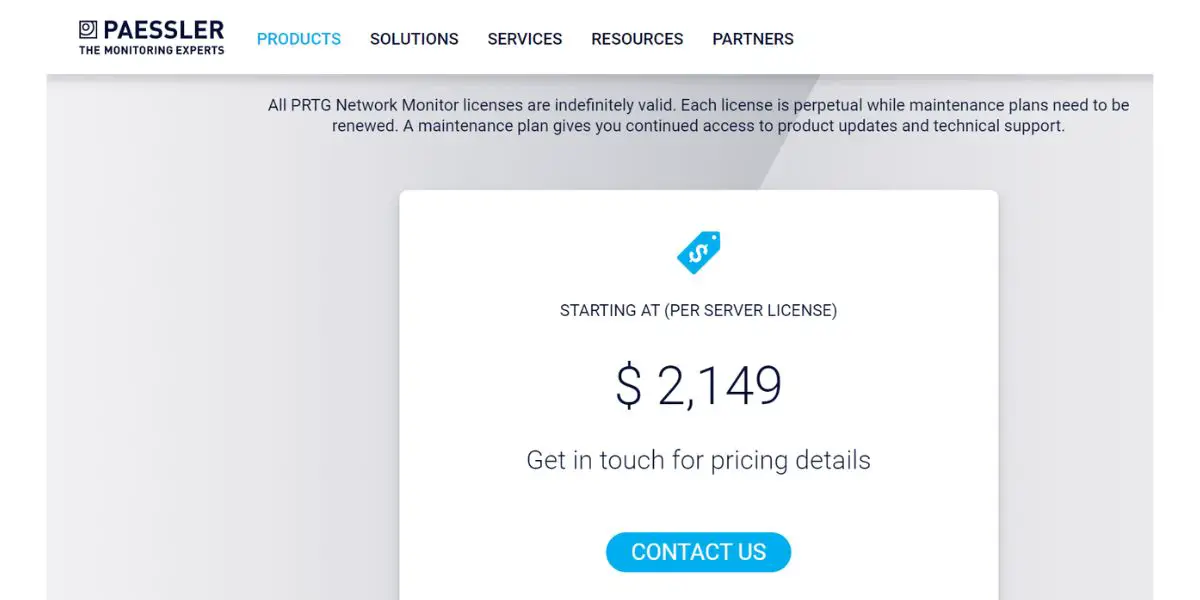
How we checked this list, and what to distrust. Every price, product name and owner below was re-checked against the vendor’s own pricing page, documentation or press release on 3 September 2026. Where a vendor publishes no price we say so rather than estimate one. Two things on this page are older than that check and should be treated as point-in-time: the screenshots, which were captured in 2023 and 2024 and show the pricing pages as they looked then, and the Capterra and G2 scores, which we could not re-verify and which you should confirm at the source. Note also that those two are no longer independent of each other: G2 agreed in January 2026 to acquire Capterra, Software Advice and GetApp from Gartner, and said it would fold their reviews into its own platform.
One ownership point worth knowing before you shortlist. Two of the ten are now controlled by the same investor. Turn/River Capital took SolarWinds private in April 2025 and made a strategic investment in Paessler, the maker of PRTG, in May 2024. Paessler’s chief product officer is a former SolarWinds executive. A shortlist of SolarWinds and PRTG is therefore less of an independent comparison than it looks.
1. Solarwinds Network Performance Monitor( NPM)
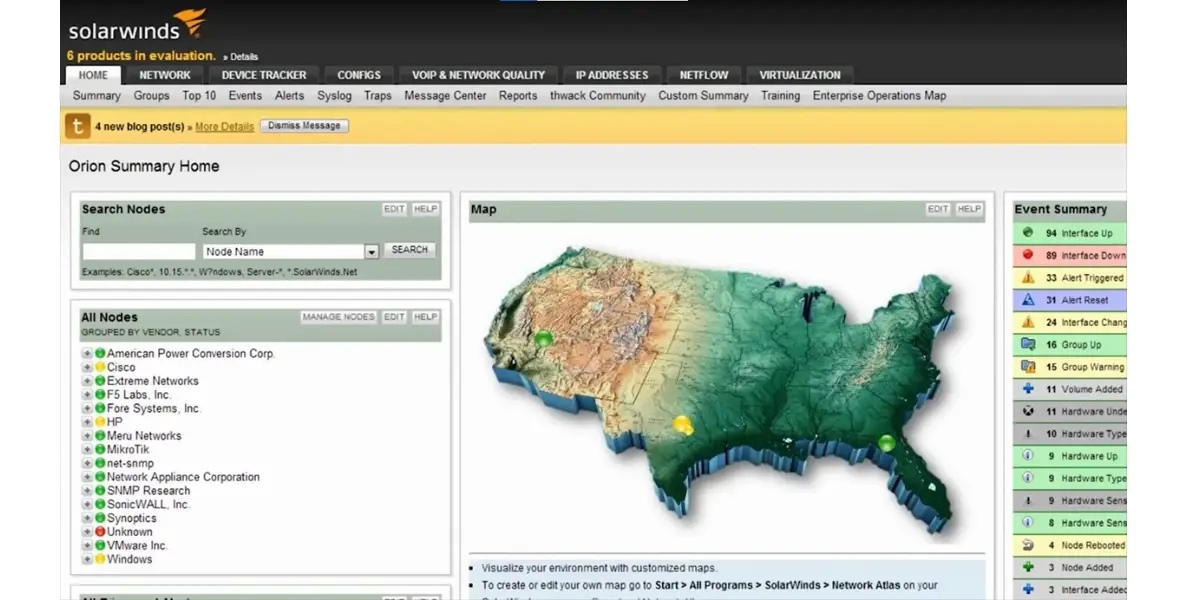
Solarwinds is a network management software that helps you see, understand, and fix problems with your network. You can use these tools to configure or monitor traffic, map the topology of your network, and keep it running smoothly. The tools are easy to use, extendable for larger networks, and can be used with different types of networks.
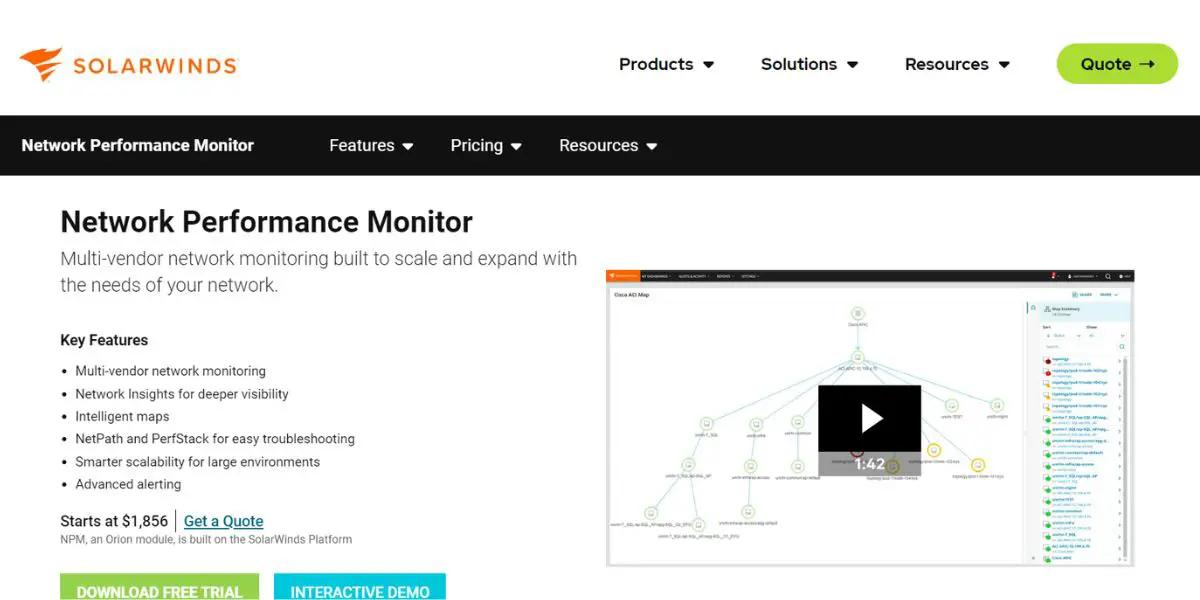
Features
- Application and information monitoring
- Web performance management
- Log performance
- Log monitoring and Analysis
- Network mapping
- Wireless infrastructure monitoring
- Provides alerts
- Customizable reports
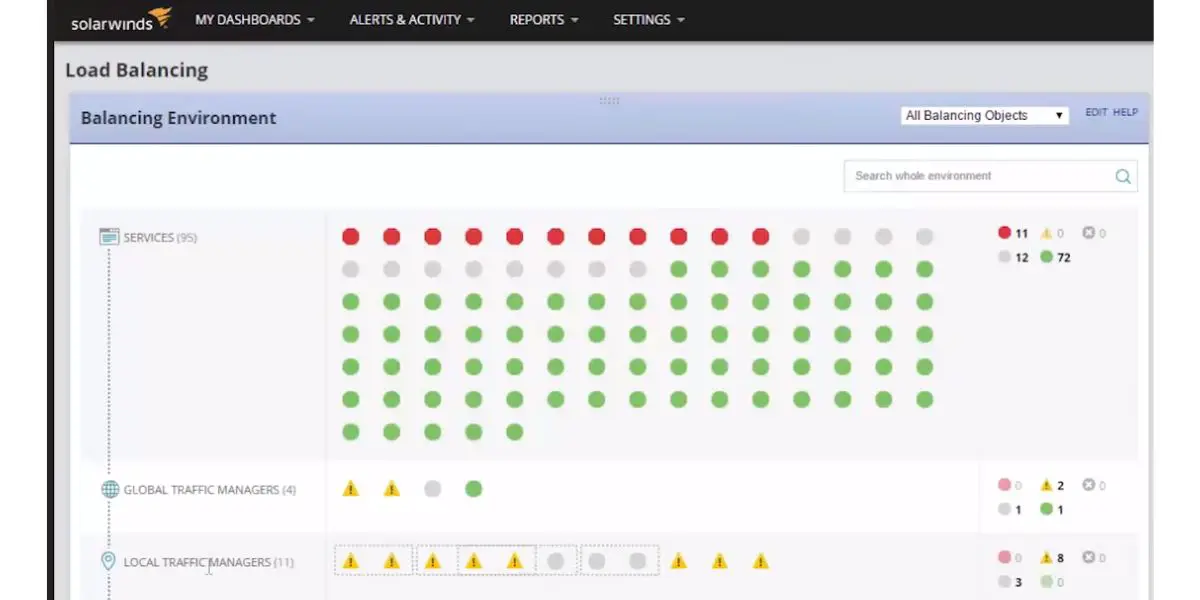
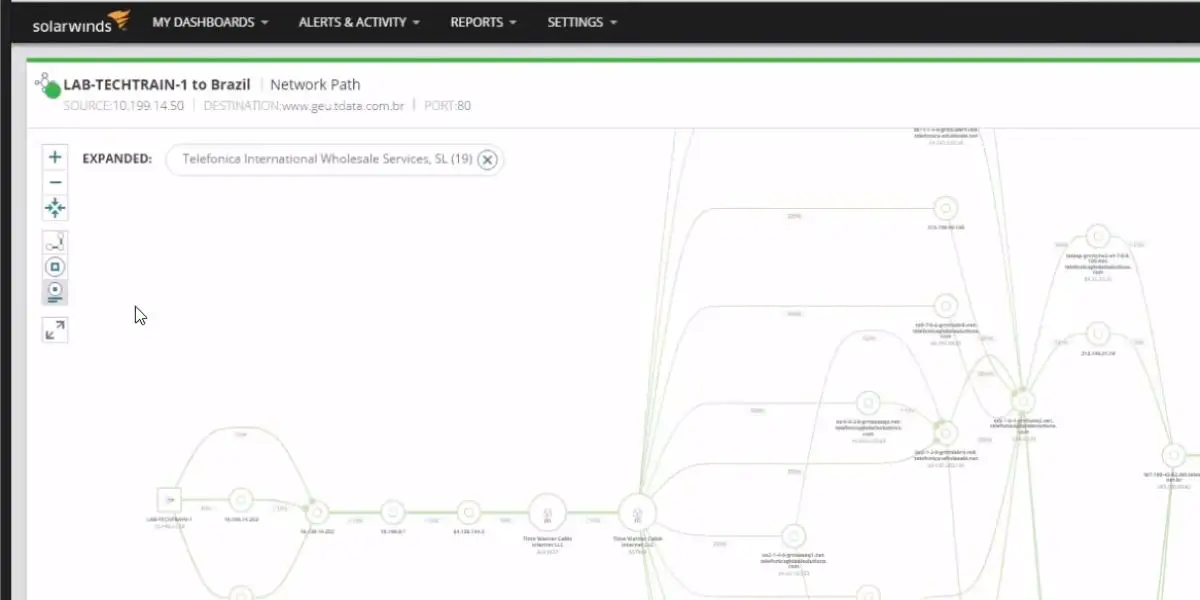
Some screenshots of Solarwinds
Pricing
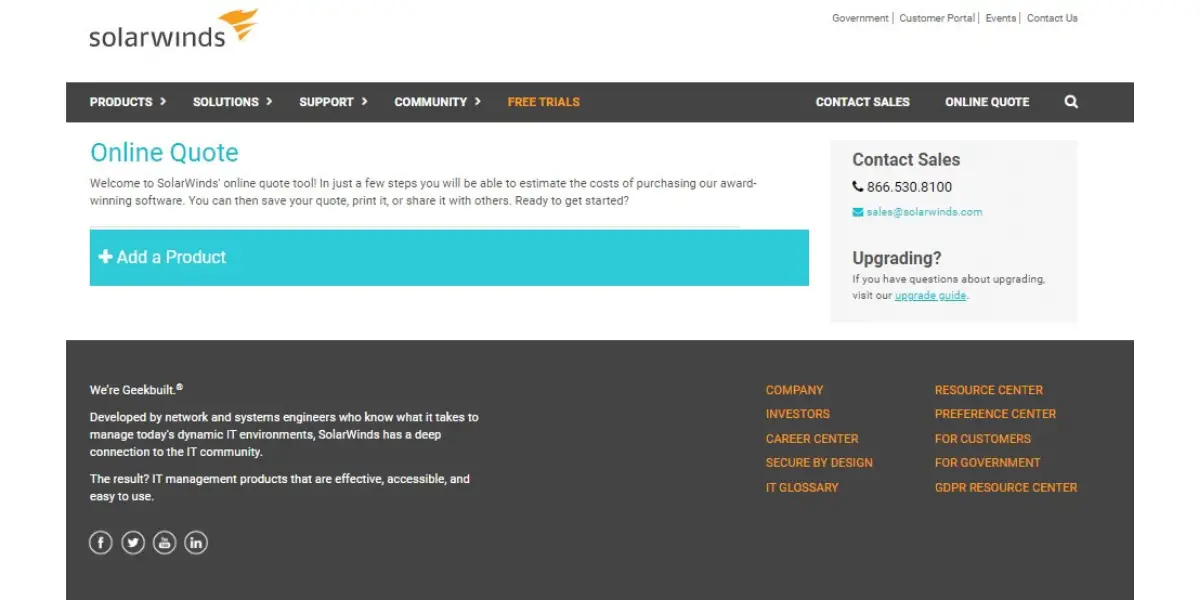
SolarWinds no longer publishes a standalone price for NPM. The product page routes buyers to a custom quote, and NPM is now positioned as an Orion module available inside SolarWinds Observability Self-Hosted, which is the current name for what was called Hybrid Cloud Observability.
- NPM on its own: not disclosed. Quote only.
- Observability Self-Hosted, which includes NPM features: from $8 per node per month, on a multi-year contract billed annually.
- Licence unit: tiers SL100 to SLX, counted on whichever is largest of nodes, interfaces, or volumes. There is no free edition; the trial runs 30 days.
You need to get quotes for special featured products. It offers a free trial.
 Likes
Likes
- It can easily detect and dissolve network issues.
- It responds to multiple checks, device dependency, and correlated events.
- Uptime server monitoring
- Network devise monitoring
- Monitors simple network management protocol(SNMP)
 Dislikes
- Sometimes it can be hard to understand how the user interface works. It might not make sense right away.
- Warning messages are not very clear.
- You cannot use the usual messages because they don’t fit your company’s needs.
- Some users felt that the software is hard to navigate.
Supported industries
- Small business
- Enterprise
- Education
- Public sector
Other details
| Deployment | Cloud, SaaS, Web-Based |
| Support | Email/Help Desk, FAQs/Forum, Knowledge Base, Phone Support |
| Training | Videos |
| Customer ratings | Capterra: 4.2( out of 5+ reviews), G2: 4.5(out of 210+ reviews) |
User opinion
Overall, SolarWinds NPM software for routers helps you know how well your network works. It can quickly find problems and tell you when something isn’t working as it should.
In addition, you can set up rules to tell it when to let you know if there’s a problem.
2. Zenoss ZenPacks, now Virtana Service Observability
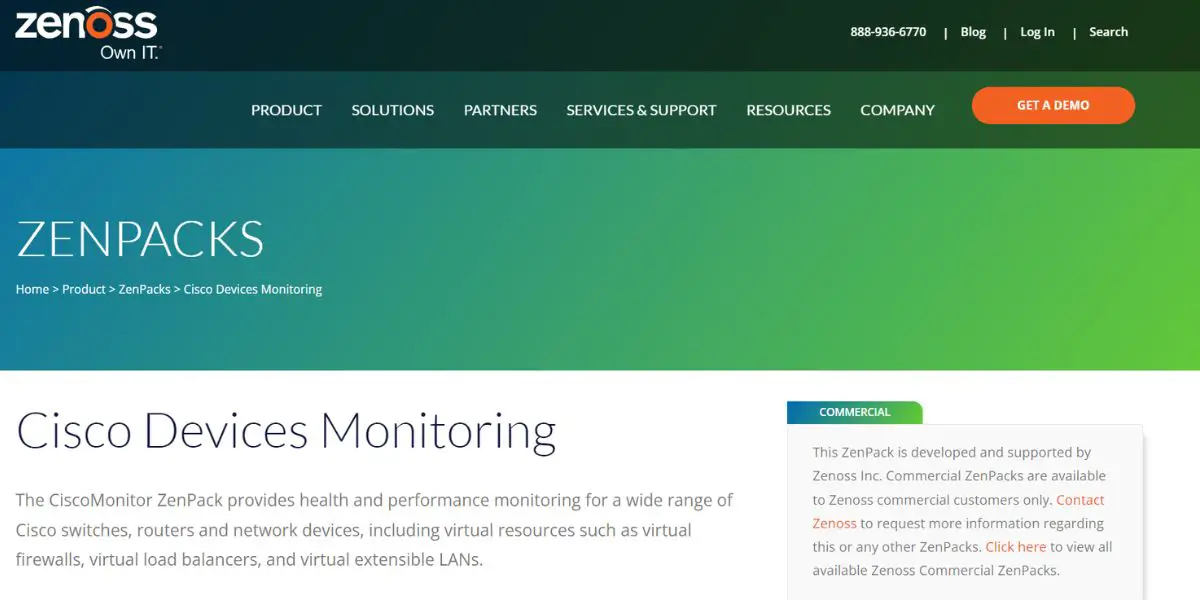
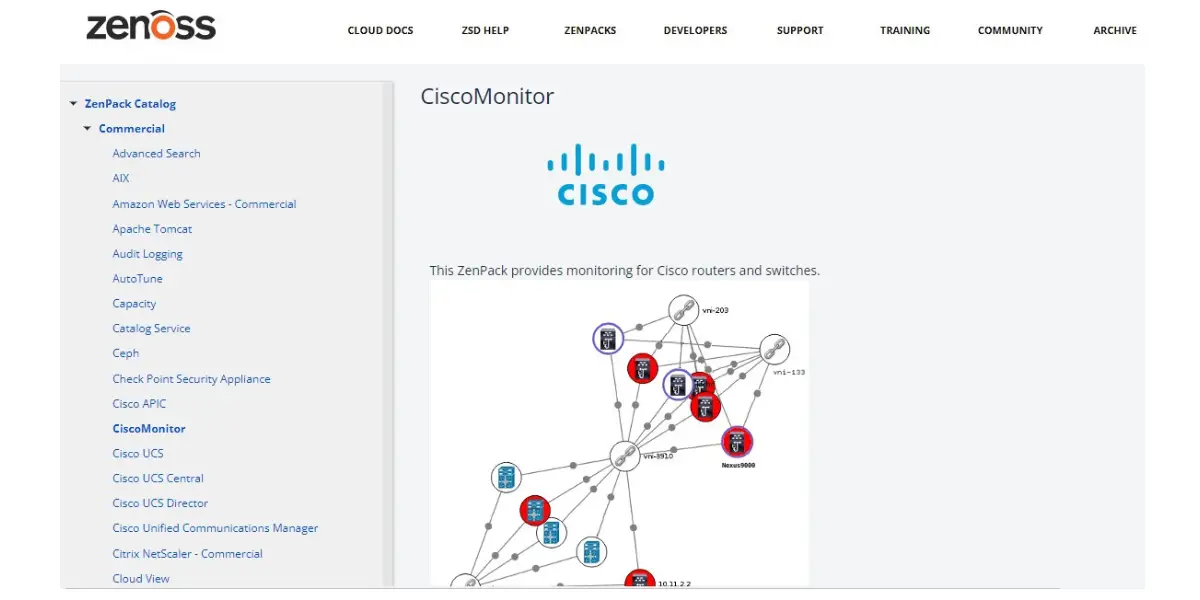
CiscoMonitor is a tool that helps you to keep track of the performance of your Cisco switches, routers, and other network devices. It also works with virtual things like firewalls, load balancers, and VLANs.
IT teams and network admins can use one platform to look at how well applications are running, the condition of the servers, and how much traffic is on the network. This single monitoring solution helps ensure everything works correctly in modern IT environments.
Features
- Unified communication and NetFlow analysis
- Identify and fix potential network issues before they become a problem.
- Network function virtualization
- Multivendor network visibility
Some screenshots of Zenoss
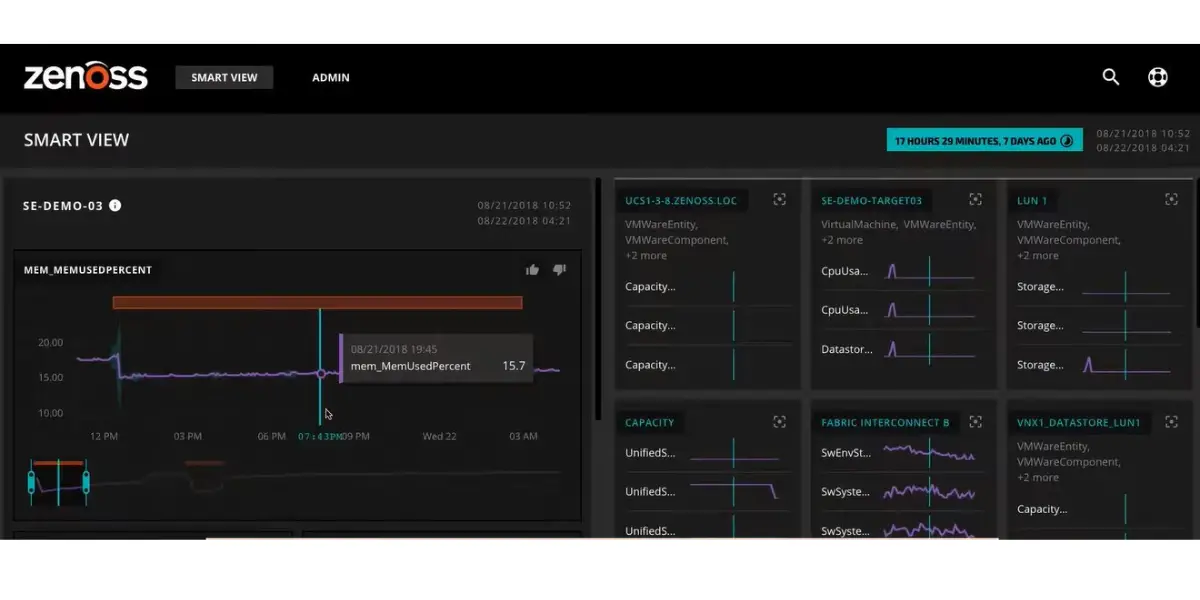
Pricing
This vendor no longer exists independently. Virtana acquired Zenoss on 14 May 2025, and the technology now ships as Virtana Service Observability, with Zenoss Service Dynamics renamed Virtana Service Dynamics. ZenPacks were never sold separately; they are free extension packages, and they are now part of the Virtana Data Collector integration framework. Virtana discloses no price for the platform, and there is no free edition. Note also that the Cisco monitoring here is a ZenPack for Cisco gear, not a Cisco product, so Cisco is not the vendor to contact.
Likes
- Good flexibility in monitoring
- Real-time monitoring
- User friendly
- Helpful RCA and troubleshooting
- Configurable
Dislikes
- GUI and user interface can be better
- Steep learning curve
- If your organization had it before, you might find it hard not to keep up with maintenance. This means that you will need to take care of more than just the parts you are working on.
- The visuals look old and can be hard to use.
Supported industries
- Federal
- Financial
- Health Care
- Service Providers
- Technology
Other details
| Deployment | Cloud, SaaS, Web-Based |
| Supported device | Mac, Windows, Mobile – iPhone, Mobile – iPad |
| Support | Email/Help Desk, FAQs/Forum, Knowledge Base |
| Training | In-person, Live Online, Webinars, Documentation |
| Customer ratings | Capterra: 4.2 out of 5 (2+reviews) |
User opinion
Overall, its powerful device monitoring capabilities help detect any potential issues before they become major problems, ensuring downtime is minimized, and service levels remain optimal.
All in all, Zenpack Cisco Devices from Zenoss provide an invaluable asset to any organization looking to maximize their IT efficiency and protect their investments in critical network infrastructure.
3. ManageEngine OpManager
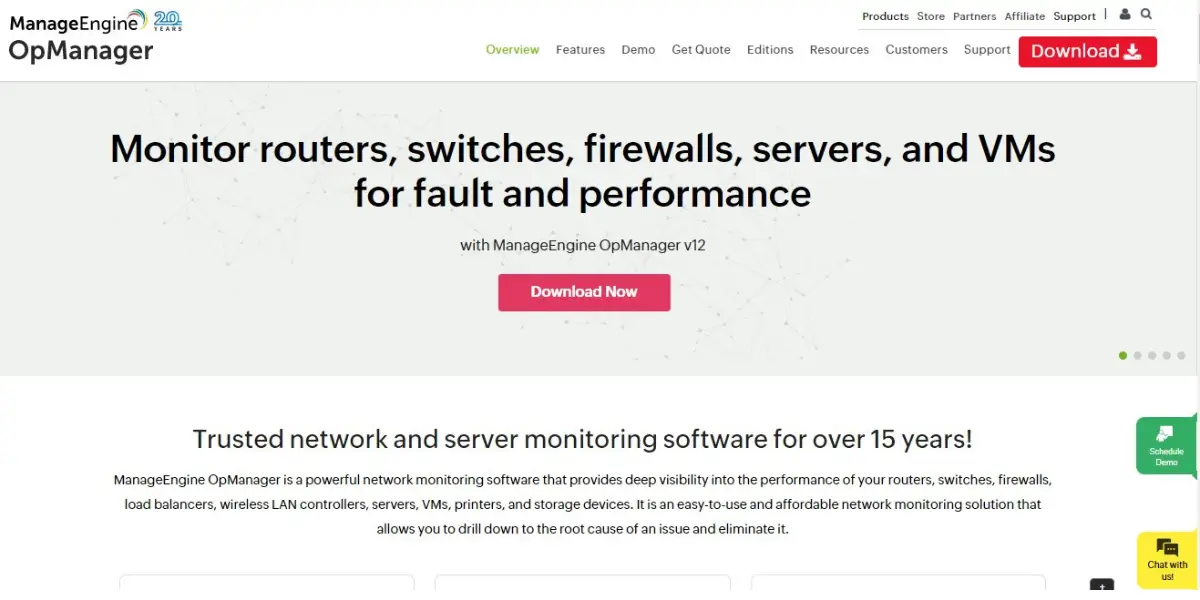
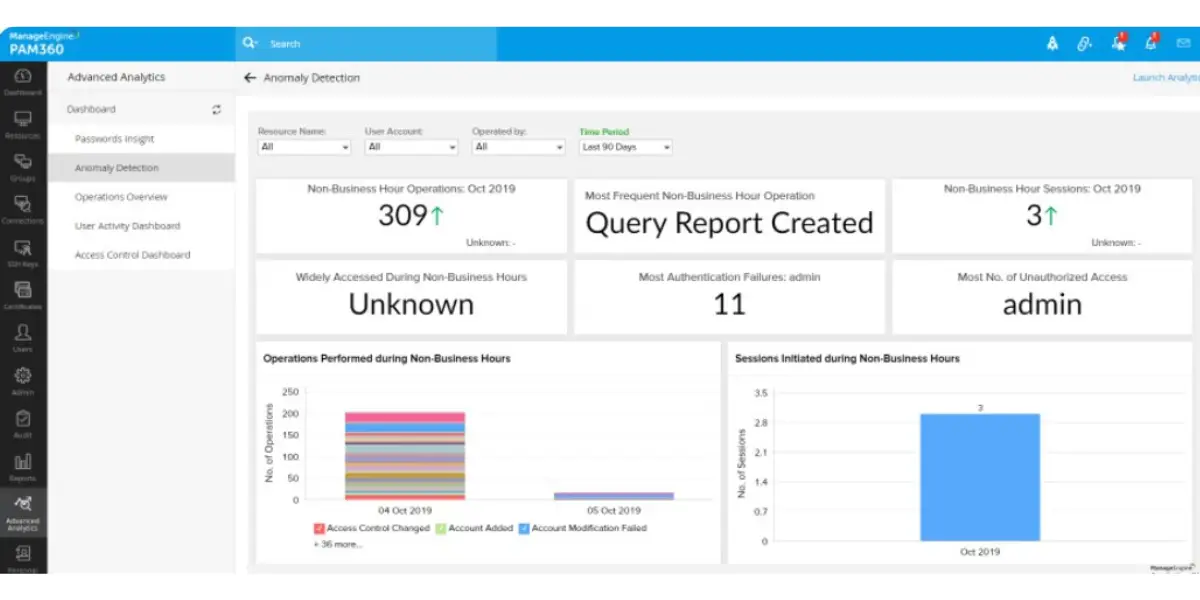
ManageEngine OpManager is software for routers that helps you monitor your devices like routers, switches, servers, and more. It gives you detailed information about how well these things are working. It is easy to use and can help you find out what is causing any problems so that you can fix them quickly.
Features
- Network performance monitoring
- Router monitoring
- Switch Monitoring
- Network mapping
- VoIP monitoring
- WAN RTT monitoring
Pricing
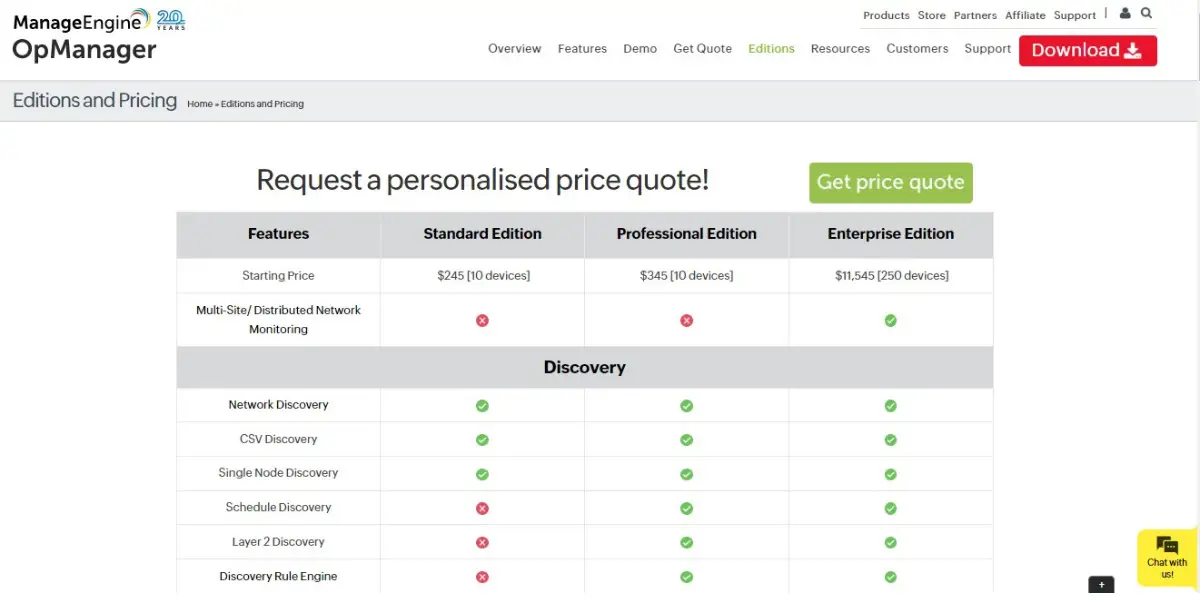
It offers three editions.
- Standard edition: The starting price is $245( for 10 devices)
- Professional edition: The starting price is $345(For 10 devices)
- Enterprise edition: The starting price is $11255( For 250 devices)
Likes
- OPM is a great tool for keeping an eye on many different devices.
- It’s easy to learn how to use and adjust it, and it’s good value for the money.
- This product is a good deal because it offers great quality at a reasonable price.
- You can change the tool to fit your needs.
- You can also use their API to connect with it.
- Their support team is really helpful whenever we talk to them in the application.
Dislikes
- Deleting the SNMP custom trap processor is impossible, so you need to create a new environment to test it.
- Text messages should continue working only sometimes.
- Initially, setting up Software may consume time.
- It has extra features to buy, and you can’t turn them off.
- It shows many alerts every day that may not be needed.
- Sometimes, the browser can cause problems. In this case, you must delete all the browser cash and use the application.
Supported industries
- Healthcare
- Manufacturing
- Education
- Government
- Financial services
Other details
| Deployment | Cloud, SaaS, Web-Based |
| Supported device | Mac, Windows, Desktop – Linux, On-Premise – Windows, On-Premise – Linux, Mobile – Android, Mobile – iPhone, Mobile – iPad |
| Supported languages | German, English, French, Italian, Japanese, Korean, Russian, Spanish, Chinese (Simplified) |
| Support | Email/Help Desk, FAQs/Forum, Knowledge Base, Phone Support, Chat |
| Training | In-Person, Live Online, Webinars, Documentation, Videos |
| Customer ratings | Capterra: 4.7 out of 5 (72+reviews), G2 4.3( out of 74+ reviews) |
User opinion
Overall OpManager helps you track how your network is doing. It can tell you if there are any problems in real time and help you fix them before they cause any issues.
It works with many different types of networks and is easy to use, even for big networks. You can use it to watch over all the parts of your network so that everything runs smoothly.
4. Progress WhatsUp Gold
WhatsUp Gold is a Progress Software product that monitors the performance and status of applications, routers, firewalls, servers, and other devices. It came to Progress through its acquisition of Ipswitch, so older write-ups still call it an Ipswitch product. You can monitor devices in the cloud or on your own premises.
The G2 Grid Report praised WhatsUp Gold as a top network monitoring solution. It got eight awards in total. WhatsUp Gold helps you see how applications, devices, and servers work in the cloud or on nearby computers.

Features
- Application monitoring
- Automated discovery
- Cloud monitoring
- Bandwidth monitoring
- Failover manager
- Distributed monitoring
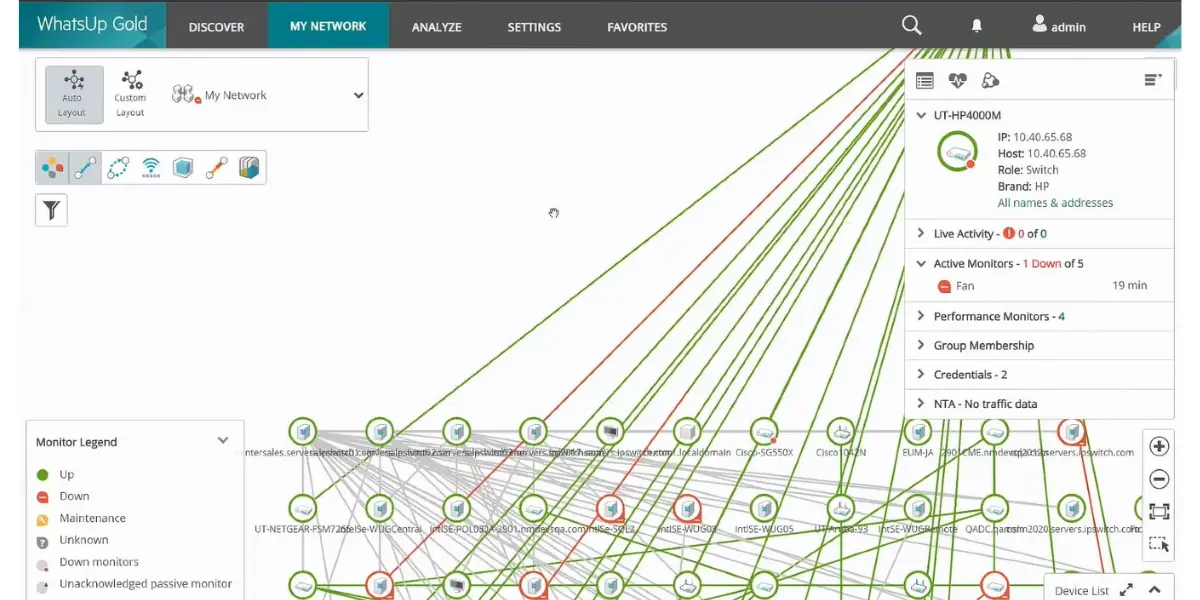
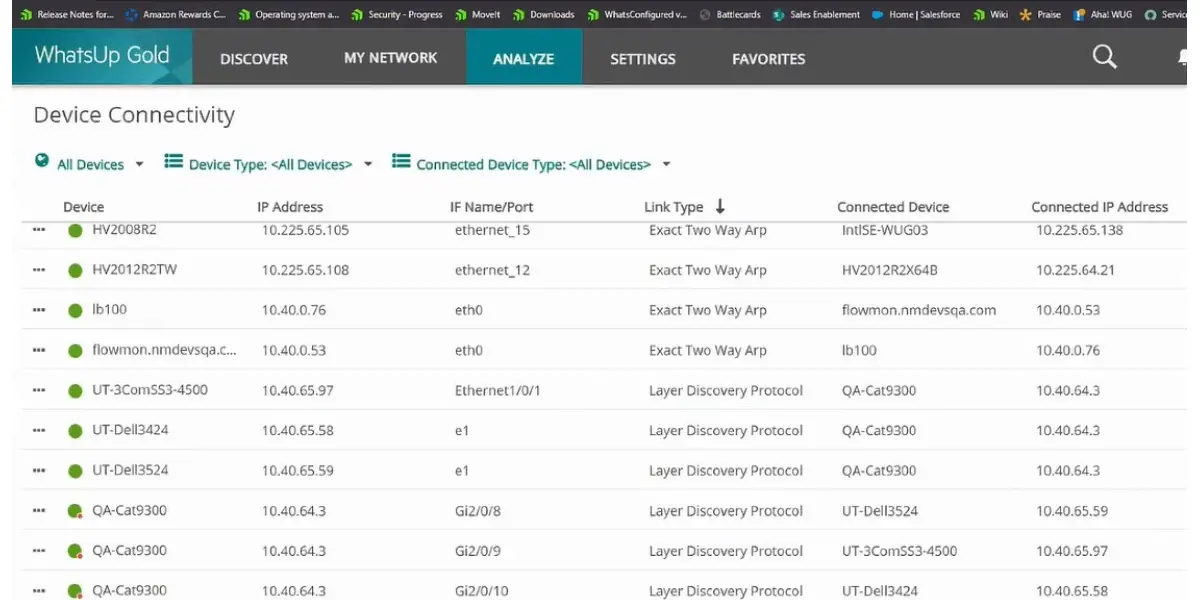
- Network mapping
- Configuration management
- Server and traffic monitoring
- Virtualization management
- Wireless monitoring
Pricing
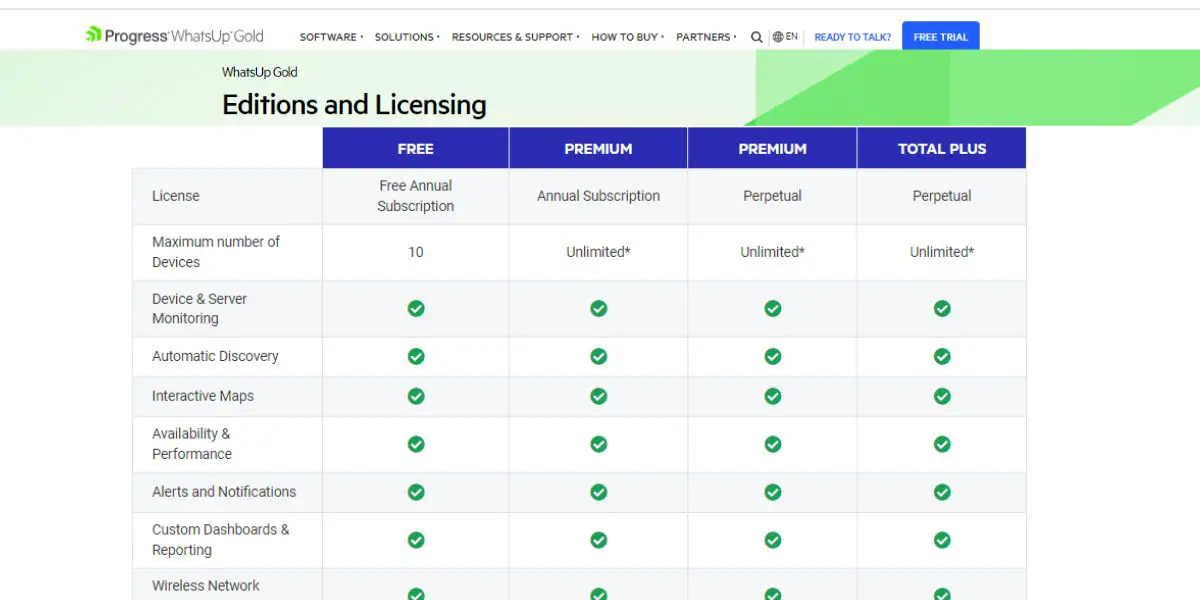
It offers four licensing plans.
- 12-month renewable perpetual license( Free)
- Annual subscription(Premium)
- Perpetual (Premium)
- Perpetual(Total plus)
Likes
- This Software is great because it has free updates.
- The community board can help you with your questions.
- This product can be a good choice for any IT environment that needs to monitor their network.
- A good system for notification and Analysis
Dislikes
- Sometimes it will need to be fixed when moving things around on the screen.
- When you use network mapping, it can be hard to understand if there are many elements or layers. This can make the map confusing.
- As more things are added to the network, it becomes harder and more complicated to use.
- Poor formatting for text alerts.
- Updating can be difficult; Sometimes, you have to use a new server when making big changes.
- The graphs need to be corrected to show how much bandwidth is used.
Supported industries
- Education
- Federal government
- State and Local governments
Other details
| Deployment | Cloud, SaaS, Web-Based |
| Supported device | Desktop – Windows, On-Premise – Windows, Mobile – Android, Mobile – iPhone |
| Supported languages | German, English, French, Italian, Japanese, Dutch, Portuguese, Russian, Spanish, Swedish, Chinese (Simplified) |
| Support | Email/Help Desk, FAQs/Forum, Knowledge Base, Phone Support,24/7 (Live Rep), Chat |
| Training | Live Online, Webinars, Documentation, Videos |
| Customer ratings | Capterra: 4.5 out of 5 (221+reviews), G2: 4.4 out of 5 (282+ reviews) |
User opinion
Overall Progress WhatsUp Gold (WUG) helps network administrators find and fix problems before users notice. It shows a visual map of the network, including devices on-site and in the cloud.
WUG is designed for businesses to help them manage their IT infrastructure and networks. It has tools to see, show, and keep track of the devices on the network as well as how they are connected.
5. Icinga
Icinga is special because it is open-source. Icinga is for monitoring devices. If you know its use, you can get lots of freedom from this software.
Features
- Server monitoring
- Network monitoring
- On-premises and cloud-based server monitoring
- Generic SNMP monitoring
- Vendor-specific SNMP monitoring
- Monitoring network interface
- Monitoring networking equipment
Pricing
It offers two subscriptions. Repository subscription and Support subscription.
An official Support Subscription gives you help from professional Icinga engineers. A Repository Subscription gives you access to special packages for enterprise Linux operating systems.
The Icinga Repository Subscription gives you access to extra operating systems and programs that can help make Icinga better. You can use this subscription as many times as you need.
Support subscription
- Basic
- Premium
- Enterprise
Contact them directly for pricing details.
Likes
- Scalable and configurable
- Good monitoring solution
Dislikes
- Setting up can be a bit difficult task.
- It can take a lot of work to get distributed configurations working. But once it is set up, it will be a strong system that works well and won’t break down easily.
- It can be hard for people who are new to understand and use.
Other details
| Deployment | Cloud, SaaS, Web-Based |
| Supported device | Desktop – Windows, Desktop – Linux, On-Premise – Windows, On-Premise – Linux |
| Supported languages | Catalan, German, English, Italian, Portuguese, Russian, Spanish, Ukrainian |
| Support | Email/Help Desk, FAQs/Forum, Knowledge Base, Phone Support, 24/7 (Live Rep), Chat |
| Training | In-person, Live Online, Documentation |
| Customer ratings | Capterra: 4.4 out of 5 (11+reviews), G2: 4.4 out of 5 (22+ reviews) |
User opinion
Overall, Icinga is a tool that helps you keep track of how well things are running. It gives you easy access to data and tells you when something isn’t working as it should.
6. NagiosXI
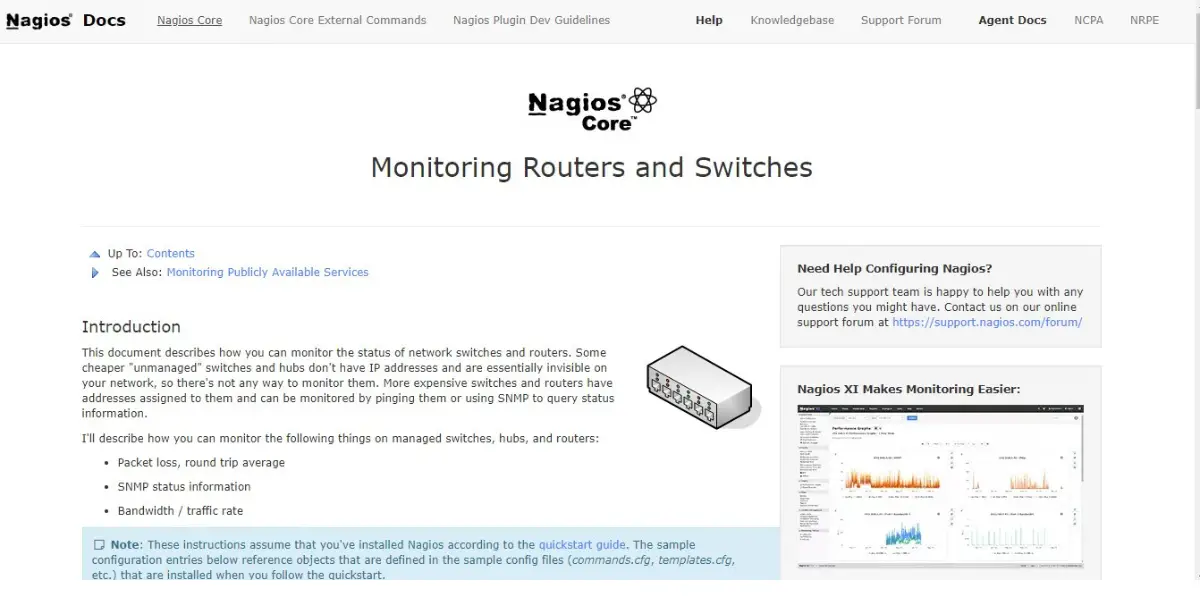
Nagios can help you keep track of your router. It does this using SNMP, a special type of monitoring. SNMP works with many different kinds of network devices and can work with versions 1, 2c, and 3.
Features
- Extensive network Analysis
- Comprehensive IT infrastructure monitoring
- Intuitive design
- Visibility
- Network clarity
- In-depth insight
- Bandwidth utilization calculator
- Adaptability
Pricing
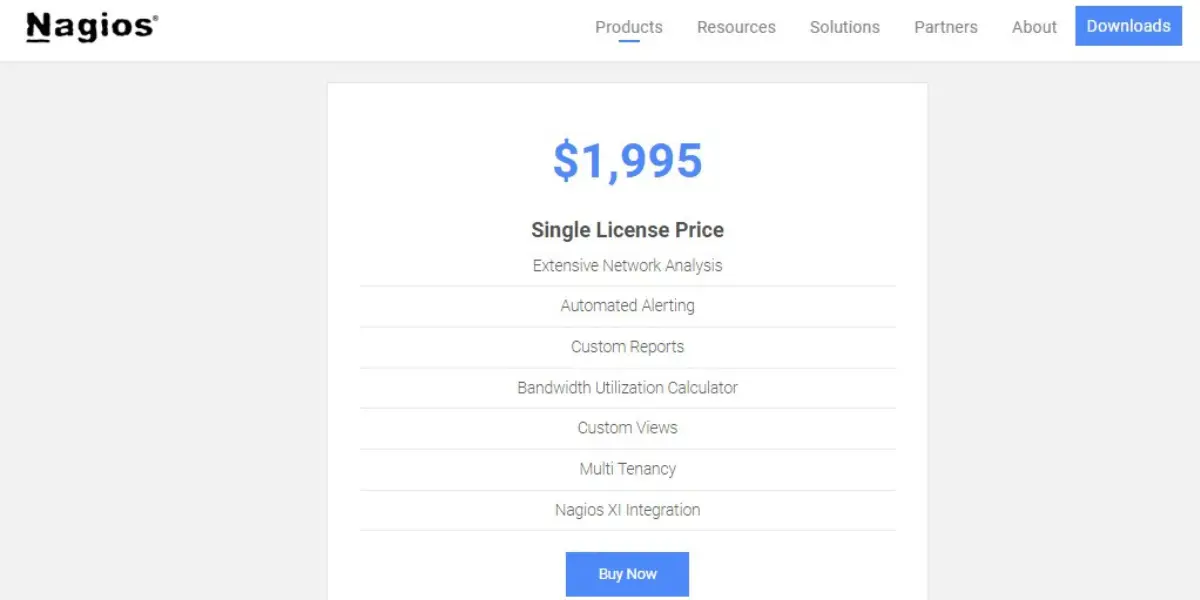
- Standard edition: Starts at$1995
- Enterprise edition: Starts at $3495
Likes
- SNMP monitoring
- Simple to use
- Good price
Dislikes
- Time-consuming configurations
- Steep learning curve
- Need prior experience
Other details
| Deployment | Cloud, SaaS, Web-Based |
| Supported device | Desktop – Mac, Desktop – Linux |
| Support | FAQs/Forum, Knowledge Base, Chat |
| Training | Live Online, Webinars, Documentation, Videos |
| Customer ratings | Capterra: 4.6 out of 5 (11+reviews), G2: 4.5 out of 5 (49+ reviews) |
User opinion
With Nagios, you can determine the availability of devices such as routers, switches, firewalls, VPNs, and more. You can also monitor key metrics like memory utilization and CPU load from your routers to ensure everything runs smoothly.
7. Data dog network monitoring
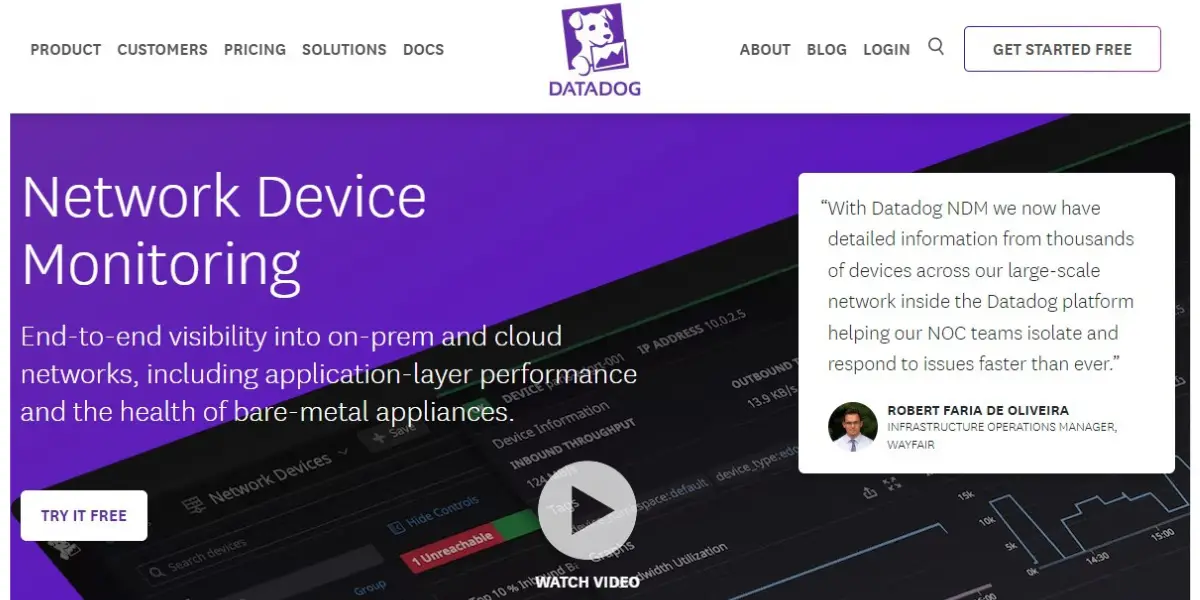
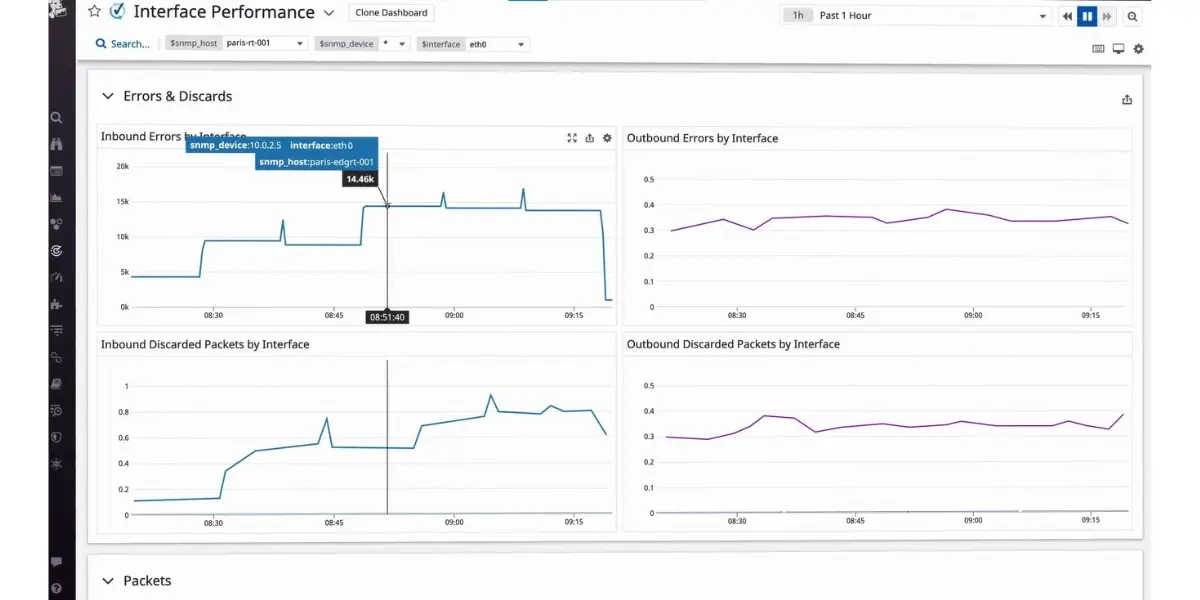
Datadog Network Device Monitoring helps keep track of the health and performance of your network devices like routers, firewalls, switches, etc. It makes it easy for teams to monitor their network infrastructure so they don’t need to use lots of different tools.
Features
- Work on any interface, any device, and any network
- Quickly expose performance with next-level tooling
Pricing
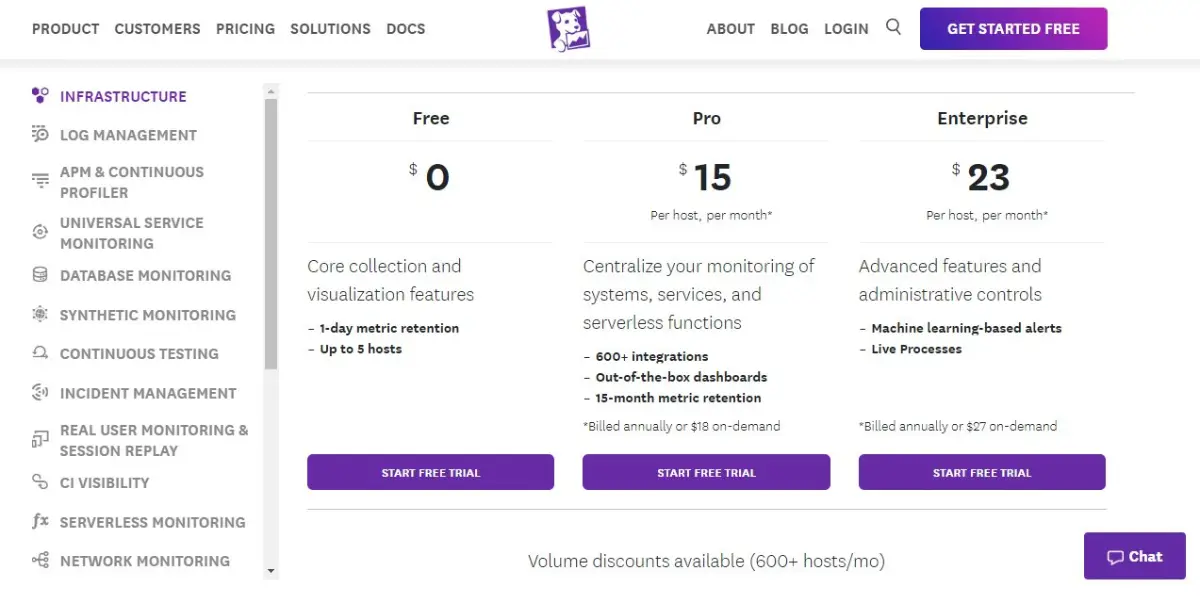
- There is no product called Datadog Network Monitoring. The former Network Performance Monitoring is now Cloud Network Monitoring, and it is sold separately from Network Device Monitoring.
- Cloud Network Monitoring: from $5 per host per month billed annually, or $7.20 on demand.
- Network Device Monitoring: from $7 per device per month billed annually, or $10.20 on demand. This is the one that watches routers and switches.
- The dependency that catches people out: Cloud Network Monitoring requires an Infrastructure Pro or Enterprise plan for every host it monitors, so the real floor is roughly $5 plus $15 per host per month, not $5.
- Free tier: none on any network product. Datadog’s free plan covers Infrastructure only, up to 5 hosts. The trial is 14 days.
Likes
- It provides great insight and alerting
- Easy to setup
- Easy integration and configuration
- Good customer support
Dislikes
- Sometimes it can take effort to understand a graph report.
- It may take some time to learn how to use it correctly.
- It does not have important features like finding devices by itself and giving reports.
Supported industries
- Financial Services
- Manufacturing & Logistics
- Healthcare/Life Sciences
- Retail/E-Commerce
- Government
- Education
- Media & Entertainment
- Technology
- Gaming
User opinion
Datadog is good for companies with medium-sized technology systems. It takes some time to set up, but when it’s done, it works well.
8. NetCrunch
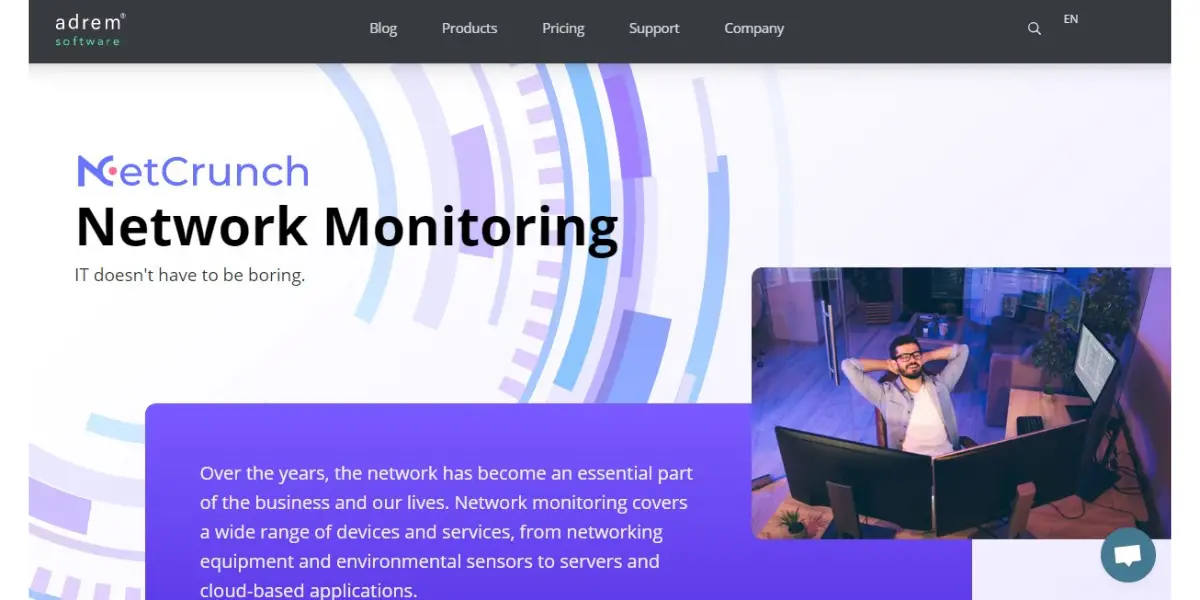
NetCrunch is another software for router. It is a good and inexpensive way to watch how your network is working. You will know if something isn’t working or not doing well. It’s easy to install and use. It also lets you know when there are problems with the network.
Features
- Bandwidth and Traffic Monitoring
- Monitors a wide range of devices
- Visualizing the network topology
- NetCrunch dashboard helps to identify the problems
- NetCrunch map is helpful for monitoring.
- Advanced alert management system
- Intime notification, analytics, and integration
Pricing
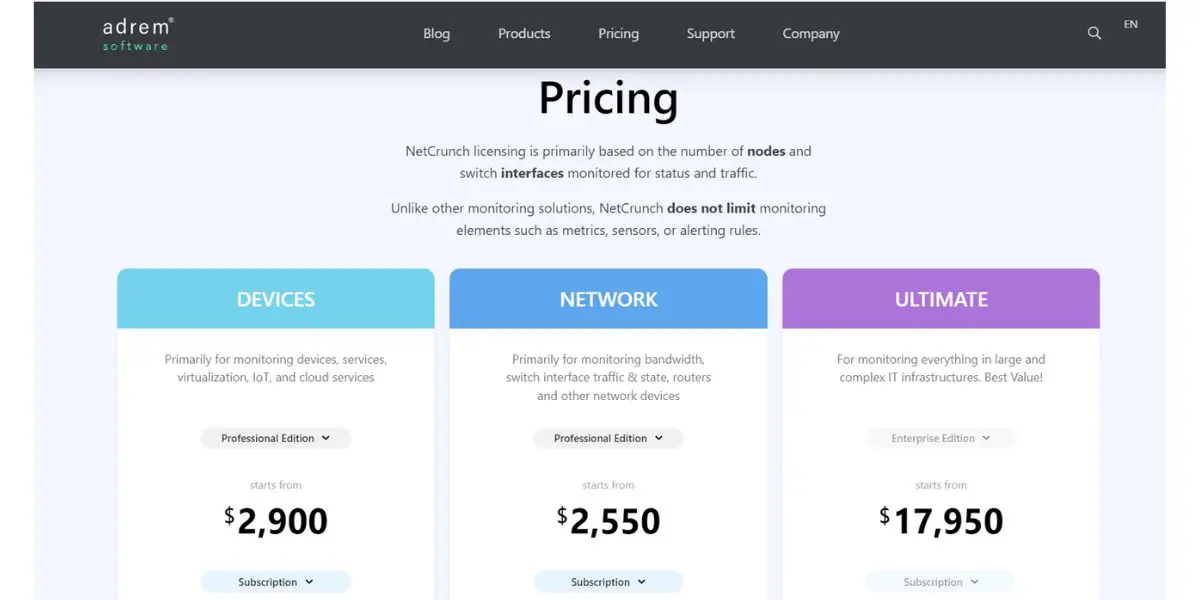
- Devices: Starts from $2900( For 250 nodes)
- Network: Starts from $2550( For 100 nodes)
- Ultimate: Starts from $17950(For 2000 nodes)
Likes
- This product is easy to use and powerful at the same time.
- Netcrunch is easy to use and can discover things on its own. It is a great tool for people who work in technology.
- It also knows how to use MIB packs for items it does not know about.
Dislikes
- Support service is slow and needs more improvement in technical service
- For difficult changes, you will need the Windows client.
Other details
| Deployment | Cloud, SaaS, Web-Based |
| Supported device | Desktop – Windows, On-Premise – Windows |
| Support | Email/Help Desk, Knowledge Base, Phone Support, Chat |
| Training | In-Person, Live Online, Webinars, Documentation, Videos |
| Customer ratings | Capterra: 4.7 out of 5 (26+reviews), G2: 4.2( out of 3+ reviews) |
User opinion
Overall NetCrunch is a program that collects information from all devices connected to your network. It then creates a map showing how those devices are connected. The map has two layers.
NetCrunch keeps an eye on what is happening inside and outside of your network.
9. Logic Monitor
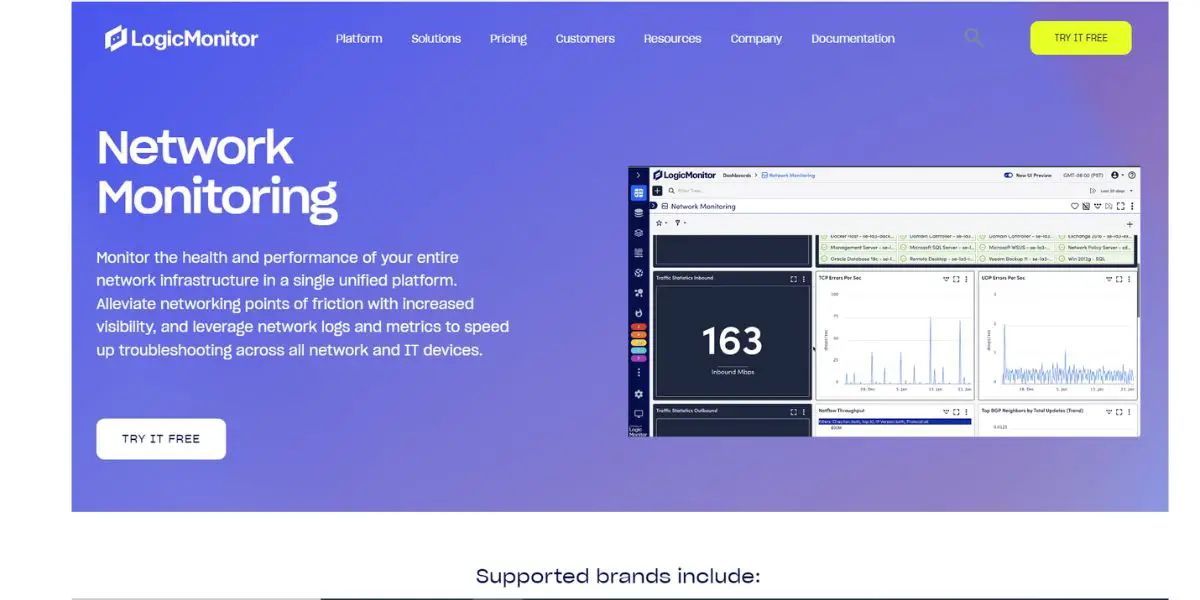
LM Envision is another option for software for router. It can help you see how your network is working. It will show you any issues that need to be fixed quickly.
In addition, LM Envision will discover any problems with your whole network, making it easier to stay on top of it.
Features
- Auto discover network devices
- Visualize your network
- Troubleshoot network issue
- Monitoring via API, Netflow, NBAR2, jFLOW, WMI
- Support for AD-WAN and cloud-based network
- Network topology mapping, root cause Analysis
- Automated setup and configuration
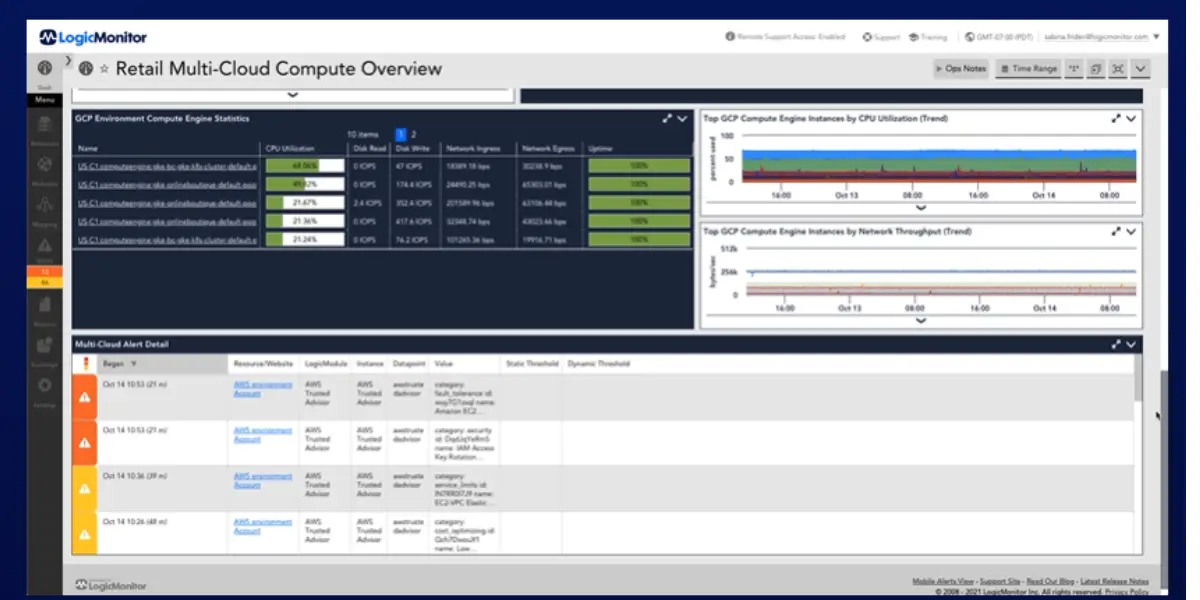
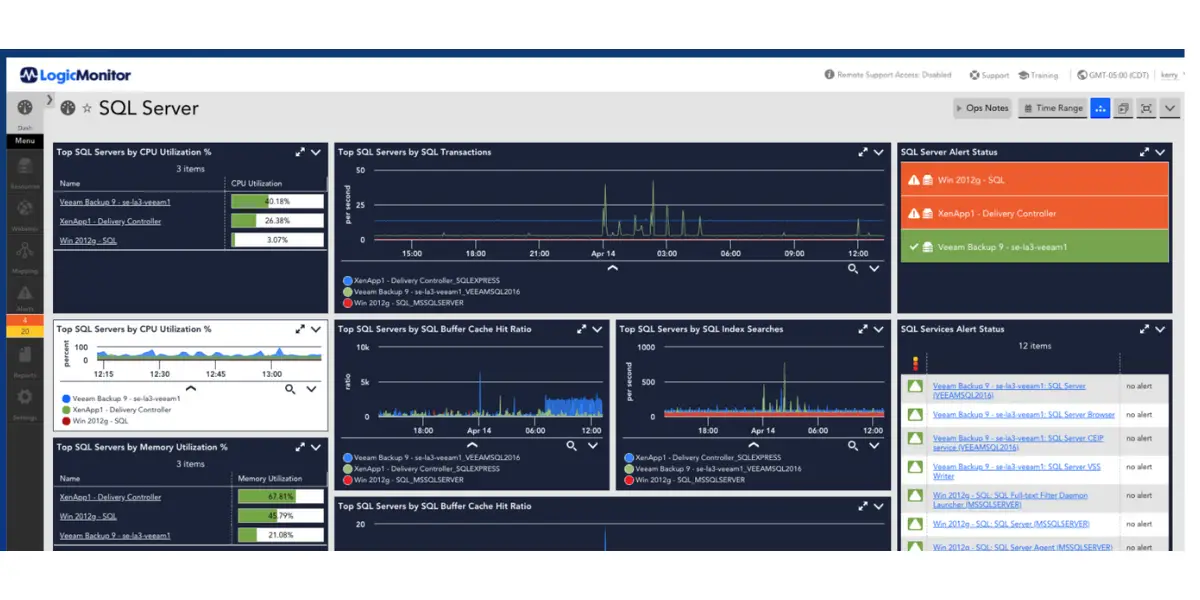
Some screenshots of Logic Monitor
Pricing
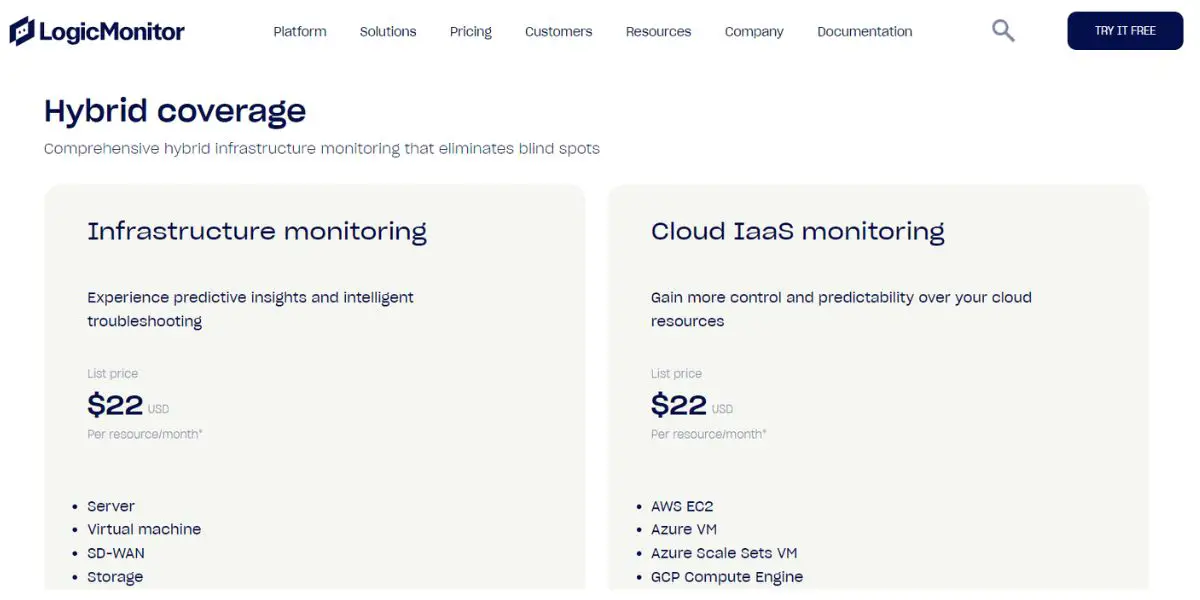
It offers two packages.
- Infrastructure monitoring – Starts from $22 per user per month
- Cloud Iaas monitoring – Starts from $22 per user per month
Likes
- This system records every detail about devices, and it also notifies people when something happens.
- The notifications are always accurate.
- UI is modern and good.
- Flexible setup for creating alerts
- Easy to deploy and add the device to monitor
Dislikes
- The mobile version is not good.
- Sometimes the difficulty in getting alerts
- Setting the right limits and getting the data you want can be complicated.
- Slow for implementation
- The pricing and contractual terms for this product are not good. They require you to renew every year and charge more each time.
- You also need to buy a certain number of devices, and you can’t pay according to how much you use them.
- Not SBM friendly
Supported industries
- Financial services
- Health and life sciences
- Manufacturing
- Retail
- Education
- State and local
- Software companies
- MSP
Other details
| Deployment | Cloud, SaaS, Web-Based |
| Supported device | Desktop – Windows, On-Premise – Windows |
| Support | English |
| Support | Email/Help Desk, Knowledge Base, Phone Support, Chat |
| Training | Live Online, Webinars, Documentation, Videos |
| Customer ratings | Capterra: 4.7 out of 5 (72+reviews), G2: 4.5( out of 458+ reviews) |
User opinion
Logic Monitor is one of the best Software for routers. It offers comprehensive monitoring capabilities designed to ensure optimal performance and availability of your network devices. By considering its pros and cons, you can make a good decision.
10. Paessler PRTG Network Monitor
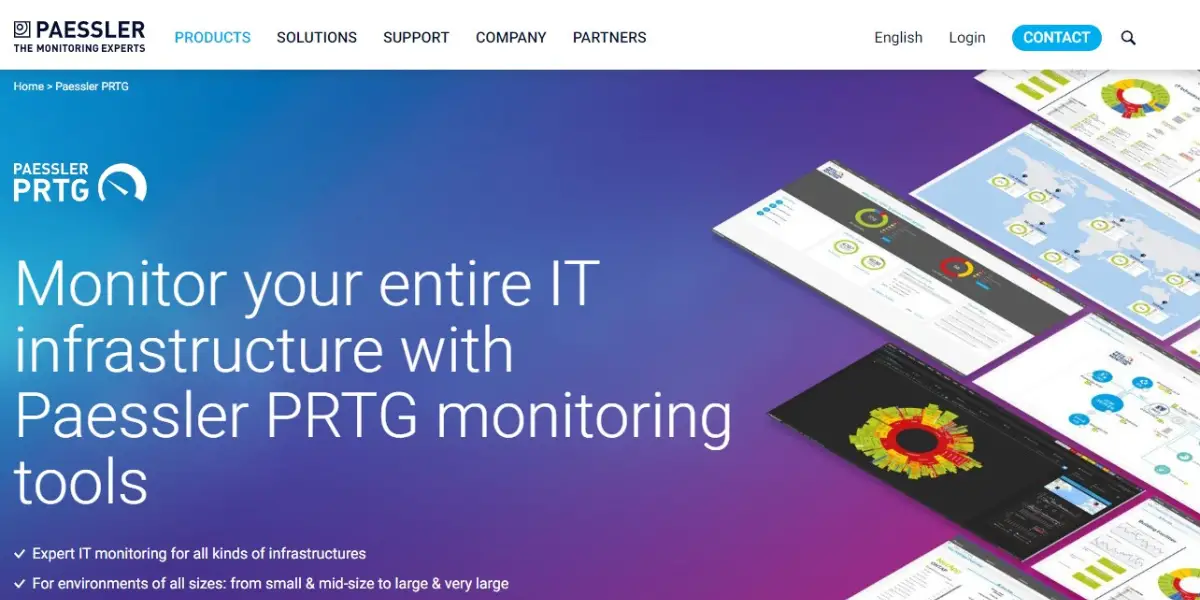
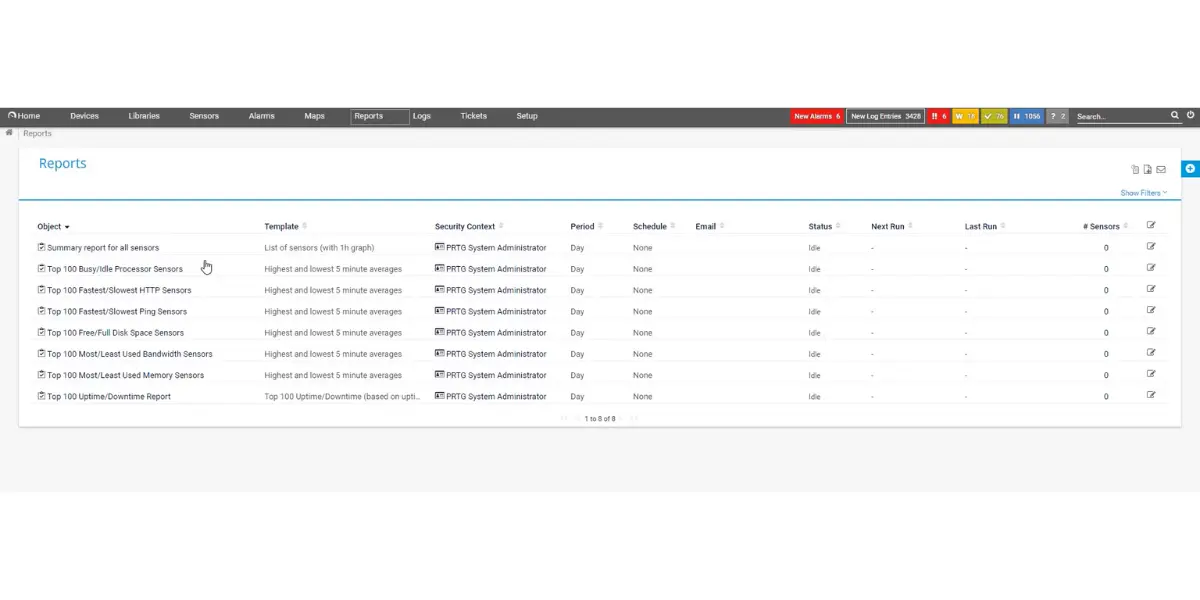
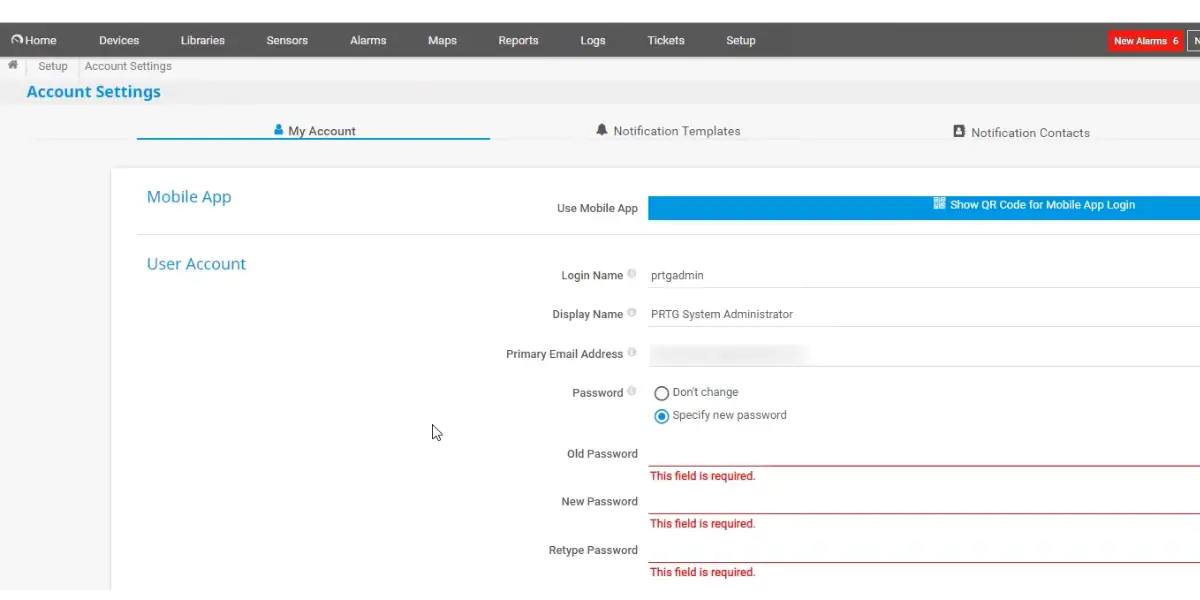
Paessler monitoring software helps you keep track of your technology. It monitors everything from your IT infrastructure’s systems, connections, devices, programs, and traffic. In addition, it is a tool that you can use on-site.
Features
- Central management control
- Flexible and customizable solution
- All-in-one monitoring tool
- On-premise installation
- Built-in cluster functionality
- Monitoring experts
Some screenshots of Paessler PRTG
Pricing
Subscription only. The perpetual licence is gone.
- PRTG is priced per sensor, per month, paid annually: PRTG 500 at $200, PRTG 1000 at $358, PRTG 2500 at $742, PRTG 5000 at $1,300, and PRTG 10000 at $1,642.
- A sensor is one measured value, such as one switch port’s traffic or one disk’s free space, so sensor counts rise far faster than device counts. PRTG 500 covers roughly 50 devices.
- PRTG Hosted Monitor is billed per year instead, from $2,399 to $19,699.
- After the 30 day trial PRTG reverts to a freeware edition capped at 100 sensors.
Likes
- Easy to use
- Good customer service
- Good and clear licensing model
- Proactive monitoring
- It can track almost anything if you know how to do it.
- This includes easy things like SNMP and more complicated tasks like writing scripts and sending out alarms.
Dislikes
- Sometimes they had unusual problems with the internet speed.
- The initial configuration is confusing.
Supported industries
- Healthcare
- Industrial
- Buildings
- Education
- Finance
- Government
User opinion
Overall, PRTG Network Monitor is a program by Paessler, a German software company. This program helps you track different types of networks, like local and wide area networks, servers, websites, and apps.
Conclusion
The useful question is not which of these is best. It is which class you needed in the first place, because the four do not substitute for one another.
- One router, and you want more from it: change the firmware. OpenWrt covers the widest hardware range, Asuswrt-Merlin is the safer choice on ASUS gear because it keeps the vendor code, and FreshTomato suits older Broadcom models.
- You have spare server hardware and real routing requirements: use a software router. OPNsense and pfSense CE cost nothing, and VyOS is the one to look at if you want configuration you can keep in version control.
- You already committed to one vendor: its controller is usually the cheapest path, and the thing to check before you commit further is what happens when the licence lapses. The answers differ sharply.
- You run a mixed fleet and need to know when something breaks: that is the only case where the ten platforms above apply. Price them on the unit each vendor actually bills, because sensors, nodes, hosts, devices and hybrid units are not comparable quantities.
That last point is where most budgets go wrong. PRTG bills per sensor and one device can easily consume a dozen, Nagios XI bills per node with unlimited services on each, Datadog bills per host for Cloud Network Monitoring and per device for Network Device Monitoring, and LogicMonitor bills in hybrid units where one unit is one on-premises device but seven cloud PaaS resources. Two quotes for the same network can differ by an order of magnitude purely on the counting unit.
Frequently asked questions
Is router software the same as router firmware?
No. Firmware is one of four things the phrase can mean. Firmware is the operating system running on the router itself, such as OpenWrt or MikroTik RouterOS. The other three are software routers that run on your own server, vendor cloud controllers that manage one brand of hardware, and router management platforms that monitor routers from many vendors.
Can router firmware be changed or replaced?
Yes. Router firmware sits in rewritable flash memory, which is why manufacturers ship firmware updates at all. ASUS documents uploading a firmware file through the router’s own admin page, and projects such as OpenWrt, DD-WRT, FreshTomato and Asuswrt-Merlin exist specifically to replace the manufacturer image. Support depends on the exact hardware revision rather than the model name, and some vendor firmware will only accept vendor-signed images.
What is a software router?
A software router is a routing operating system installed on ordinary server hardware or a virtual machine instead of on purpose-built router hardware. VyOS, pfSense, OPNsense and Cisco Catalyst 8000V are the main examples. They suit organisations that already have server capacity and want routing, firewalling and VPN on hardware they control.
What is the best free router management software?
For monitoring a mixed fleet, the genuinely free options are capped rather than unlimited. Nagios XI’s free edition covers 7 nodes or 100 services, ManageEngine OpManager’s free edition covers 3 devices, PRTG reverts after its trial to a freeware edition capped at 100 sensors, and Progress WhatsUp Gold has a permanent free edition for 10 devices without support. Icinga is the outlier: its forever free edition monitors unlimited hosts and services, with paid subscriptions covering enterprise package repositories.
How much does router management software cost?
It depends entirely on the billing unit, which differs by vendor. Published examples as of September 2026 include ManageEngine OpManager from $95 a year for 10 devices, Nagios XI at $2,595 one-off for 100 nodes, PRTG at $200 a month for 500 sensors paid annually, Datadog Network Device Monitoring at $7 per device per month, and LogicMonitor from $16 per hybrid unit. SolarWinds, Progress WhatsUp Gold and Virtana do not publish prices for these products.
Do I still need a management platform if I flash OpenWrt or DD-WRT?
For a single router, no. Independent firmware gives you that device’s own interface and statistics. A management platform earns its cost once you have more devices than you can reasonably open one at a time, or once you need alerting, historical data and configuration backup across several vendors at once.
Sources
Every figure on this page was read off the vendor or project page linked below on 3 September 2026. Where a vendor publishes no price, this page says so instead of estimating one.
- OpenWrt 25.12 release page
- DD-WRT project overview and licence terms
- FreshTomato hardware compatibility table
- Asuswrt-Merlin supported models
- MikroTik RouterOS licensing and prices
- ASUS instructions for uploading router firmware
- VyOS release channels and LTS access
- Netgate on withdrawing the free pfSense Plus Home+Lab download
- pfSense CE and Plus comparison and pricing
- OPNsense licence and project background
- Cisco Catalyst 8000V data sheet
- Cisco Meraki licence compliance behaviour
- Ubiquiti UniFi Cloud Gateways licensing FAQ
- TP-Link Omada controller licensing FAQ
- Virtana announces its acquisition of Zenoss
- Turn/River completes its acquisition of SolarWinds
- Paessler AG becomes Paessler GmbH
- Paessler PRTG pricing
- ManageEngine OpManager editions and pricing
- Nagios XI pricing plans
- Datadog network monitoring pricing
- LogicMonitor platform package pricing
- Icinga subscriptions and free edition
- G2 announces it will acquire Capterra, Software Advice and GetApp
- eBooks of ManageEngine OpManager, network monitoring
- Progress WhatsUp Gold, monitoring in manufacturing