
ADempiere is a free, open-source ERP written in Java. It began in October 2006 as a community fork of Compiere, one of the first open-source ERPs, and it covers accounting, inventory, purchasing, sales, manufacturing, CRM and point of sale in a single self-hosted suite. The most important thing to know before you evaluate it is that the ADempiere core has been frozen since December 2023 (its last release was version 3.9.4). The community’s active continuation of the same codebase is iDempiere, which still ships a current release. This guide explains what ADempiere is, how it relates to Compiere and iDempiere, and how it compares with Odoo.
| Attribute | Detail |
|---|---|
| Software | ADempiere ERP |
| Type | Self-hosted, open-source ERP (Java) |
| First released | October 2006 (community fork of Compiere) |
| Lineage | Compiere (1999) → ADempiere (2006) → iDempiere (2011) and metasfresh |
| License | GNU GPL version 2 |
| Tech stack | Java, with a Swing desktop client and a ZK web interface |
| Database | PostgreSQL or Oracle |
| Latest ADempiere release | 3.9.4.001 (December 2023) |
| Core status | Frozen since December 2023 |
| Active successor | iDempiere (release 13 Orion, 2026 LTS) |
| Cost | Free |
What is ADempiere ERP?
ADempiere is a self-hosted, business-suite ERP that combines ERP, CRM and supply-chain management. It is written in Java and inherits the data-dictionary-driven design of Compiere, which lets much of the application be defined as data (windows, fields, workflows and reports) rather than hard-coded. It is not a cloud or SaaS product: you install it on your own server against a PostgreSQL or Oracle database. Because it is released under the GPL v2, the full source is open and there is no paid edition.
Compiere, ADempiere and iDempiere: the lineage
ADempiere makes more sense once you know where it came from. Compiere was created in 1999 by Jorg Janke. In 2006, after Compiere’s company took venture capital and steered the project toward its commercial edition, part of the open-source community forked the code into ADempiere (first release October 2006) to keep it fully community-governed. In 2011, ADempiere’s own technical leaders, Carlos Ruiz and Low Heng Sin, forked it again to re-architect it on an OSGi plugin platform, creating iDempiere. The German ERP metasfresh is also a fork of ADempiere. Compiere itself was acquired in 2010 and has not had a release since 2009.
Is ADempiere still maintained?
This is the key question, and the honest answer is nuanced. The classic monolithic ADempiere ERP core is dormant: its last functional release was 3.9.4.001 in December 2023, and the main code branches have had no new commits since then. At the same time, the ADempiere community is not gone: it maintains a set of newer satellite projects, including a modern web UI and gRPC API services, and the community home has moved to adempiere.io. But if you want an actively developed version of this ERP, iDempiere is where the work happens. It is committed to almost daily and ships a current long-term-support release (release 13, Orion, in 2026). For a new deployment in the ADempiere family, iDempiere is the practical choice.
Architecture and tech stack
ADempiere is a three-tier application written in Java. Its defining feature is the Application Dictionary inherited from Compiere: a central metadata layer that describes the data model, the user interface and business rules, so the system can be extended largely through configuration. It ships a Java Swing desktop client and a ZK-based web client, runs on an application server such as Apache Tomcat or JBoss, and stores its data in PostgreSQL or Oracle. A standards-based workflow engine drives document approvals and processes. The iDempiere line modernised this stack further, moving to an OSGi module system and a Jetty server, but the underlying data-dictionary model is shared across the whole family.
Features and modules
ADempiere covers the core areas an ERP is expected to handle. Some capabilities, such as HR and payroll or advanced (Libero) manufacturing, ship as bundled extensions rather than pure core.
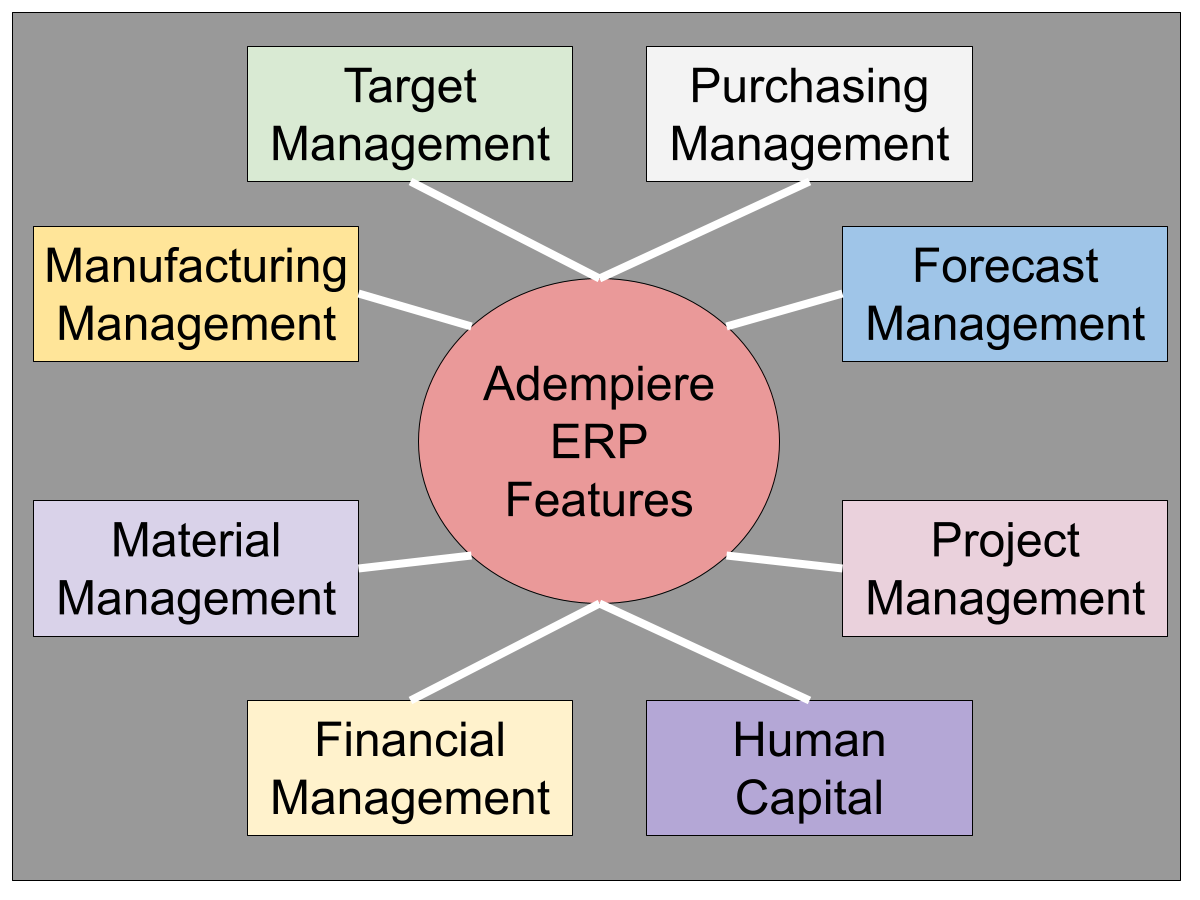
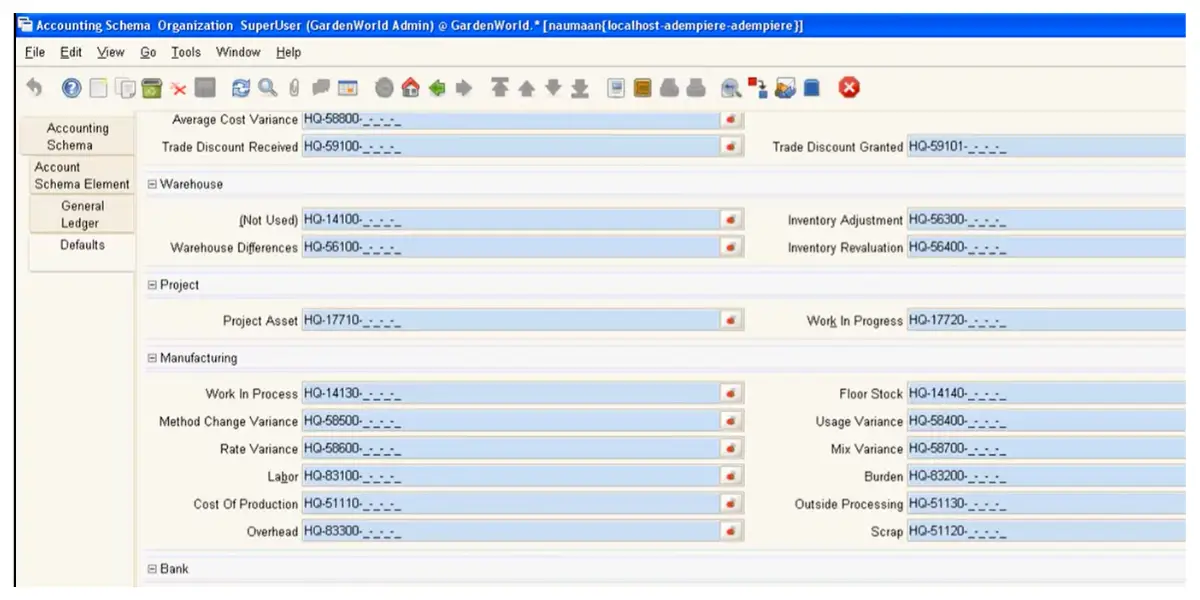
- Financial management: general ledger, accounts payable and receivable, cash and bank, and internal audit
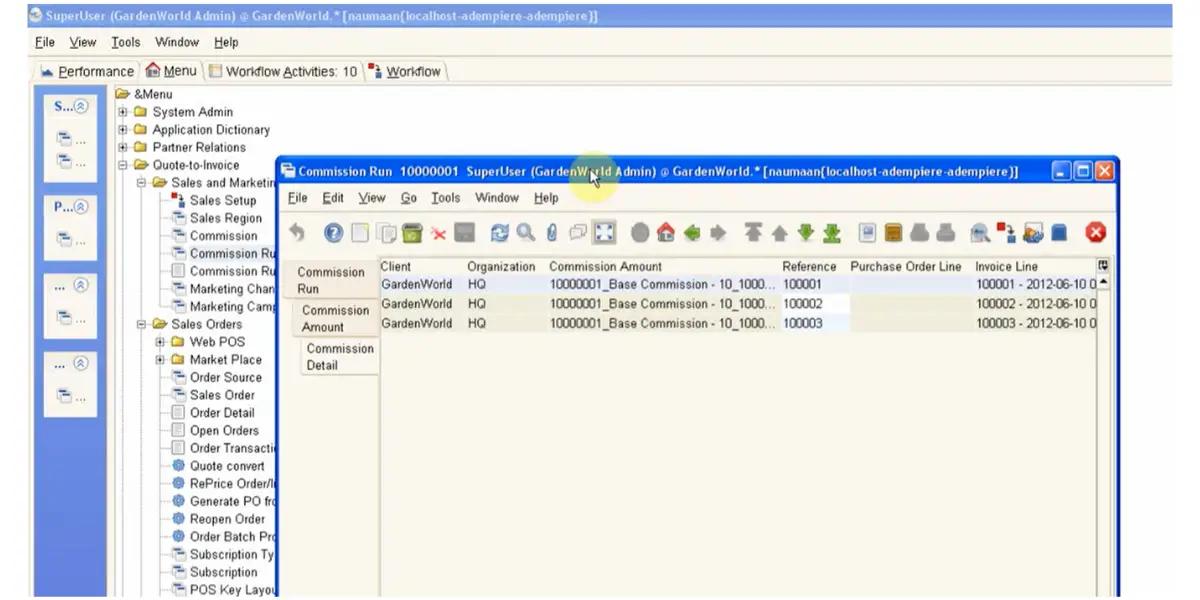
- Trade and sales: customer management, pricing, orders and quotes, invoicing and approvals
- Purchasing: procurement of items and services
- Inventory and materials management: stores, resource management and warehousing
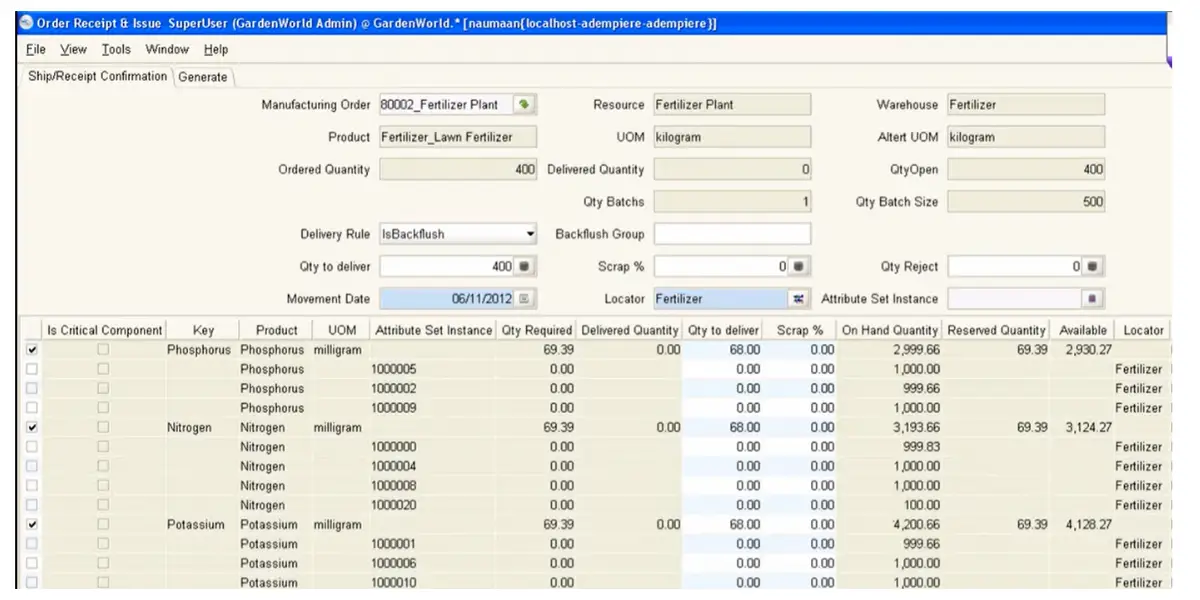
- Manufacturing: bills of materials, manufacturing orders, product and capacity planning
- CRM, point of sale, project management and fixed assets
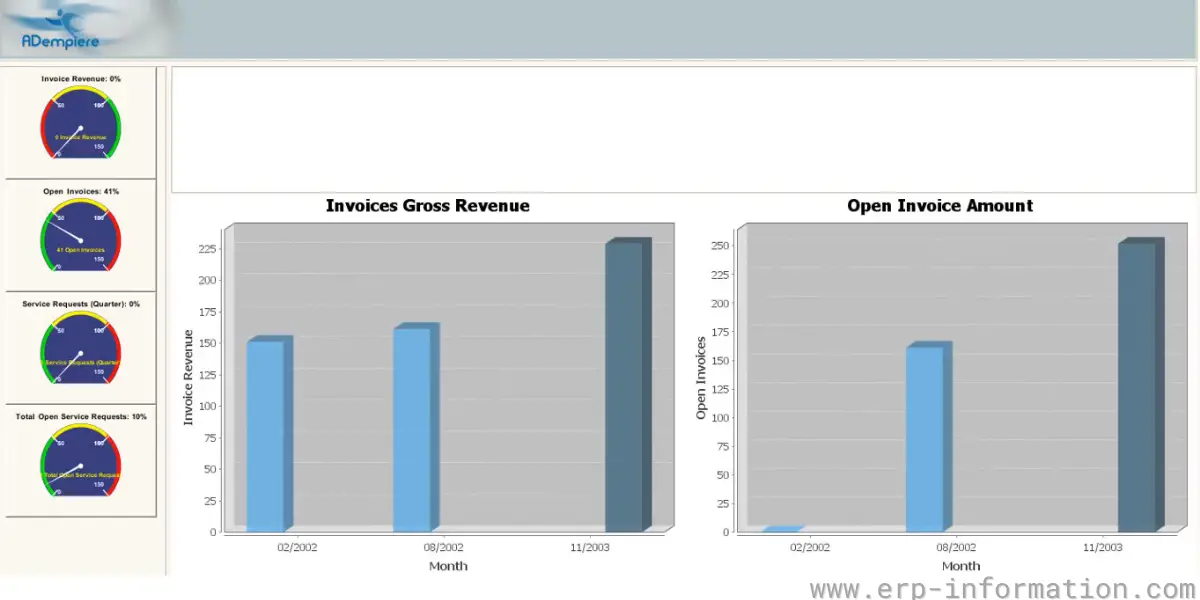
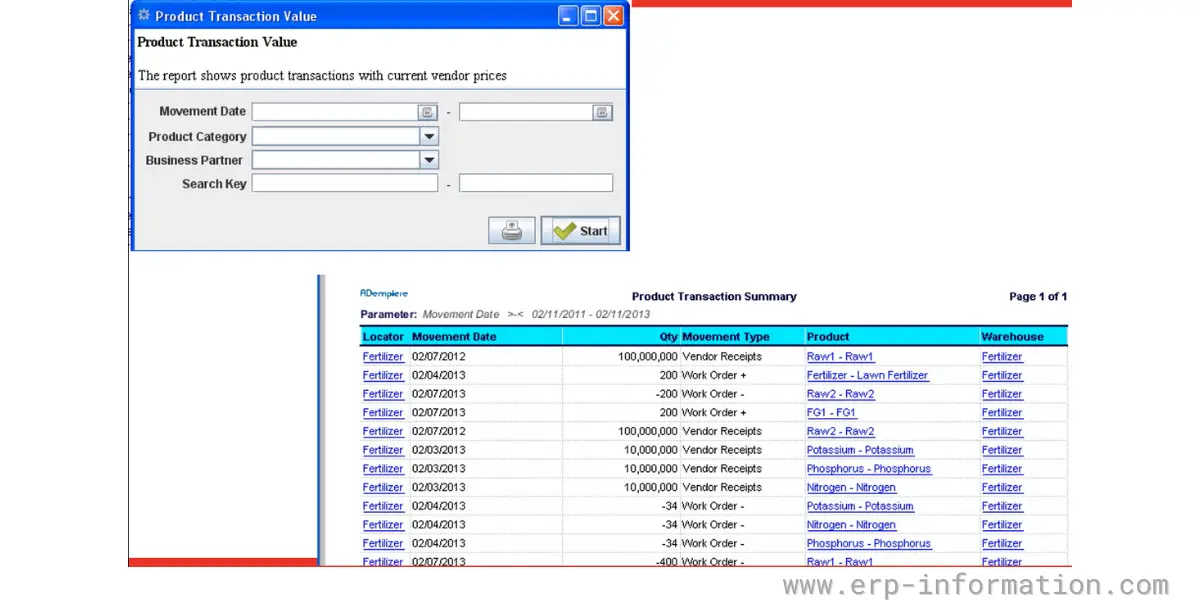
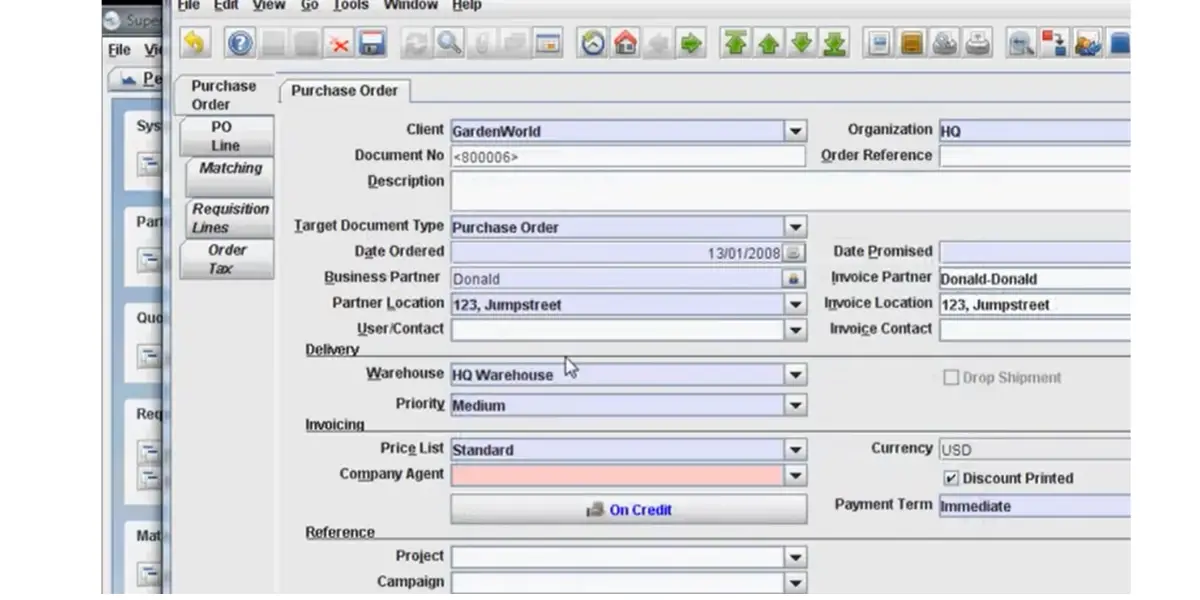
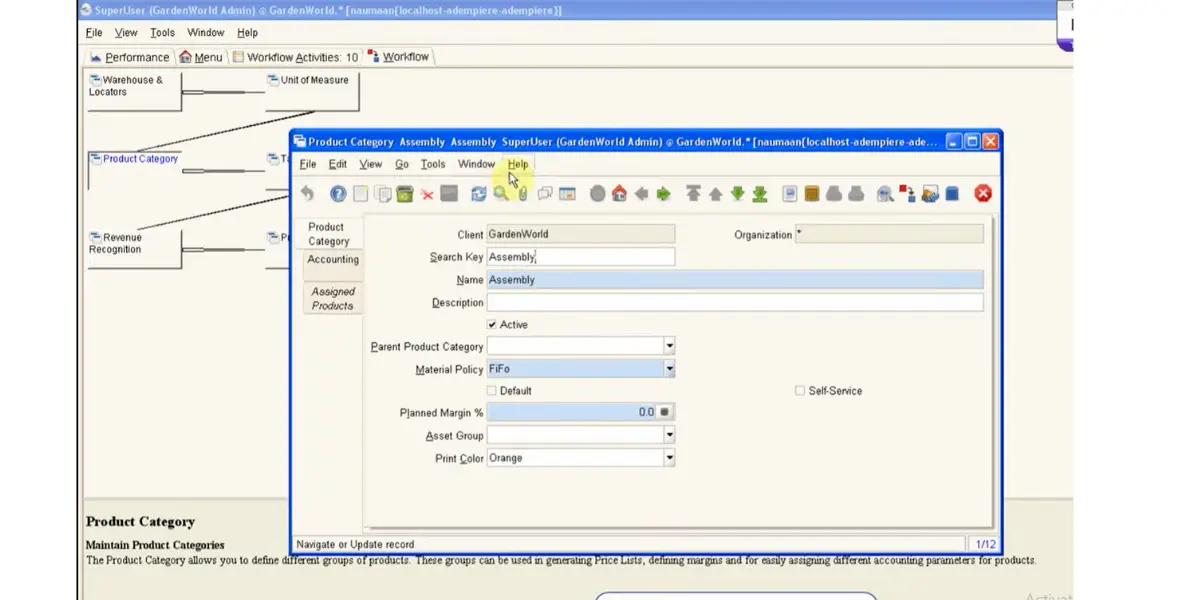
Screenshots from the modules
ADempiere pricing
ADempiere is free. It is released under the GPL v2 with no paid tier and no official cloud edition, so there is no license fee. The real costs of running it are hosting the server and database, and the implementation and support work, which for a system of this depth usually means bringing in a specialist consultant or an iDempiere service partner.
ADempiere vs Odoo
A common comparison is ADempiere against Odoo, another open-source ERP. They are aimed at different buyers. ADempiere (through iDempiere) is a fully open, GPL v2, accounting-strong Java ERP backed by a small specialist community. Odoo is a company-backed Python platform with a modern web interface and a very large app ecosystem, but its full feature set sits in a paid, proprietary Enterprise edition, with only the Community edition free.
| ADempiere | Odoo | |
|---|---|---|
| Backing | Community-governed fork of Compiere (2006); no single company owner | Odoo S.A. (Belgium), founded by Fabien Pinckaers |
| Language and stack | Java (Swing desktop and ZK web), PostgreSQL or Oracle | Python, PostgreSQL |
| Activity | Core frozen since December 2023; the active successor is iDempiere | Very active; version 19 released September 2025 |
| License | GPL v2, fully open, single edition | Community edition LGPL v3 (free) plus a paid, proprietary Enterprise edition |
| Ecosystem | Small, specialist community | Very large app ecosystem and marketplace |
| Best for | Teams wanting a fully open, accounting-strong Java ERP (today via iDempiere) | Teams wanting a modern web UI and a large app marketplace |
Advantages and limitations
- Fully open (GPL v2), with complete source access and no vendor lock-in
- Deep, mature accounting and manufacturing functionality inherited from a 25-year Compiere lineage
- Highly customisable through the Application Dictionary, without forking the core
- Limitation: the ADempiere core is no longer actively developed (use iDempiere for a maintained version)
- Limitation: a steeper learning curve and an older Swing/ZK interface; implementation usually needs Java and ERP expertise
- Limitation: a smaller community and app ecosystem than Odoo or ERPNext
Alternatives to ADempiere
If you are weighing ADempiere, these are the most relevant open-source options: iDempiere (its active successor, the same lineage), Odoo, ERPNext, Tryton and metasfresh (also an ADempiere fork). Compiere, the original project, is no longer maintained. You can compare more options in our list of ERP software.
Sources
- ADempiere on GitHub (releases and code history).
- iDempiere project site (the active successor).
- ADempiere community (adempiere.io).
Is ADempiere still maintained?
The ADempiere ERP core has had no new code since December 2023, so the main application is effectively frozen. The community is still active on satellite projects such as a new web UI and API services, but the live continuation of the codebase is iDempiere, which is committed to daily and ships a current release. For a new project, iDempiere is the practical choice.
What is the difference between ADempiere and iDempiere?
iDempiere is a 2011 fork of ADempiere by Carlos Ruiz and Low Heng Sin that re-architected the software onto an OSGi plugin platform. Both are free, GPL v2 Java ERPs that share the same Compiere heritage and data-dictionary design. The practical difference today is activity: ADempiere’s core is frozen at version 3.9.4 (2023), while iDempiere ships a current LTS release and is maintained continuously.
Is ADempiere free?
Yes. ADempiere is free and open-source under the GNU General Public License version 2, with no paid edition. You self-host it on your own server with a PostgreSQL or Oracle database, so the only costs are hosting and any implementation help you choose to buy.
What is ADempiere built on?
ADempiere is written in Java and follows the three-tier, data-dictionary-driven design it inherited from Compiere. It offers a Java Swing desktop client and a ZK-based web interface, and it runs on a PostgreSQL or Oracle database. It is self-hosted software, not a cloud service.
Should I choose ADempiere or Odoo?
Choose the ADempiere lineage, in practice iDempiere, if you want a fully open, GPL v2, accounting-strong Java ERP with no proprietary edition. Choose Odoo if you want a modern web interface and a very large app ecosystem, and you accept that its full feature set sits in a paid, proprietary Enterprise edition while only the Community edition is free.