ERPNext is a free, open-source ERP built by Frappe Technologies. It covers accounting, inventory, manufacturing, sales, CRM, HR, and projects in one system, and it is unusual among ERPs in one important way: it is fully open source, with no paid “enterprise edition” and no per-user license fees. You either self-host it for free or pay only for managed hosting.
This review covers what ERPNext is, the Frappe Framework it runs on, its current pricing and hosting, the modules it includes, and its honest strengths and limitations.
Click here for similar kinds of Open Source ERP Software
Latest major version: ERPNext 16, released January 12, 2026. Version 15 is still supported and patched, while version 14 reached end of life in January 2026. ERPNext and the Frappe Framework it runs on are versioned together and get frequent point releases.
ERPNext at a glance
| Vendor | Frappe Technologies Pvt. Ltd. |
| Founder | Rushabh Mehta (CEO); ERPNext launched as a hosted product in 2010 |
| Headquarters | Mumbai, India |
| Latest version | ERPNext 16 (January 2026) |
| Built on | The Frappe Framework, a low-code web framework in Python and JavaScript |
| License | ERPNext app is GPLv3; the Frappe Framework underneath is MIT |
| Editions | One open-source edition. No paid enterprise tier and no per-user fees |
| Hosting | Self-host for free, or Frappe Cloud managed hosting from about $5 per site/month |
| Best for | Small and mid-sized businesses that want a fully open-source, customizable ERP |
| Website | erpnext.com |
What is ERPNext?
ERPNext is a full enterprise resource planning suite that integrates the core areas of a business, including finance, stock, manufacturing, sales, purchasing, HR, and projects, on one shared database. It runs in the browser with a responsive interface that also works on phones, and scales from a single-user setup to multi-company operations.
The application is written in Python and JavaScript and is released as open source under the GNU General Public License version 3 (GPLv3). Its source code is public on GitHub, where the project has more than 37,000 stars.
Built on the Frappe Framework
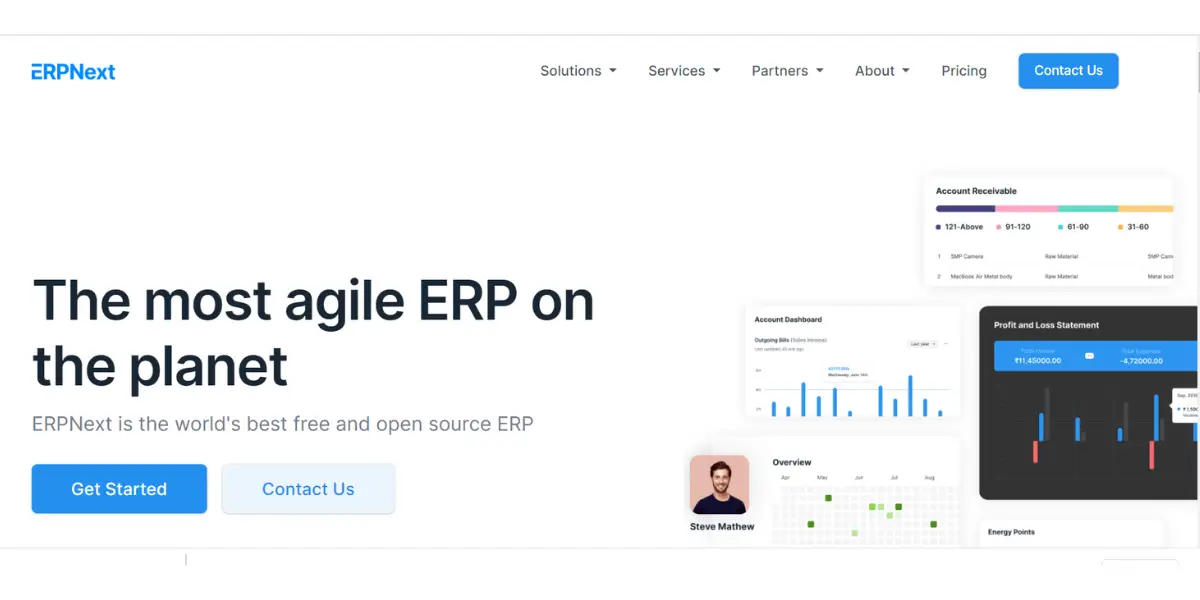
ERPNext is built on the Frappe Framework, a low-code web framework written in Python and JavaScript. This matters more than it sounds, because it is the reason ERPNext is so customizable without forking the code.
In Frappe, every data model is a “DocType”: a definition of fields, links, permissions, and validations stored as metadata. Because the models are metadata rather than hard-coded, an administrator can add custom fields, forms, and even entire new record types from the interface, with little or no programming. Every DocType automatically gets list and form views, a REST API, role-based permissions, and reporting. Customizations sit as a layer on top of the core, which keeps upgrades manageable. The Frappe Framework itself is released under the permissive MIT license, while the ERPNext application on top of it is GPLv3.
The same framework powers a family of companion apps you can run alongside ERPNext, including Frappe HR, Frappe CRM, Frappe Helpdesk, Frappe Insights (business intelligence), and Frappe Learning. ERPNext itself is available in many languages.
ERPNext Pricing
Here is the part buyers most often get wrong: ERPNext has no per-user license fee and no paid “enterprise” edition. The software is free. You pay only if you want someone else to host and support it. There are two practical routes:
| Self-hosted (open source) | Free. You download ERPNext and run it on your own server. Every module is included; there is no feature paywall. You cover the cost of the server and your own maintenance. |
| Frappe Cloud (managed hosting) | Frappe’s official hosting, which handles servers, backups, and one-click upgrades. Shared site plans start at about $5 per site per month; dedicated servers start higher. Pricing is per site or per server, not per user. |
Beyond hosting, your other likely cost is implementation help from the global Frappe Partner network, which is optional. Because prices can change, confirm the current Frappe Cloud tiers on frappe.io/cloud/pricing.
Implementation
Frappe does not implement ERPNext for customers itself. Its pricing FAQ says implementation, customization and migration go through a global network of certified partners; the alternative is to do it yourself with the documentation and the community forum.
Paid support plans cover technical issues by ticket, and Frappe states that this “does not include functional support”, meaning help configuring your business processes (checked on frappe.io, 9 October 2026).
Supports and Services
- Self-hosted: no support from Frappe. Its own comparison lists “Frappe Support: Not available” for self-hosting, so help comes from the community forum or a partner.
- Frappe Cloud: Frappe support is available for first-party apps such as ERPNext and Frappe HR, raised as tickets through the support portal.
- Everyone can ask questions on the community forum at discuss.frappe.io.
ERPNext Modules
Financial accounting
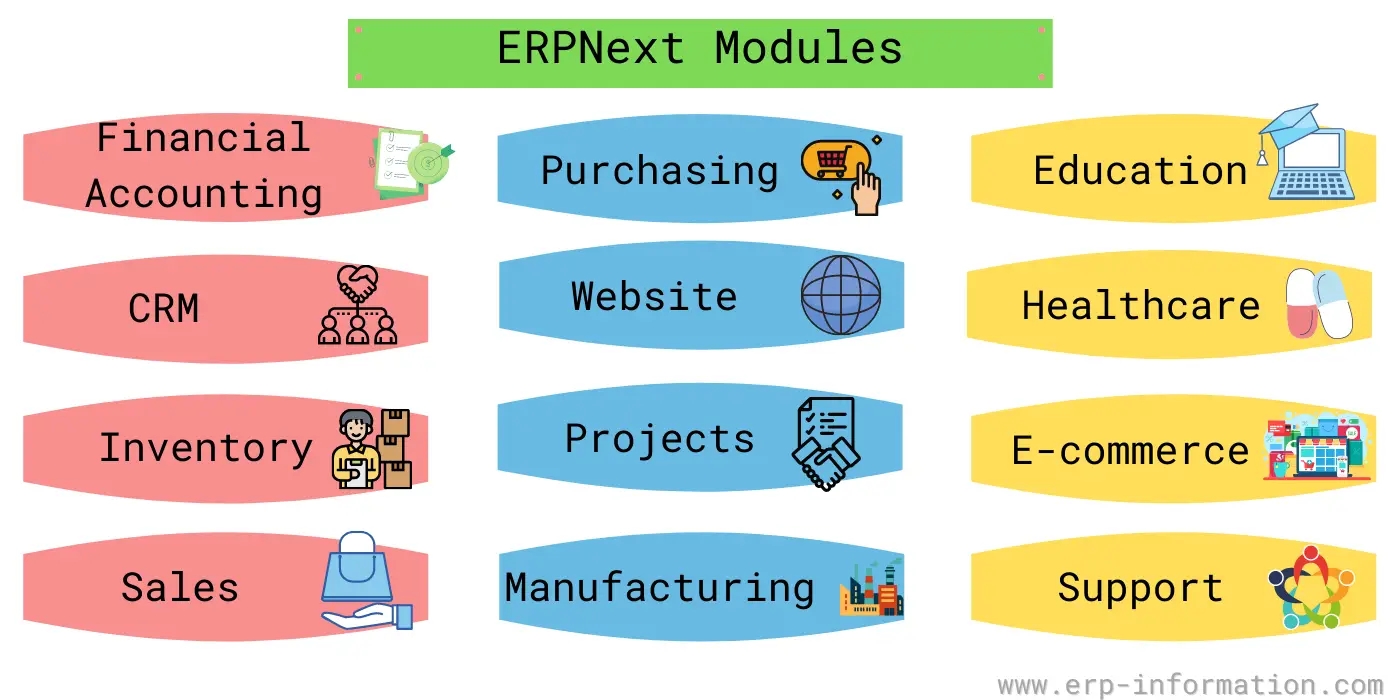
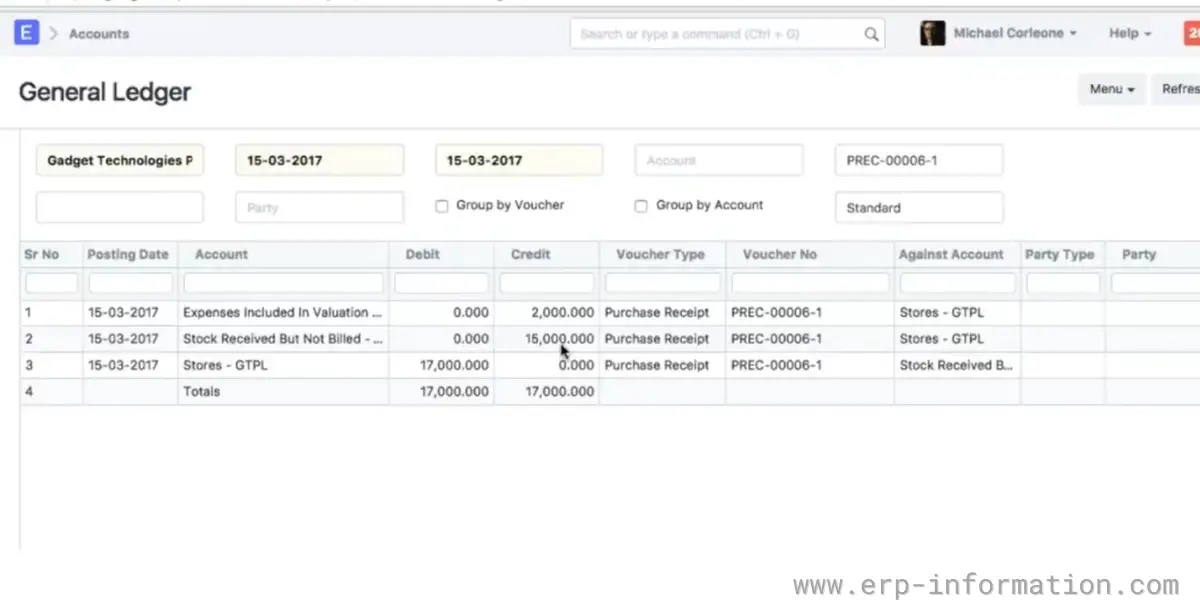
This module allows the user to have consolidated financials, transactions within the company, and bank statement uploading abilities.
CRM
This module manages the sales pipeline: leads, opportunities, contacts, and quotations, with campaign and communication tracking to help convert prospects into customers.
Inventory
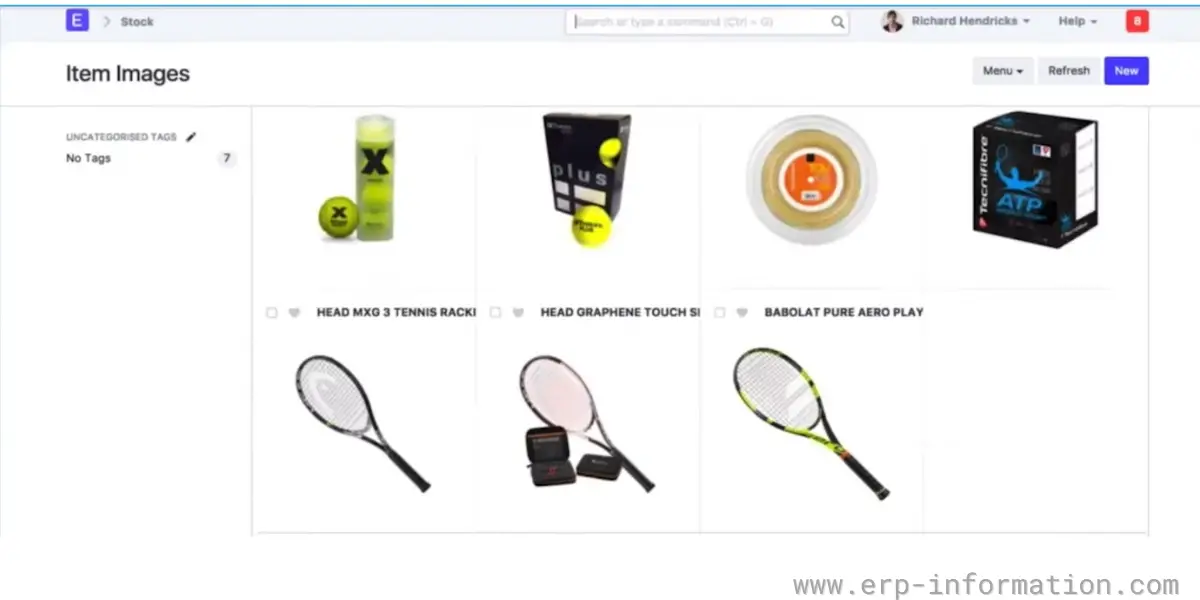
This is for managing stock and warehouse management.
Sales
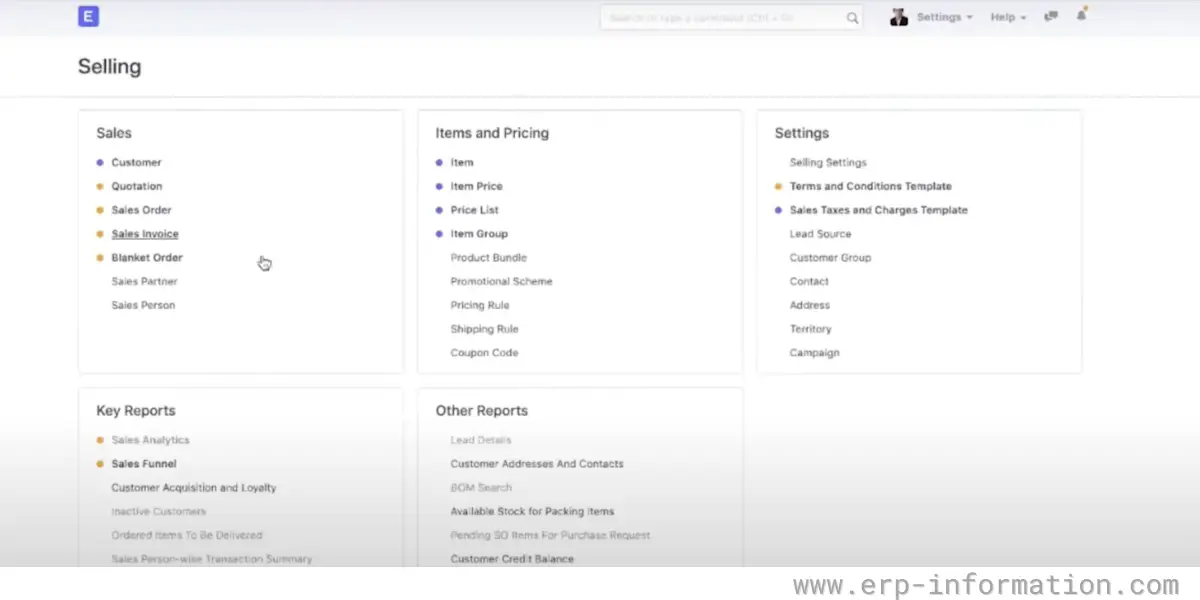
Manages the sales activities like quotations, sales orders, and customer interactions.
Purchasing
Purchasing is a cash outflow for the company’s stock and assets. ERP is useful for making good decisions in Buying required materials and electronic goods without damage and waste of materials.
Projects
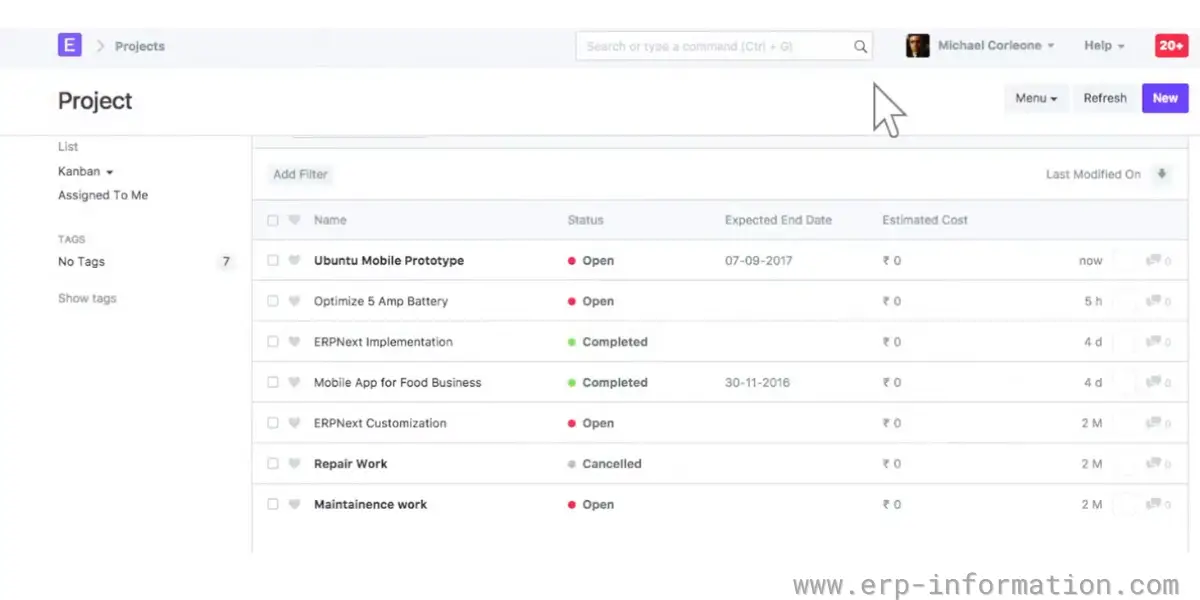
Project management keeps the record of cost, time usage, states of the assigned work, and returns.
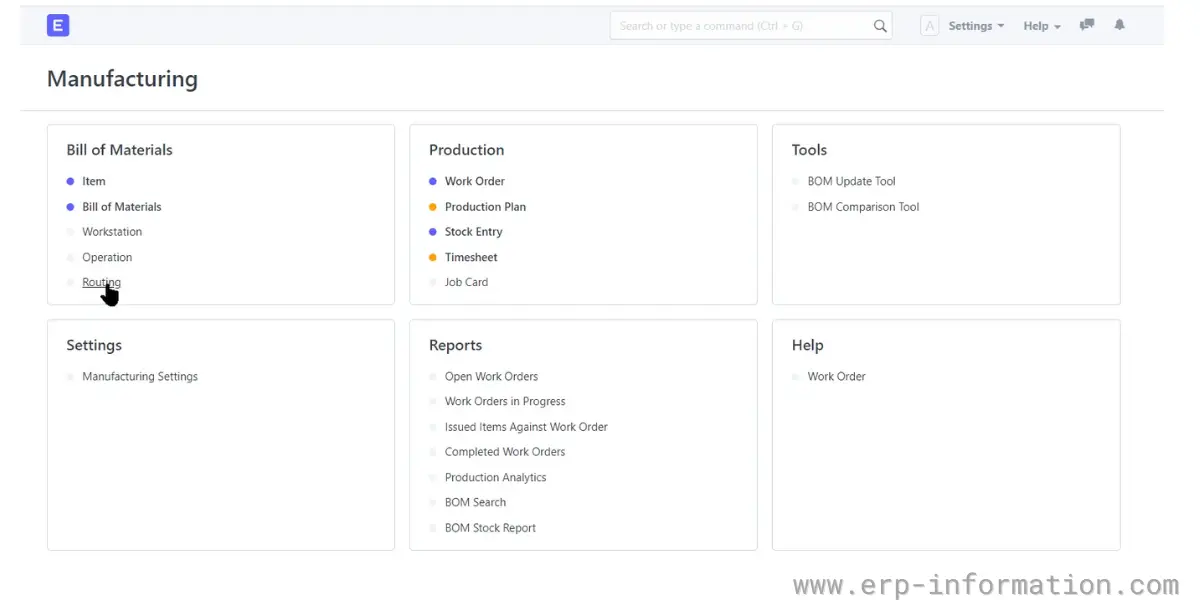
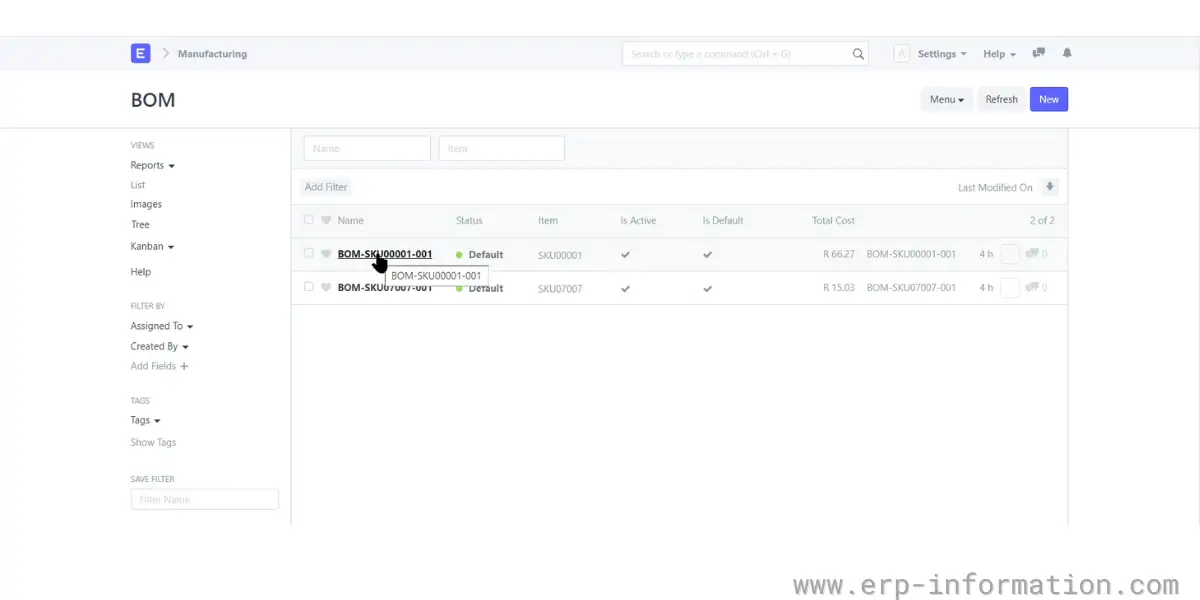
Manufacturing
The manufacturing module manages the Bill of materials, production plan, work order, stock entry, and time sheet.
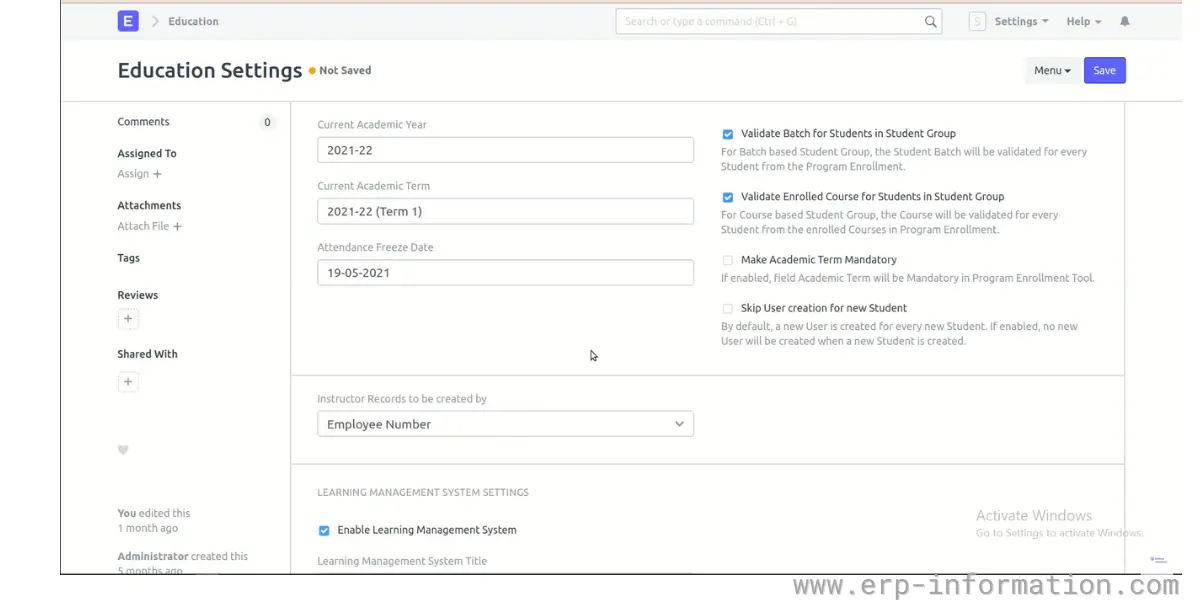
Education
Education is no longer part of ERPNext. It was a built-in module up to version 13; since version 14 it is a separate open-source Frappe app (frappe/education) for students, courses, fees and assessments, installed alongside ERPNext. The screenshot shows the old built-in settings.
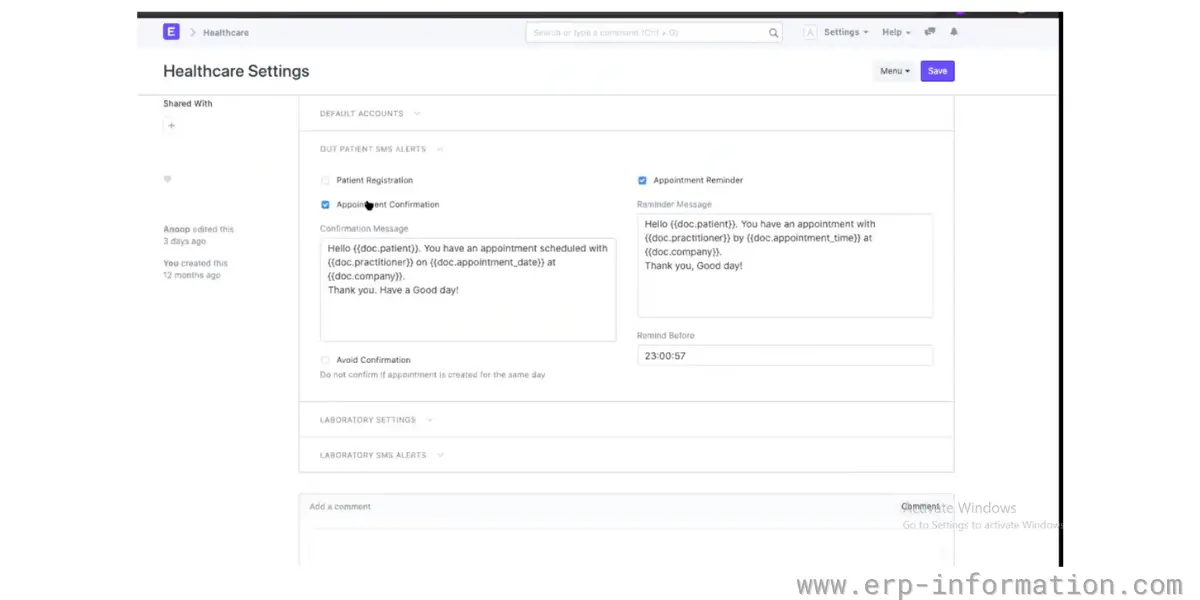
Healthcare
Healthcare also left ERPNext in version 14. The former Frappe Health app is now maintained by Earthians as Marley Health, a separate install for patient appointments, records, practitioner schedules and prescriptions. The screenshot shows the old built-in settings.
E-commerce
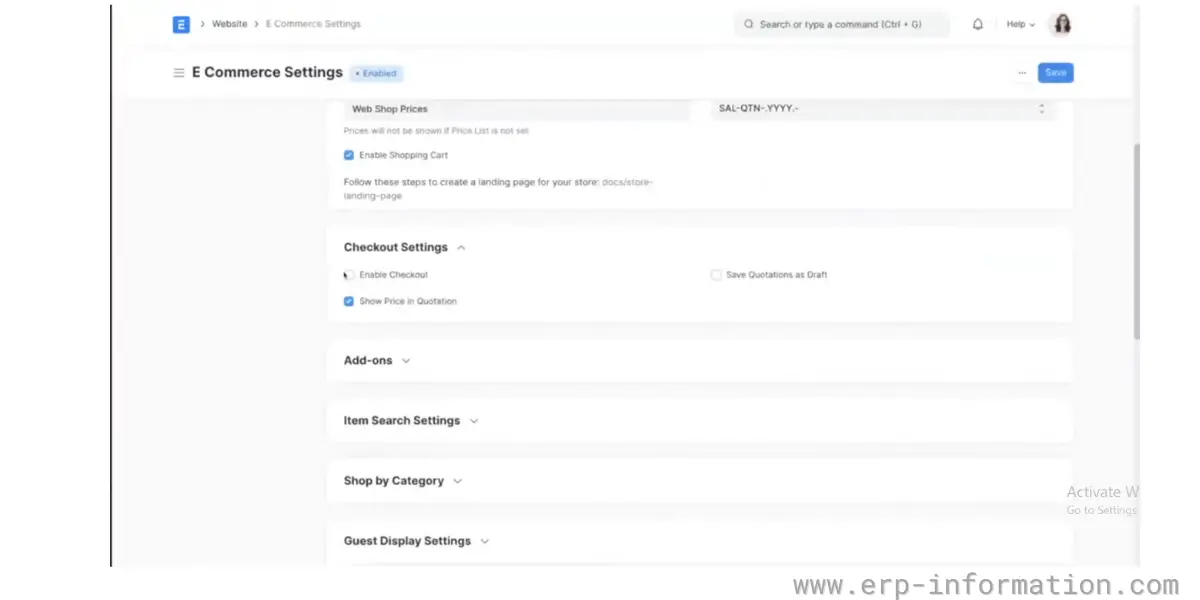
E-commerce was removed from ERPNext in version 15 and moved to the separate Webshop app (frappe/webshop), which adds product listings, item groups and a shopping cart to the ERPNext website. The screenshot shows the old built-in E-commerce settings.
Website
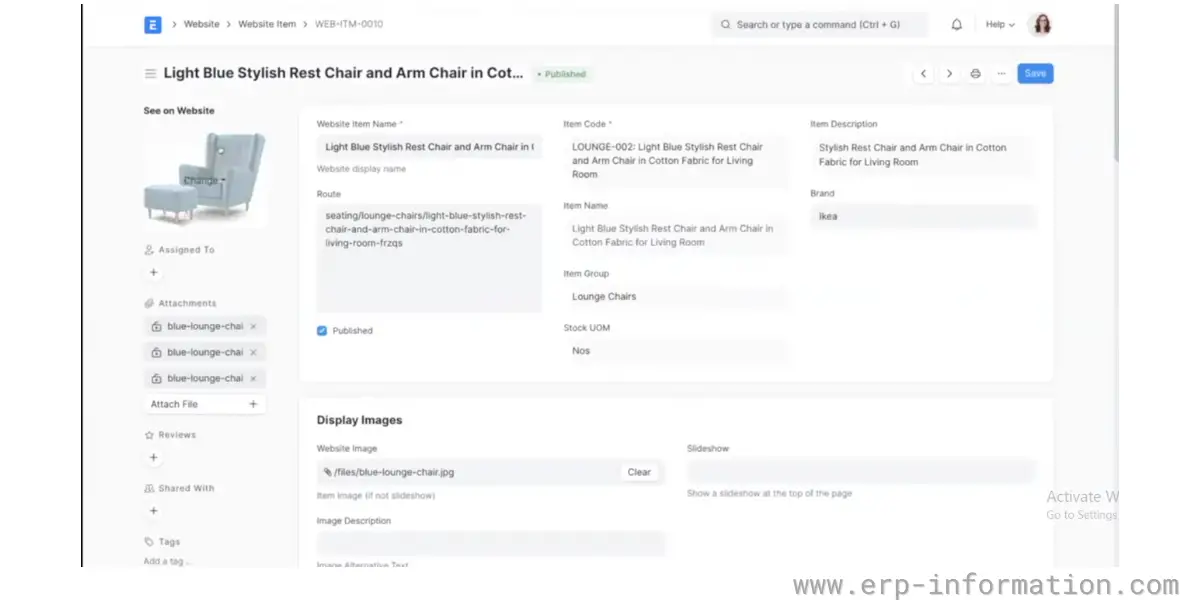
A website is a good platform for public interactions. This module helps to create a webpage, write the blog, publish the product details, and allow to buy the same.
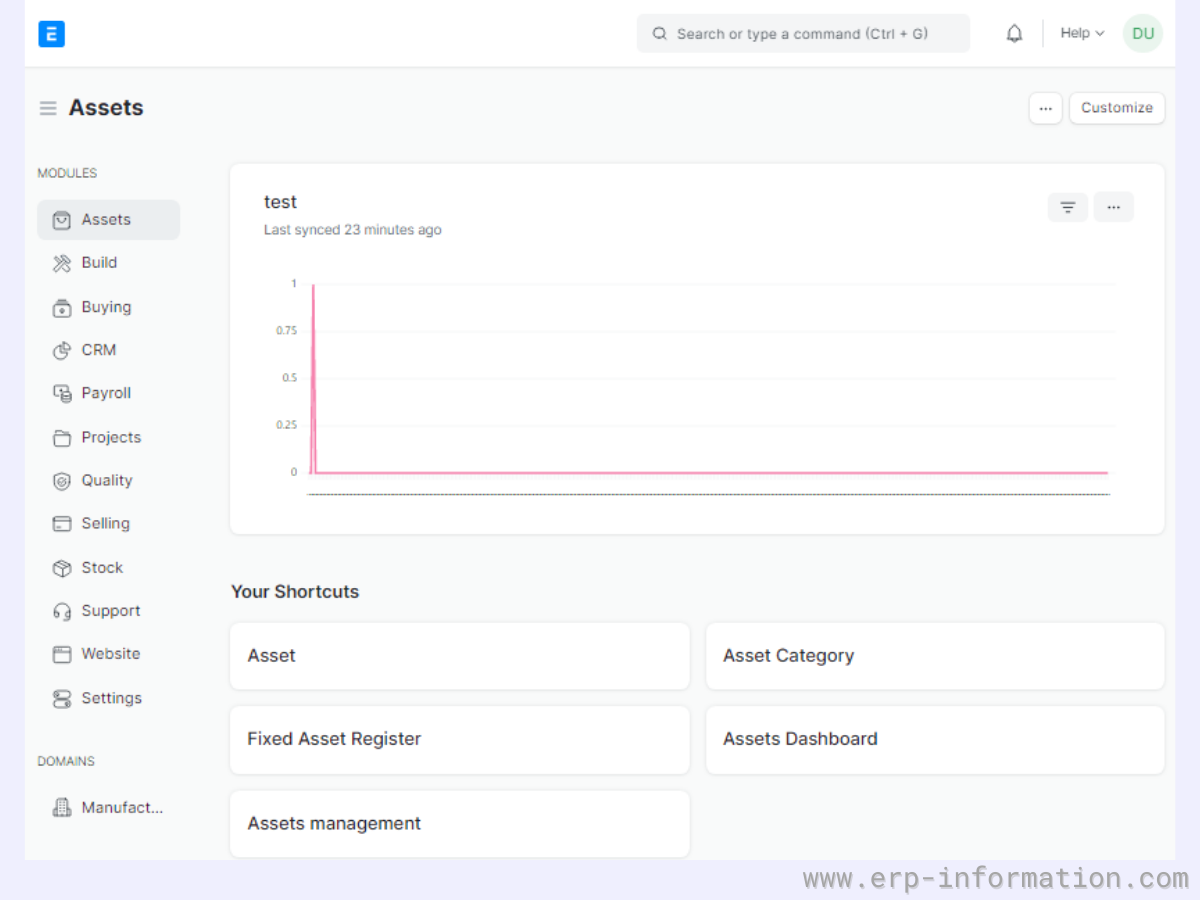
Some Screenshots of Modules
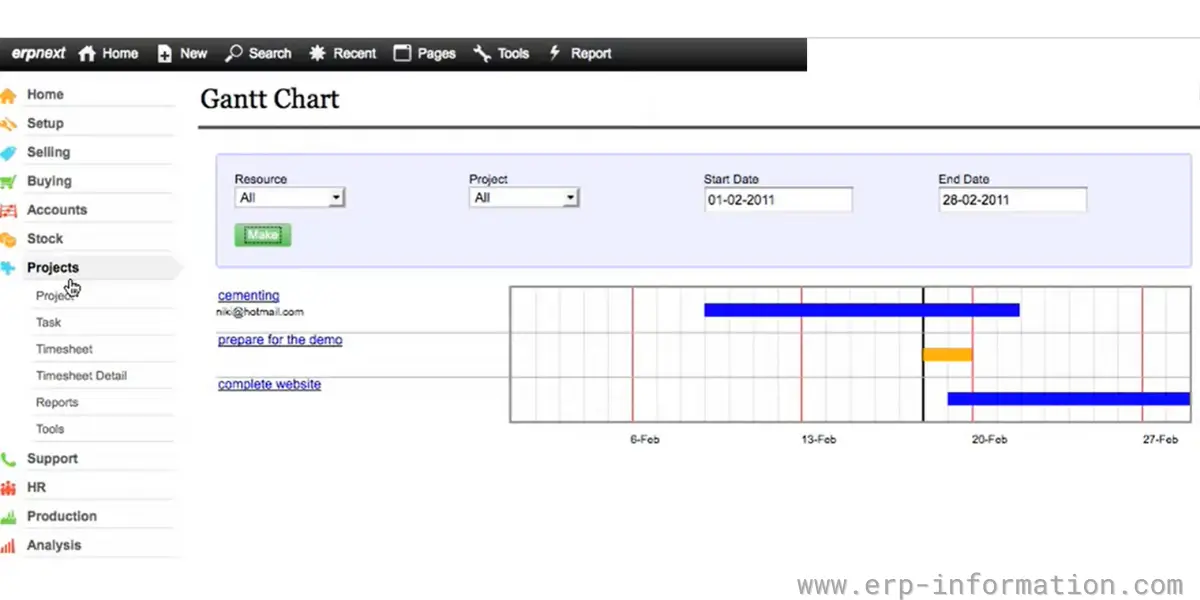
Projects Gantt Chart
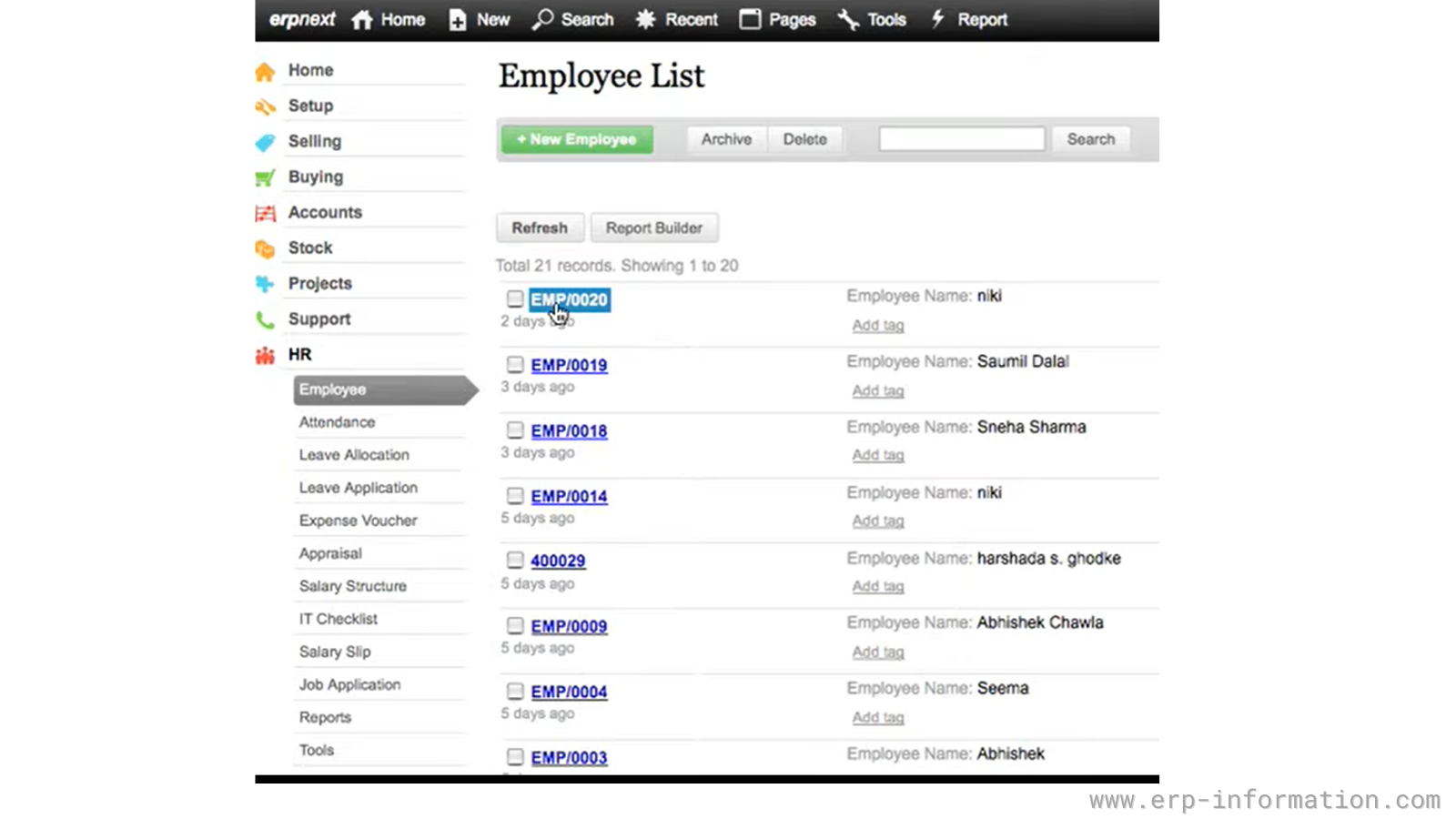
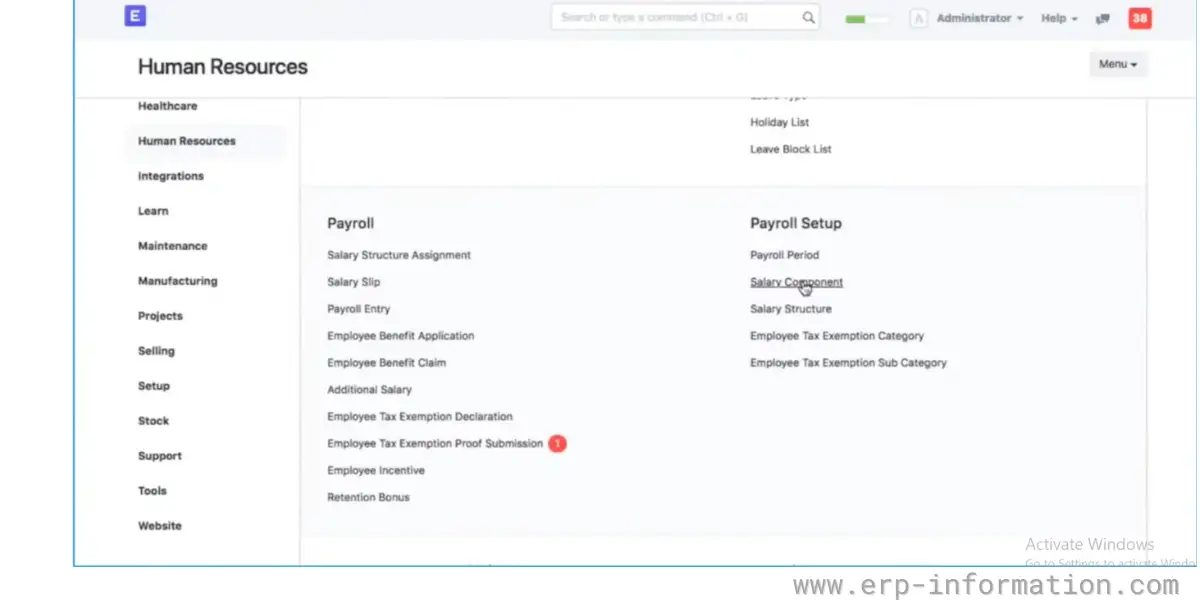
HR Employee List
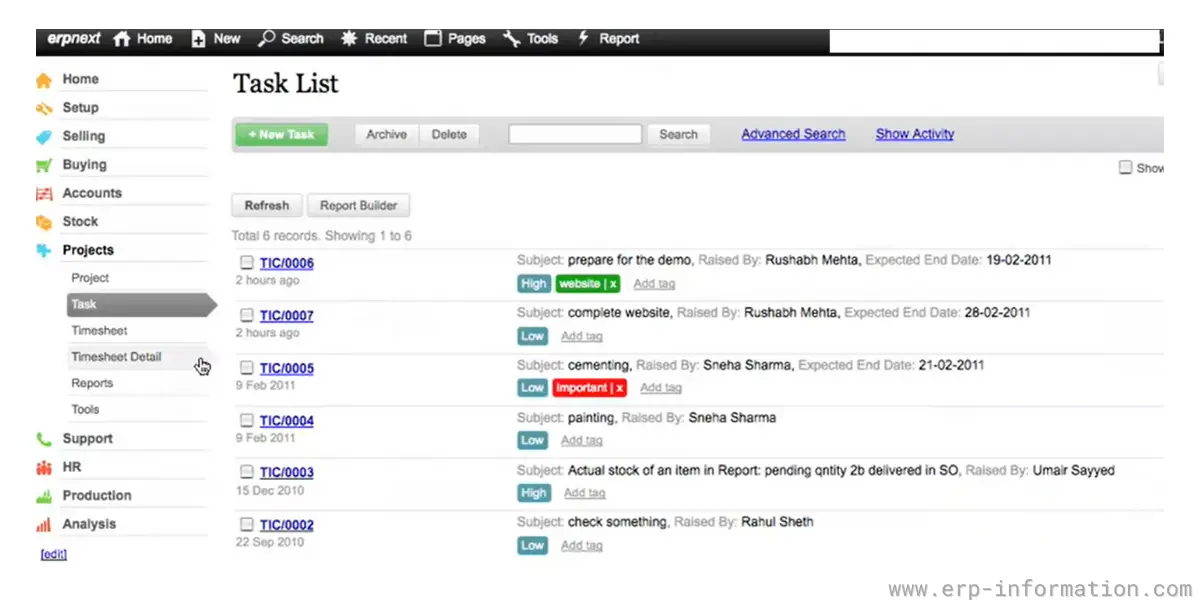
Project Task List
ERPNext pros and cons
Pros
The top advantages for your enterprise include,
- It has a practical and easy-to-use interface
- It is freely available. No license charges
- You can implement this software by yourself
- With its comprehensive features, it saves your time and money
- Its reporting system is straightforward
- It provides a flexible, centralized platform for your business
Cons
- The third-party app marketplace and partner ecosystem are smaller than Odoo’s or SAP’s.
- Complex or heavily customized deployments usually need a Frappe Partner or in-house technical skill to run well.
- The interface can feel leaner on polish than some commercial ERPs in places.
- Very large or highly specialized enterprises may outgrow its native feature depth.
What industries does it support?
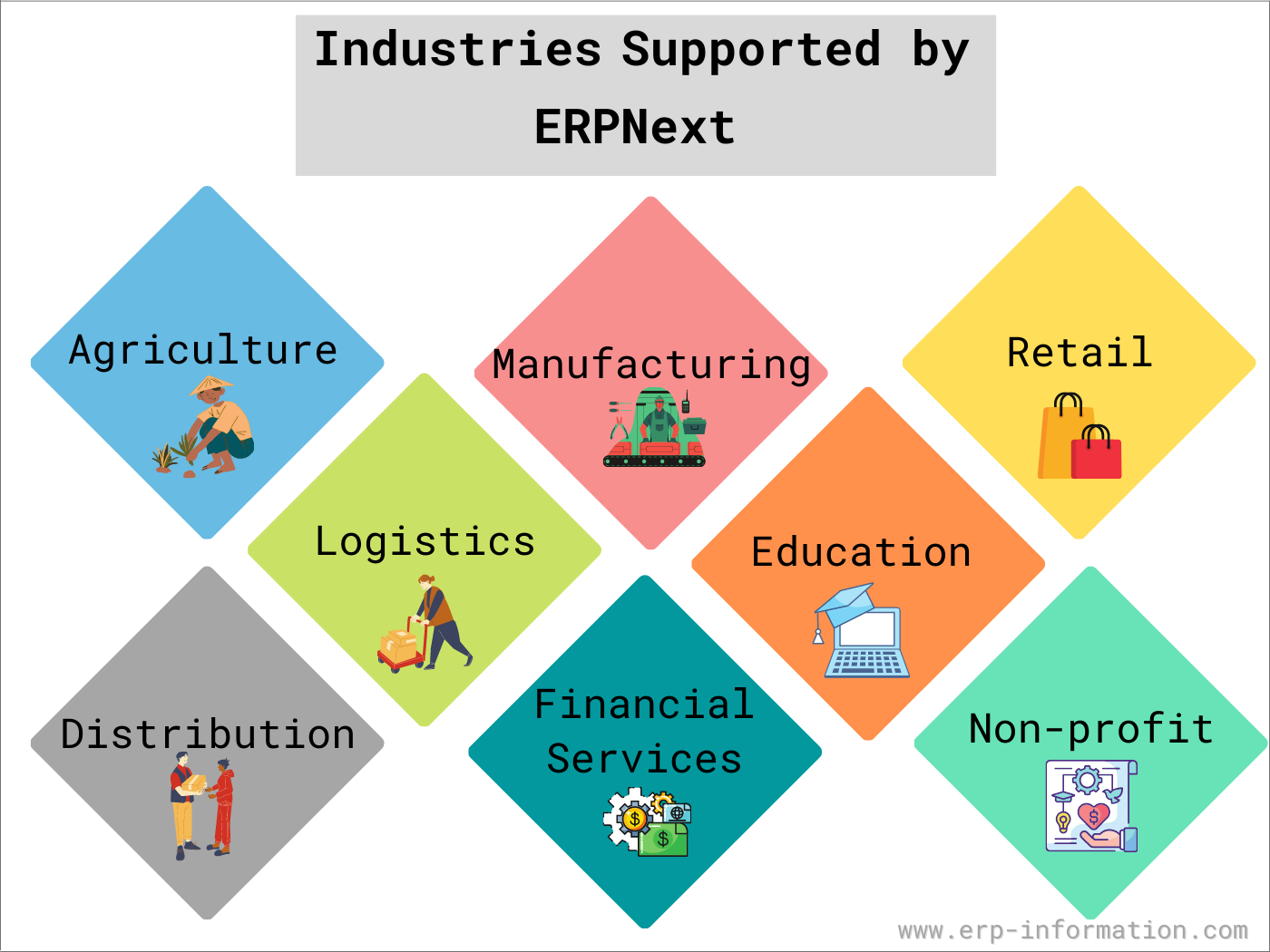
Frappe positions ERPNext for these industries. Three of them now need a separate app:
- Agriculture (separate Agriculture app, last updated May 2025)
- Manufacturing
- Retail
- Distribution
- Logistics
- Financial services
- Education (Education app)
- Healthcare (Marley Health app)
- Non-profit (the dedicated app was archived in July 2024)
ERPNext vs Odoo
ERPNext and Odoo are the two best-known open-source ERPs, and buyers usually weigh them against each other. The core difference is the licensing model.
| ERPNext | Odoo | |
|---|---|---|
| Open-source model | One edition, fully open (GPLv3) | Community (free) plus Enterprise (paid) |
| Per-user fees | None | Yes, on the paid plans |
| Feature paywall | No; all modules included | Some features are Enterprise-only |
| Customization | Frappe DocTypes (low-code, metadata) | Odoo Studio (paid) or custom code |
| Ecosystem | Smaller, but fully open | Larger app store and partner network |
In short: choose ERPNext if you want everything open source with no per-user cost and are comfortable self-hosting or paying flat hosting; choose Odoo if you want the largest app ecosystem and the most polished commercial features and can pay per user.
Alternatives
Customers
Some of the companies using it are
- Union Global
- Office one
- Neolync
- eso electronic
- V3 Technologies
- ElasticRun
Conclusion
ERPNext is one of the strongest options for a business that wants a genuinely open-source ERP without per-user licensing. Every module is in the free edition, the Frappe Framework makes it highly customizable, and your only required cost is hosting.
The trade-offs are a smaller ecosystem than Odoo or SAP and a real need for technical skill, or a Frappe Partner, on complex projects. If you want full control with predictable, no-per-user costs and can handle or pay for the technical side, ERPNext is well worth a close look. Weigh your team’s technical capacity, the modules you need, and your budget before you decide.
You can find more open-source ERP software similar to ERPNext.
References:
Frequently asked questions
Is ERPNext really free?
Yes. ERPNext is open-source software under the GPLv3 license, with no per-user fee and no paid “enterprise” edition. Every module is in the free version. You can run it at no software cost by self-hosting; you only pay if you choose managed hosting or paid support.
What is the latest version of ERPNext?
ERPNext 16, released on January 12, 2026, is the latest major version. Version 15 is still supported and patched, and version 14 reached end of life in January 2026. Both ERPNext and the Frappe Framework it runs on get frequent point releases.
What is ERPNext built on?
ERPNext is built on the Frappe Framework, a low-code web framework written in Python and JavaScript. Frappe models data as metadata-driven “DocTypes,” which lets administrators add custom fields, forms, and record types with little or no code. The framework is MIT-licensed, while the ERPNext application on top of it is GPLv3.
How much does ERPNext hosting cost?
Self-hosting the open-source software is free apart from your own server. Frappe Cloud, the official managed hosting, starts at about $5 per site per month for shared plans, with dedicated servers costing more. Pricing is per site or per server, never per user. Check frappe.io/cloud/pricing for the current tiers.
ERPNext vs Odoo: which is better?
ERPNext is fully open source with no per-user fees, so all features come in the free edition. Odoo splits into a free Community edition and a paid Enterprise edition, with some features and a per-user price on Enterprise. Choose ERPNext for a fully open, no-per-user-cost system; choose Odoo for the larger app ecosystem and polished commercial features.
Using Google Search? Add erp-information.com as a preferred source.