Oil and gas ERP is not one market. An upstream operator needs joint interest billing, division of interest and revenue distribution before it needs anything else. A midstream company needs volume balancing, tariff calculation and regulatory reporting. A refiner runs closer to conventional process manufacturing. A system that is excellent for one of those three is often irrelevant to the other two.
That distinction matters more than any feature list, because most products sold as oil and gas ERP are general platforms carrying an energy overlay, and only a handful were built around the accounting rules the industry actually runs on.
Below are eight systems used across the sector, what each one is genuinely built for, and what we could and could not verify about pricing. Where a vendor does not publish figures, we say so rather than repeat a number we cannot source.
What is Oil and Gas ERP Software?
Oil and gas ERP software is specialized ERP software for oil and gas industry. It helps companies manage their operations, track production data, and comply with regulations.
There are many different types of oil and gas ERP software, and each one serves a specific purpose. Common examples include production tracking, accounting, and regulatory compliance software.
Why Do You Need Oil and Gas ERP Software?
If you are running an oil and gas company, you know how important it is to have a sound enterprise resource planning system. An ERP system can help you manage your operations more effectively, track production data, and comply with regulations.
There are many different types of oil and gas ERP software on the market, each with its unique features. Therefore, you need to choose a system that will meet the specific needs of your business.
What Makes Oil and Gas ERP Different
Four requirements separate an energy system from a general ERP. If a vendor cannot demonstrate all four on your own data, it is a general platform being sold into the sector.
- Joint interest billing. Wells are rarely owned outright. The operator pays the costs and bills each non operating partner for its share on a schedule set by the joint operating agreement. Getting this wrong creates partner disputes and audit exposure.
- Division of interest and revenue distribution. Production revenue splits across working interest, royalty and overriding royalty owners, and the split changes as leases and title change. The system holds those decks and pays the owners from them.
- Production accounting and allocation. Volumes metered at a battery or tank have to be allocated back to individual wells before anything can be valued, taxed or billed.
- Authorization for expenditure and land records. Capital spend is approved and tracked per AFE against partner approvals, alongside the lease, tract and obligation records that drive rentals and expiries.
Severance and production tax reporting sits on top of all four and is state specific in the United States. General ERP platforms usually meet these needs through a partner add on rather than natively, which is worth establishing early because it decides who actually supports the system when a close goes wrong.
Which of These Systems Fits Which Segment
Two entries below are Oracle products. NetSuite and Oracle Fusion Cloud ERP are separate systems aimed at different sizes of business, so they are listed separately, but they come from one vendor and one negotiation.
| System | Built for | Native upstream accounting |
|---|---|---|
| Enertia | Upstream exploration and production, independents | Yes, purpose built |
| Oracle NetSuite | Small to mid size, general purpose | No, partner add on |
| Infor CloudSuite | Asset heavy operations, midstream | No, industry overlay |
| SAP Business One | Small business, general purpose | No, partner add on |
| IFS Cloud | Asset and maintenance heavy, midstream | No, strong asset management instead |
| Workday | Finance and HR, large enterprise | No |
| Oracle Fusion Cloud ERP | Mid to large enterprise, general purpose | No, partner add on |
| Deltek Costpoint | Project and contract accounting | No |
Enertia is the only system here designed around upstream accounting from the start. The rest are capable general platforms and several are excellent, but an upstream operator adopting one of them is buying an integration project alongside the licence.
1. Oracle NetSuite
Oracle NetSuite is one of the leading ERP solutions for oil and gas companies. It offers a comprehensive suite of features that can meet the needs of businesses in all stages of growth.
Its key features include financial, revenue, inventory, and project management. NetSuite is also highly customizable, so it can be tailored to fit the specific needs of your business.

Key features
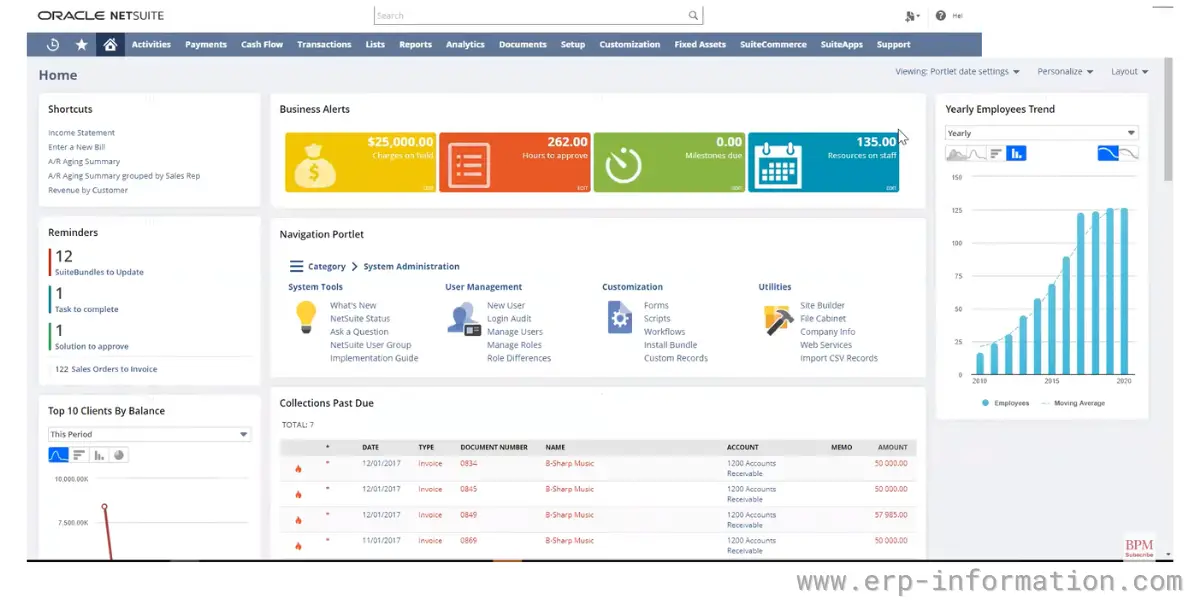
Oracle NetSuite ERP is a comprehensive solution that helps oil and gas companies manage their business processes and operations more effectively. It offers a range of features that can help improve efficiency and optimize performance, including:
- Financial management: Oracle NetSuite ERP helps oil and gas companies manage their finances more efficiently, allowing them to keep track of their revenue and expenses more effectively.
- Inventory management: The software includes features that can help oil and gas industries manage their inventory more effectively, including tracking stock levels and monitoring stock movements.
- Customer relationship management: Oracle NetSuite ERP includes features that can help manage organizations’ customer relationships more effectively, including tracking customer contact details and customer queries.
- Spend management: The software includes features that help oil and gas companies manage to spend more effectively, including tracking vendor contracts and purchase orders.
- Business intelligence: Oracle NetSuite ERP provides tools that can help organizations gain insights into their business operations, including the ability to generate reports and analytics.
Screenshots of Oracle NetSuite
Pricing
Oracle does not publish a NetSuite price list. Partners consistently report a base platform fee starting around $999 per month, with full user licences quoted between roughly $99 and $199 per user per month depending on edition, module mix and negotiated term. The entry per user rate has drifted upward at renewal for existing customers, so budget from the middle of that band rather than the bottom.
Pricing as per edition
It offers three types of editions. They are categorized based on the number of users, the size of your organization, and the kind of functionalities you need.
- NetSuite Limited Edition is a pricing plan for small industries with ten user licenses and less than 50 employees.
- NetSuite Mid-market Edition is a pricing plan for medium industries with more than ten user licenses and who are required to have merged financial reports across multiple currencies.
- NetSuite Enterprise Edition is a pricing plan for large industries with more than 1,000 user licenses.
Likes
- It provides comprehensive functionality, scalability, and ease of use
- It can handle various business processes, from financials and procurement to manufacturing and sales
- It can also be scaled up or down to meet the needs of organizations
Dislikes
- Subscription cost is expensive
- May not be the best fit for all businesses
- It can also be challenging to customize and implement the software
- Additional costs are charged for advanced modules and suite apps
- Steep learning curve
- Accuracy in reports is lacking
- Difficult to find the required information
- Backend work slows down while navigating
User opinion
Oracle NetSuite ERP for the oil and gas industries is a comprehensive system that can manage all aspects of the business, from accounting and financials to sales and operations.
It is perfect for midstream oil and gas companies that need a system that can handle the industry’s complexities. In addition, NetSuite is easy to use, so even employees with no prior experience with ERP systems can quickly get up to speed.
It includes all the features and functionality that oil and gas companies need to run their businesses effectively. Overall, Oracle NetSuite is the best oil and gas ERP software today.
2. Infor
Infor is a leading business software and services provider with over 20,000 customers in over 120 countries.
Infor’s products are designed to meet the unique needs of specific industries, and its solutions span the entire breadth of enterprise applications, including financials, human resources, manufacturing, sales, and service.
Key features
Infor for Oil and Gas industry is a comprehensive software suite that helps midstream oil and gas companies manage their business operations more effectively. Some of its key features include:
- Accounting and financial management: Infor Oil and Gas provides a robust accounting system and financial management tools to help midstream companies keep track of their finances more effectively.
- Project management: Infor Oil and Gas has a robust project management module to help midstream companies manage their projects more effectively.
- Enterprise asset management: Infor Oil and Gas includes a comprehensive enterprise asset management module to help midstream companies manage their assets more effectively.
- Supply chain management: Infor Oil and Gas provides a robust supply chain management module to help midstream companies manage their supply chains more effectively.
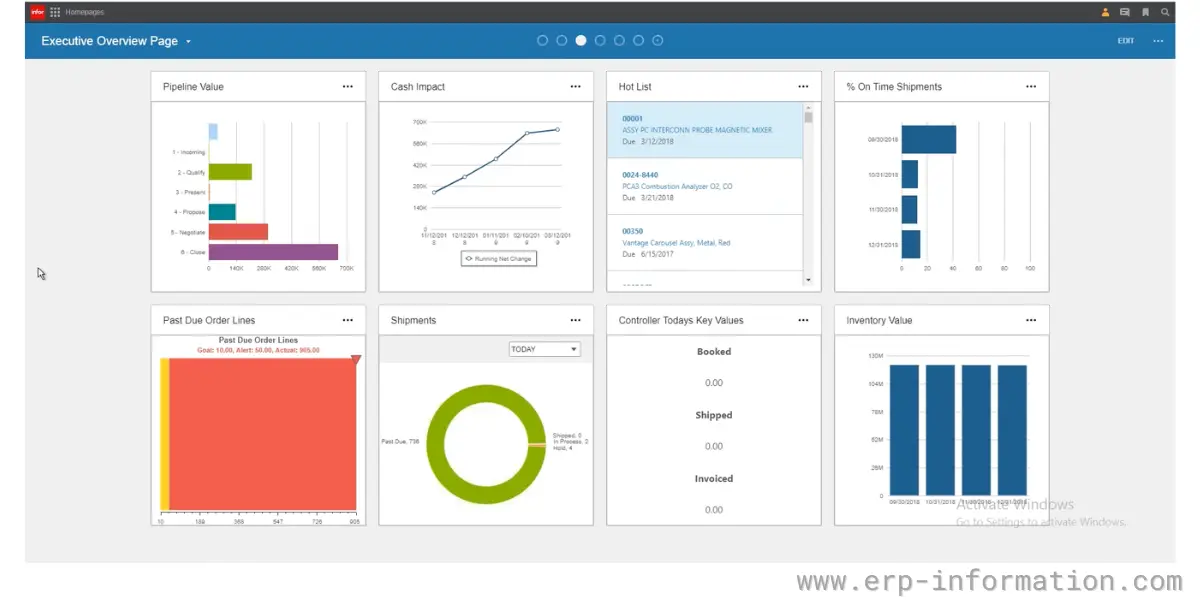
Screenshots of Infor
Pricing
Infor does not publish a list price for CloudSuite. Every deal is quoted individually against the modules taken, the user mix and the industry edition.
- Implementation partners commonly quote CloudSuite subscriptions in the region of $150 to $400 per user per month, with the product line and user type deciding where in that band you land.
- That covers licensing only. Implementation, data migration, integrations and training are quoted separately and routinely exceed the first year of subscription.
- Because nothing is published, treat any single figure as a negotiating anchor rather than a price. Ask Infor for a quote scoped to your entity structure and well count.
Likes
Infor is a popular ERP software provider that offers solutions for oil and gas industries. Their software is designed to help businesses manage their operations and comply with regulations.
- Reliable and easy to use
- Adaptable for specific needs
- It is easy to handle accounting functionalities
- It ensures the accuracy of the costs
- Runs the monthly process smoothly
Dislikes
- UI is not user-friendly
- Prepares unstructured reports
- Generation of financial statements is not up to the mark
- The implementation process takes time, and the cost is high
- Software processing speed depends on the network speed
- Fewer integration options
- You need to open more than one page to view site locations
Other details
| Deployment | Cloud, SaaS, Web-Based |
| Supported languages | Arabic, Czech, Danish, German, English, French, Croatian, Hungarian, Italian, Japanese, Korean, Dutch, Polish, Portuguese, Slovak, Slovenian, Spanish, Serbian, Swedish, Chinese (Simplified) |
| Supported device | Mac, Linux, Andriod, iPhone, iPad |
| Support | Email/Help Desk, FAQs/Forum, Knowledge Base, Phone Support, 24/7 (Live Rep), Chat |
| Training | In-person, Webinars, Documentation, Videos |
User opinion
Infor is an excellent company with top-of-the-line oil and gas software. If you use their products, you will be impressed with the quality and functionality of their software.
Infor is a world leader in oil and gas software, and its products are used by some of the largest companies in the industry.
3. Enertia
Enertia is specially designed for the oil and gas industries. It offers a wide range of solutions to help oil and gas businesses manage their operations.
In addition, Enertia’s ERP software is designed to help companies to comply with regulations and manage their finances.
Key Features
- Accounting and finance – Enertia helps businesses manage their finances and comply with regulations.
- Land, contracts, mapping – Software is designed to help businesses manage their land, contracts, and mapping.
- Production – Software is designed to help businesses manage their production.
- Reporting and integration – Software is designed to help businesses with reporting and integration.
Pricing
Pricing mainly depends on functionality, consulting, and hosting types. To get a custom quote, you need to contact Enertia.
Likes
- It provides numerous features for oil and gas companies
- It enables us to keep track of all essential information
- User-friendly interface
Dislikes
- The software is a little bit slow
- System requires some upgrading
- Process timing is slow
- Reporting and customization need improvement
- Frequent system errors keep occurring
User opinion
Enertia ERP is one of the top oil and gas software providers. It offers comprehensive functionality for managing all aspects of the business, from exploration and production to transportation and marketing.
It’s effortless to use, which helps reduce training time and costs. The customer service is excellent, and the company constantly works to improve the software. Overall, Enertia ERP is a perfect choice for oil and gas companies.
4. SAP Business One
SAP Business One is a software solution for small and midsize businesses. It offers a comprehensive suite of features covering everything from financials to production to customer relations, and it’s easy to use so you can get up and running quickly.
Key features
- Financial management – You can manage your finances more effectively with SAP Business One. The software provides comprehensive financial reporting and analysis tools to help you make better decisions.
- Spend management – SAP Business One helps you manage your company’s spending more effectively. The software provides tools to track and control spending and budgeting and forecasting tools to help you plan for the future.
- Supply chain management – SAP Business One provides powerful tools to manage your supply chain. The software can help you track inventory levels, manage supplier relationships, and optimize production processes.
- Human capital management – SAP Business One includes tools to help you manage your human resources more effectively. For example, the software can help you track employee time and attendance and manage payroll and benefits administration.
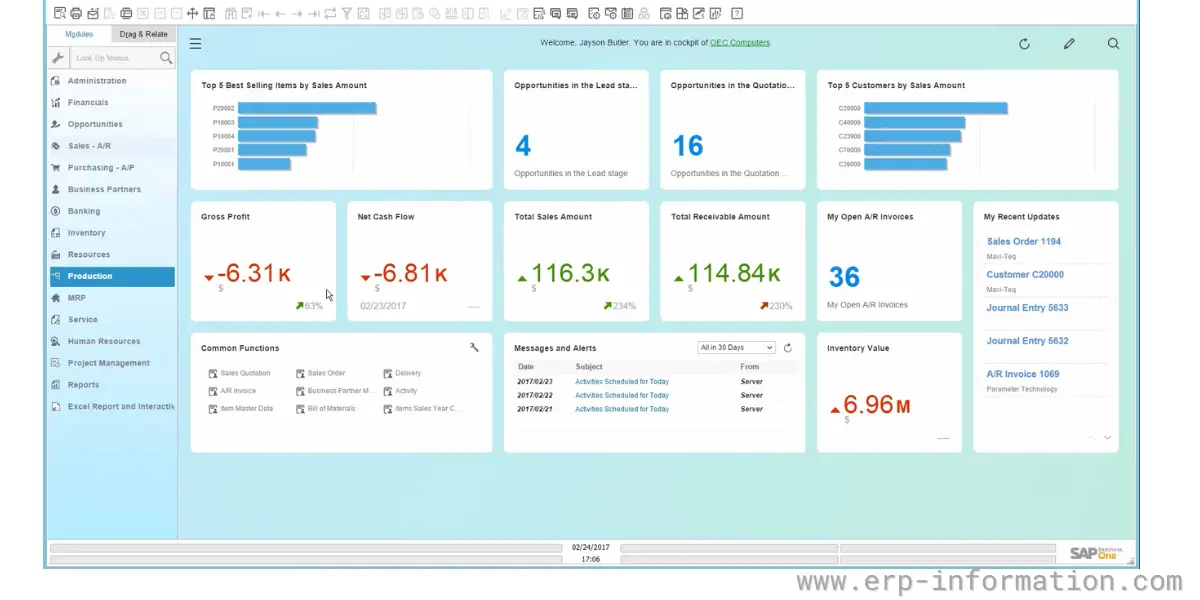
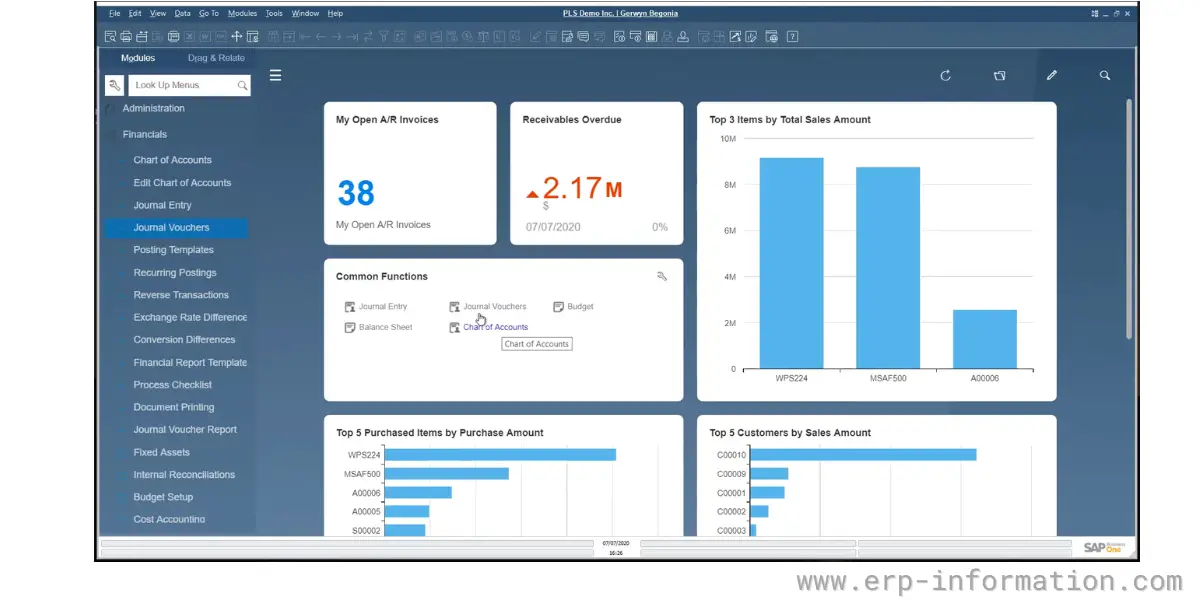
Screenshots of SAP Business One
Pricing
The figures below are one time perpetual licence fees per user for the on-premise edition, not monthly subscriptions. Budget a further annual maintenance charge of about 20 percent of licence value for upgrades and support.
Starting license package: $1,357 per user for on-premise, capped at five users
- A price plan is generated for startups and small businesses
- This license provides features for accounting, purchasing, item management, sales orders
- You can upgrade to a ‘limited license’ or ‘professional license’ when your business grows.
- Limited license package: If you want a limited license, then the price is $1666 per user
- The limited license provides access to limited users to particular features like accounting.
- Professional license package: To get a professional license, you need to pay $3213 per user
- It provides unlimited access to all the features.
Likes
- Automatic data entry
- Integrates well with other apps
- Customizable features
Dislikes
- Expensive licensing
- Complex software and a steep learning curve
- Limited Human Capital Management functionalities
- Limited customization
- Poor security features
- Complicated reporting features
- Difficulties in finding local support
Other details
| Deployment | Cloud, SaaS, Web-Based |
| Supported languages | Arabic, Czech, Danish, German, English, French, Croatian, Hungarian, Italian, Japanese, Korean, Dutch, Polish, Portuguese, Slovak, Slovenian, Spanish, Serbian, Swedish, Chinese (Simplified) |
| Supported device | Mac, Linux, Andriod, iPhone, iPad |
| Support | Email/Help Desk, Knowledge Base, Phone Support, Chat |
| Training | In-Person, Webinars, Documentation, Videos, Live Online |
User opinion
SAP Business One is an excellent option for small and midsize businesses. It has all the features and functionality you need to manage your business effectively, and it’s easy to use to get up and running quickly. We recommend SAP Business One to anyone looking for an ERP software solution.
5. IFS ERP
IFS oil and gas software company that provides ERP solutions to the energy industry. Some of the world’s largest oil and gas companies use IFS ERP software and is known for its innovation and customer-centric approach.
Key features
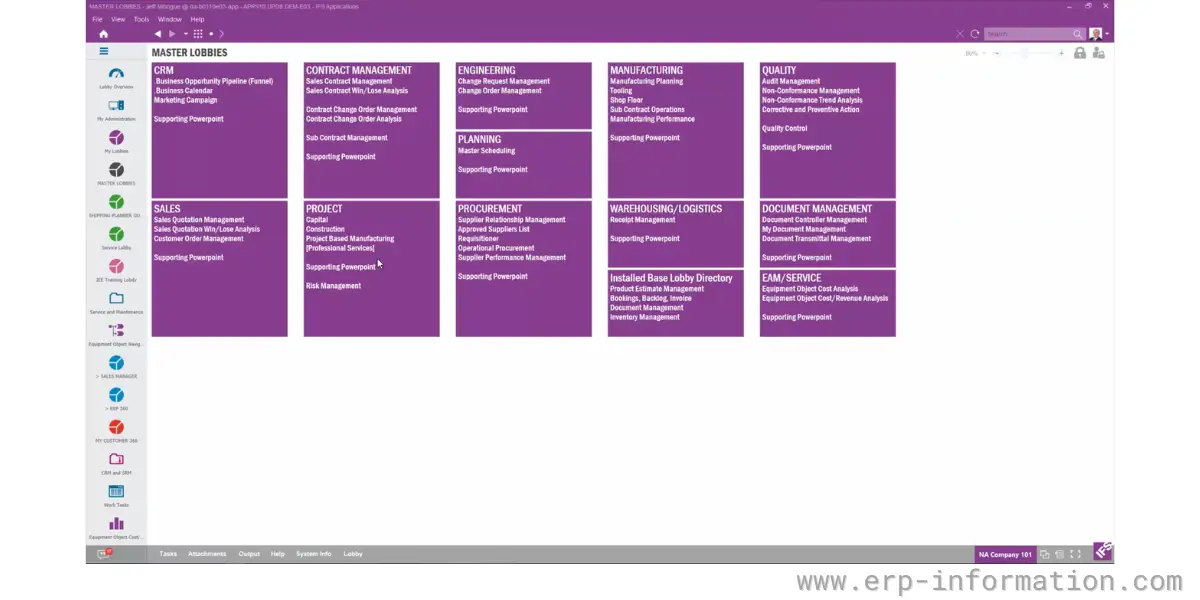
- Enterprise asset management helps companies manage their physical assets, such as wells, pipelines, and refineries, and their financial assets, such as leases and drilling rights. That allows companies to keep track of all their assets and make better decisions about where to invest.
- Accounting and finance – IFS ERP provides a complete accounting and finance solution for oil and gas companies. That includes features such as project accounting, budgeting, and forecasting. It also consists of a comprehensive financial reporting module.
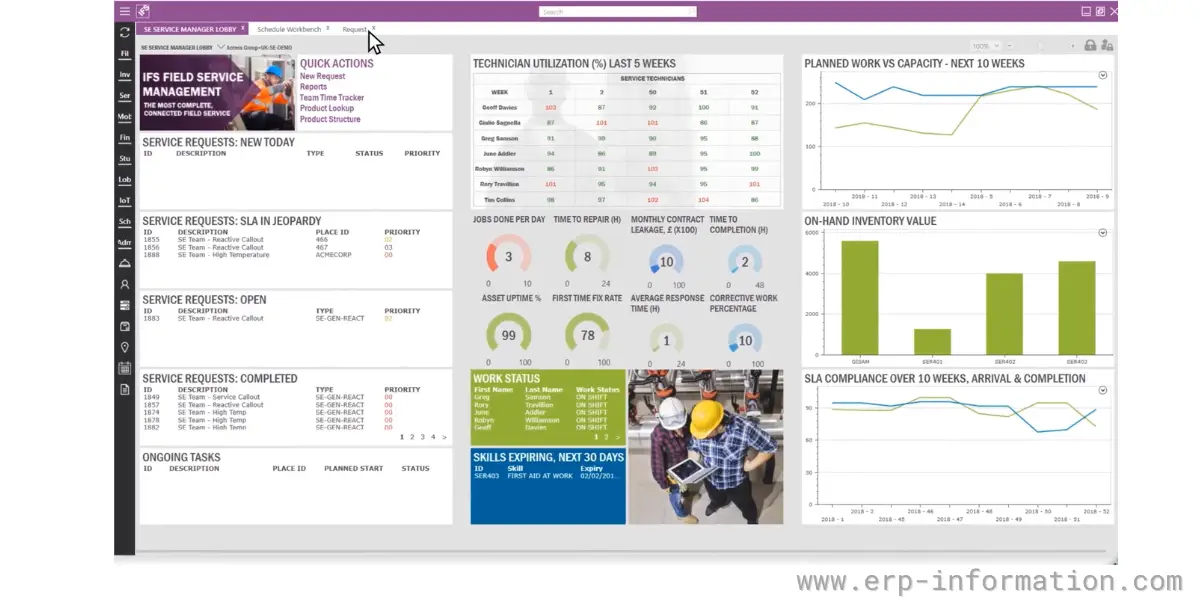
- Service management – The software includes a module that helps companies manage their service contracts and operations. That includes asset tracking, work order management, and field service management.
- Asset life cycle management – IFS ERP helps companies manage the life cycle of their assets, from planning and construction to decommissioning. That includes asset tracking, maintenance management, and disposal management.
Some screenshots of IFS
Pricing
IFS has not mentioned pricing details publicly. Therefore, you need to contact them to get pricing details.
Likes
- All-inclusive functionalities
- Easily customizable
- User-friendly software
- IFS can be transferrable to excel
Dislikes
- User interface is confusing
- It is not affordable for all businesses
- Difficult to set up the software
- Complex documentation
- Difficult to make the consolidation process
- It takes more time to fix bugs
- Lack of flexibility
- Report generation is time-consuming
- Difficult to access old data
User opinion
IFS ERP is one of the top oil and gas ERP software. It offers a comprehensive and customizable solution for the oil and gas industry. It is user-friendly and helps companies streamline their operations and improve efficiency.
6. Workday
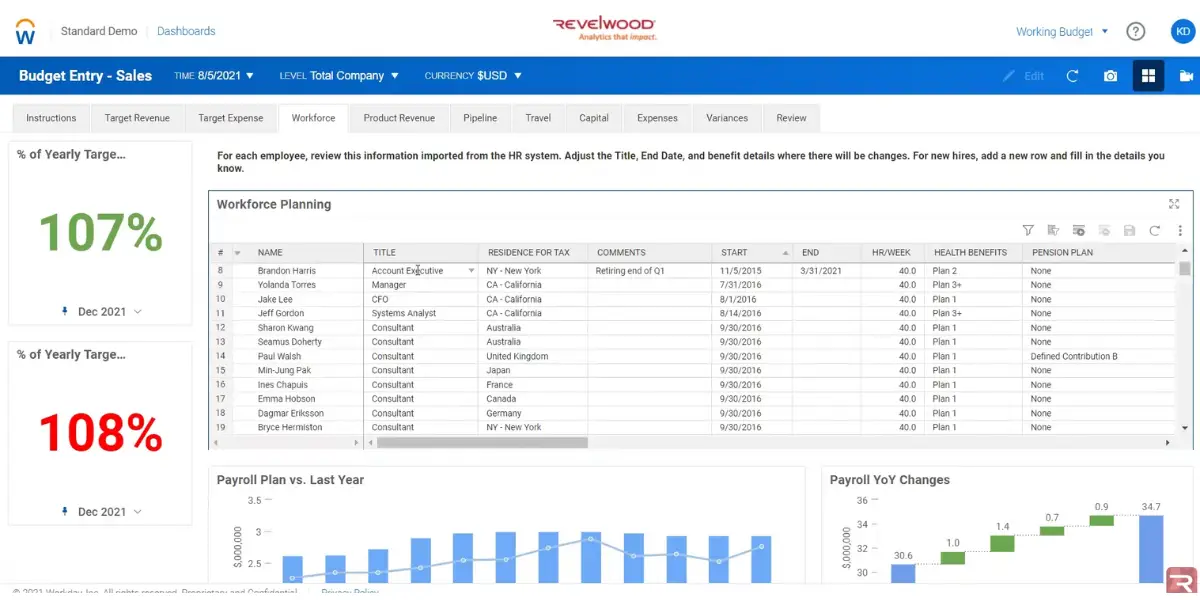
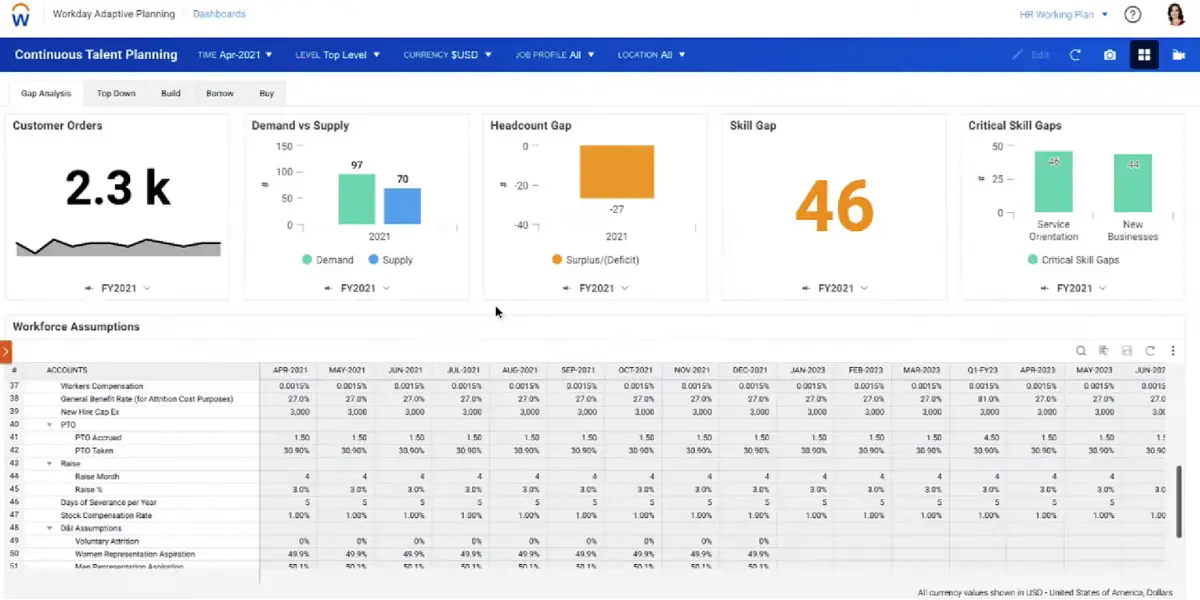
The software provides real-time insights into employee performance and productivity, allowing you to manage your workforce better and maximize output.
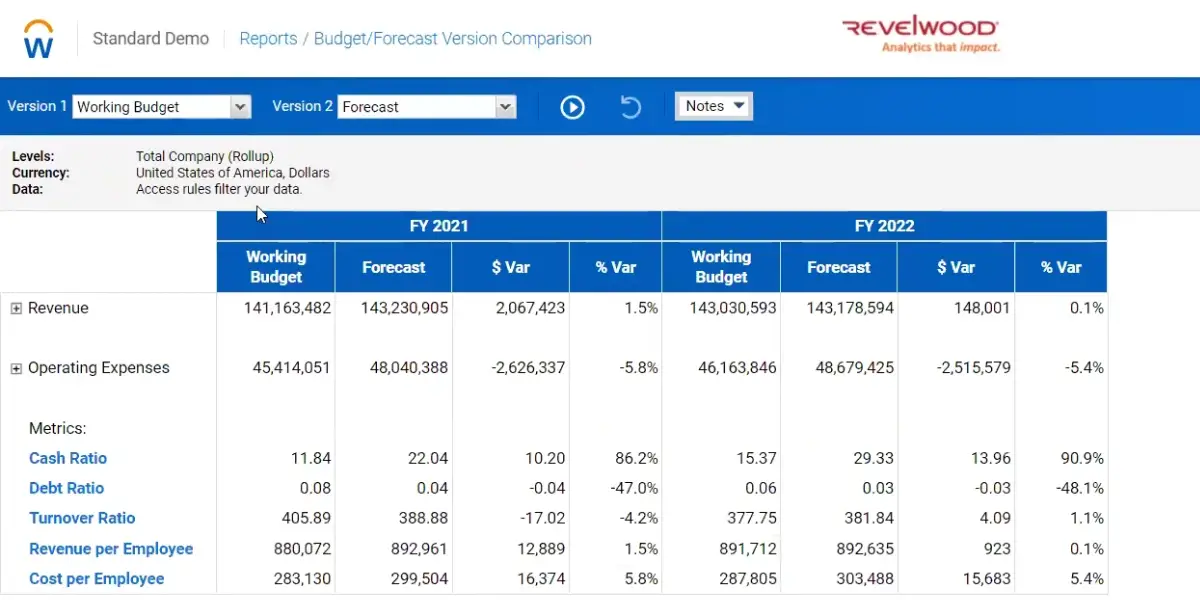
In addition, it simplifies and automates the expense reporting process, giving employees an inbuilt way to submit expenses while providing back-office teams with flexible tools to enforce spending policies and identify cost-saving opportunities.
Key features
- Human resources management
- Spend management
- Payroll
- Planning
- Analytics
Some screenshots of Workday
Pricing
The vendor does not provide details. Contact the vendor to get details.
Likes
- It allows administrators to upload a company background image
- It helps you to generate spreadsheets from data and tables
- Customizable to the company’s needs
- Great tool for presenting information
Dislikes
- Expensive user training courses
- Tedious implementation process
- Less clarity in navigation
- Slow and unresponsive at times
- Difficult to troubleshoot issues at times
- User experience should improve
Other details
| Deployment | Cloud, SaaS, Web-Based |
| Supported devices | Mac, Windows, Android, iPhone, iPad |
| Support | Email/Help Desk, Knowledge Base, Phone Support, 24/7 (Live Rep), Chat |
| Training | In-person, Live Online, Webinars, Documentation |
| Customer reviews | Capterra: 4.4 out of 5 (1212+ reviews) |
User opinion
The Workday can access the best-in-class applications for finance, HR, and more – all built on a technology foundation you can trust. Artificial intelligence helps you empower decision-making at every level and solve your greatest business challenges.
7. Oracle ERP
Oracle Enterprise Resource Planning (ERP) is a powerful tool that can help businesses predict, detect, and act on new situations. Its advanced analytics capabilities enable users to identify trends and patterns that may indicate new opportunities or threats.
Key features
- Reporting and analysis
- Payables and assets
- Revenue management
- Joint venture management
- Expense management
Pricing
Oracle has not mentioned pricing details publicly. Therefore, you need to contact them to get pricing details.
Likes
- Easy to use
- Reports generated are on time
- Convenient way and professional
Dislikes
- Modification and cancelation of SOs should be easier
- The cancellations should be easily reflected on inventory shipments
- Network perimeter is missing in ERP
- The software is sluggish
- Modules cannot be customized
- Many bugs can be encountered while working
- Very few training materials available for users
User opinion
Oracle Enterprise Resource Planning can automate and reduce the risk of errors by eliminating manual processes. That helps to free up valuable resources and simplify and speed up everyday work, allowing employees to focus on more important tasks.
In addition, Oracle ERP can help businesses launch new business models faster, enabling them to align with the competition and take advantage of emerging trends and technologies.
Oracle ERP provides a comprehensive solution for oil and gas businesses looking to streamline their operations.
8. Deltek Costpoint
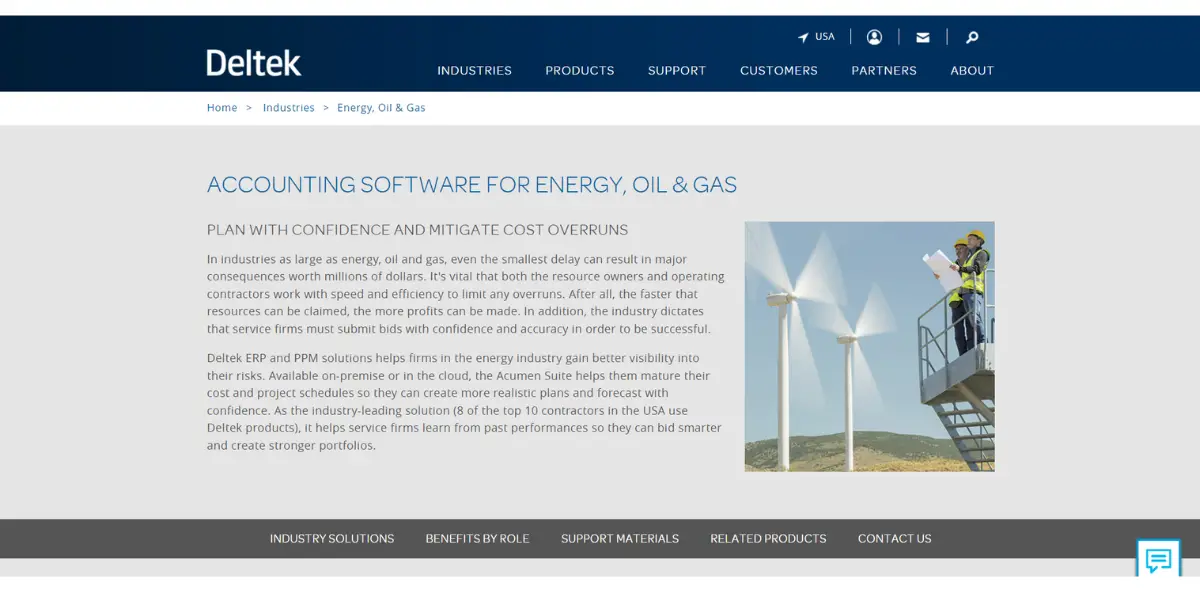
Deltek Costpoint is a leading ERP software designed specifically for government contractors. Deltek ERP software provides a comprehensive solution to many industries, including oil and gas, to manage projects and finances, maintain compliance, and increase productivity.
Key features
- Schedule management
- Risk management
- Project management
- Cost management
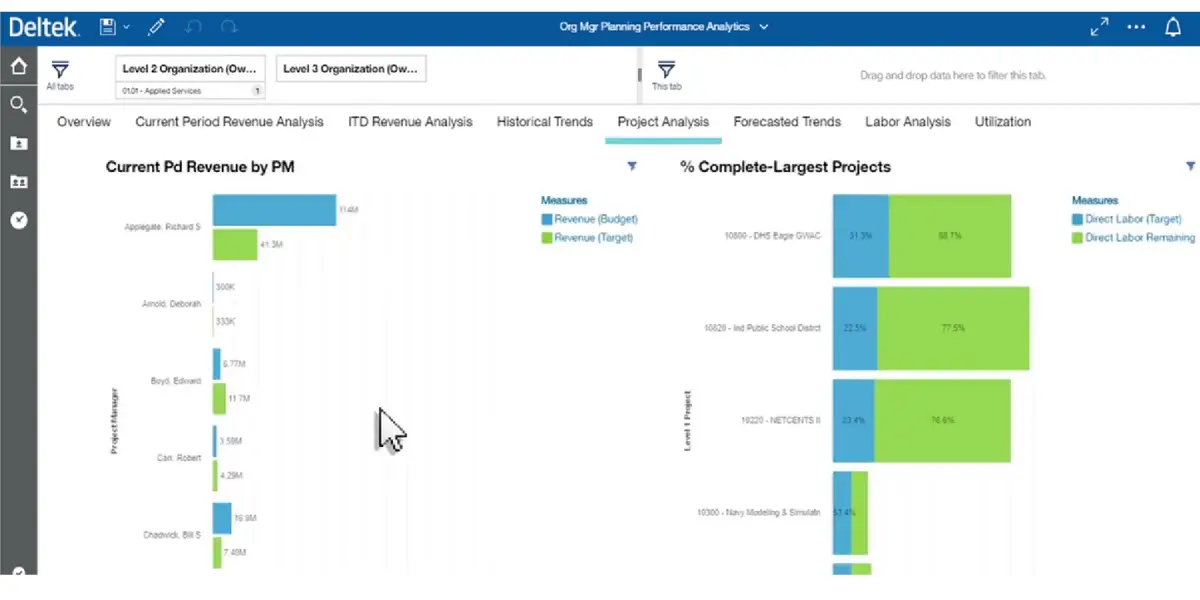
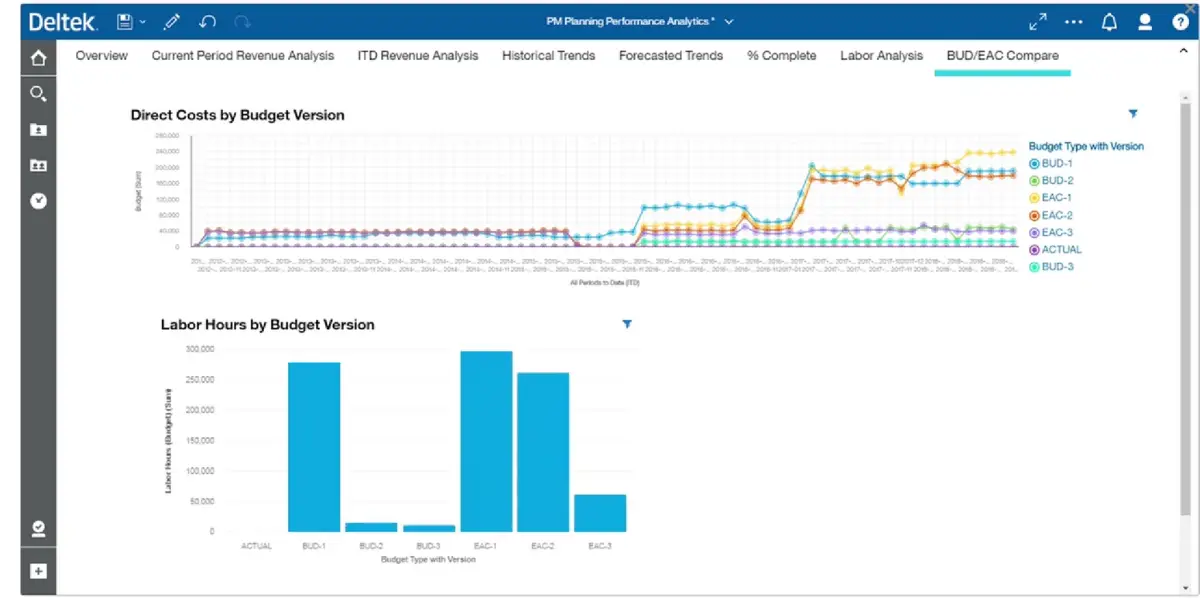
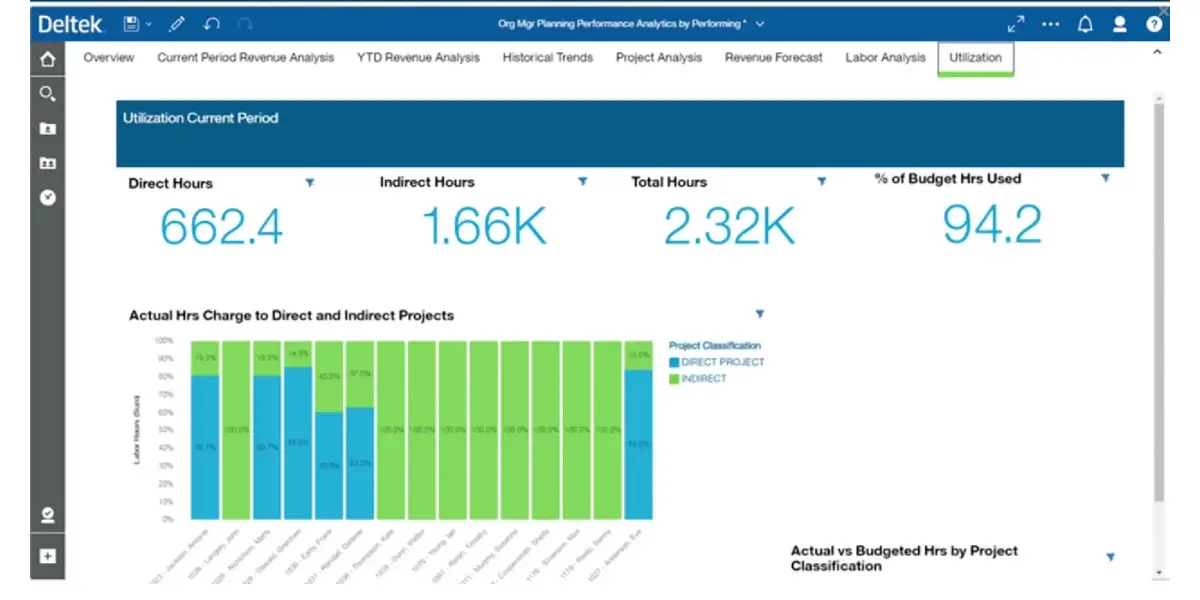
Some screenshots of Deltek
Pricing
Pricing is not mentioned on the website. Therefore, you need to contact them to get pricing details.
Likes
- Software allows users to access their timecards and log times easily
- Simple to use to track your hours worked
- System is customizable
- It can export directly to Excel as well as upload from Excel
- Easy to navigate
Dislikes
- User interface needs improvement for nonfinance and accounting users
- Difficult to perform basic functions such as daily timesheets, expense reports, and approvals
- For an enterprise solution, there are few options for individual sites
- It could produce better reporting of amounts when there are negative entries
- Features need to be improved
- There are annoying messages while using the software
- It is hard to create custom reports
- It is hard to search fields for employee data
- There are no workflows or business rules regarding employee self-service for certain events
Other details
| Deployment | Cloud, SaaS, Web-Based |
| Supported devices | Mac, Windows, Linux, Android, iPhone, iPad |
| Supported languages | German, English, French, Dutch |
| Support | 24/7 (Live Rep), Chat |
| Training | In-person, Live Online, Webinars, Documentation |
| Customer reviews | Capterra: 4.0 out of 5 (204+reviews), G2: 4.0 out of 5 (216+reviews) |
User opinion
Deltek Costpoint is an industry-leading ERP software that offers a comprehensive solution for government contractors looking to improve their project and financial management, maintain compliance, and increase productivity.
It is designed to increase productivity by streamlining workflows and automating manual processes. That includes time and expense management, procurement, and contract management.
FAQs
What are the qualities of the best oil and gas ERP software?
The qualities of the best oil and gas ERP software are:
-It should be able to handle the complex needs of the oil and gas industry.
-It should be user-friendly so that users can quickly learn how to use it.
-It should have a robust reporting capability so users can get insights into their business.
-It should be able to integrate with other software systems used by the company.
-It should be scalable so it can grow with the company.
What should you look for in an oil and gas ERP system?
When choosing an oil and gas ERP system, it is essential to consider your company’s specific needs and requirements. Some features you may want to look for include comprehensive financial management, supply chain management, and project management capabilities.
What are the benefits of using an oil and gas ERP system?
Oil and gas ERP systems can offer several benefits to companies in the industry, including improved operational efficiency, enhanced decision-making, and increased profits.
Conclusion
Start by deciding which segment you are buying for, because that one answer eliminates most of this list. An upstream operator carrying joint interest billing, division of interest and state severance reporting should shortlist the purpose built systems first and treat the general platforms as the fallback rather than the default.
Midstream and downstream buyers face the opposite choice. Volume balancing, tariff handling and plant maintenance are served well by the broad platforms with an energy overlay, and a purpose built upstream package will fit badly.
Whichever way you go, ask every vendor to demonstrate a joint interest billing run, a revenue distribution cycle and a month end close using your own chart of accounts before you sign. Demonstrations on vendor sample data hide most of the work that follows.
References