metasfresh is a free, open-source ERP from Germany, built for supply-chain-heavy businesses such as wholesale, distribution, food and beverage, and manufacturing. It is fully open source under the GPLv2 license, and unlike some rivals it has no proprietary “enterprise” edition: the paid option is a managed cloud, not locked-away features.
metasfresh grew out of the ADempiere project and is developed by a single German company that ships a new stable release almost every week. This review covers its history, technology, editions and current pricing, features, and honest strengths and limitations.
Click here for similar kinds of Open-Source Software
metasfresh no longer publishes numbered releases on GitHub: the last one, 5.175, came out in June 2023. Since then it has shipped as continuously rebuilt Docker images (several builds on October 10, 2026 alone), so there is no single yearly “version,” and the code is actively maintained.
metasfresh at a glance
| Software | metasfresh, an open-source ERP |
| Developer | metas GmbH, Bonn, Germany |
| First released | 2015, as a fork of ADempiere (which came from Compiere) |
| Release model | Continuous; a new stable release almost every week |
| License | GPLv2, fully open source, no proprietary edition |
| Built with | Java and Spring (backend), PostgreSQL database, a React web UI, and a REST API |
| Editions | Free self-hosted community edition, or a paid managed cloud |
| Focus | Supply-chain ERP for wholesale, distribution, food and beverage, and manufacturing |
| Region | Strongest in the German-speaking (DACH) region, with DATEV accounting integration |
| Website | metasfresh.com |
What is Metasfresh ERP?
metasfresh is a full open-source ERP that connects the whole supply chain, from planning and procurement to production, warehousing, distribution, and billing, on one system. It is especially strong in inventory and warehouse logistics (its handling-units model), pricing and discounts, and batch and expiry tracking for regulated industries such as food and pharma.
The software is free to download and self-host, with all features and unlimited users. If you would rather not run it yourself, metas GmbH offers a paid managed cloud hosted in German data centers.
History of Metasfresh ERP
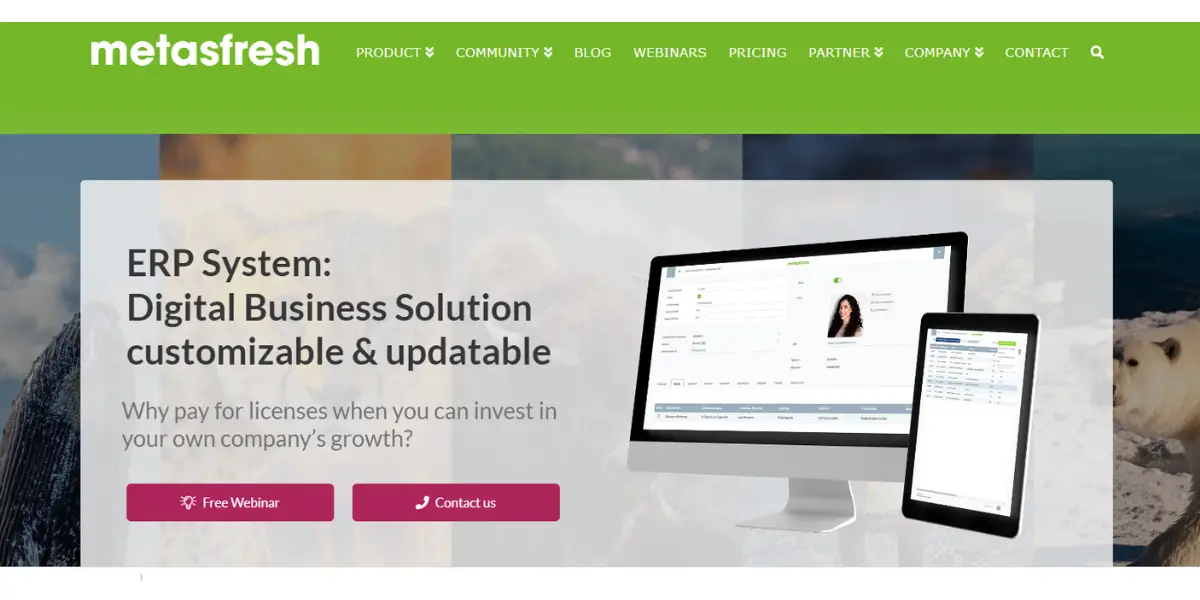
metasfresh is developed by metas GmbH, a company based in Bonn, Germany, led by managing director Mark Krake. Its roots go back to Compiere, one of the first open-source ERPs, which was forked into the community project ADempiere in 2006. In 2015 the metas team forked ADempiere to create metasfresh, releasing the code publicly in October 2015.
Since then, metasfresh has modernized that heritage with a new React-based web interface and continuous delivery, while keeping the mature accounting and logistics core from the ADempiere lineage. It is popular with medium-sized companies in Germany, Austria, and Switzerland.
Who is metasfresh best for?
metasfresh is highly configurable, but its sweet spot is clear. It fits wholesale and distribution, food and beverage, and horticulture, and any business that lives on inventory movement, batch and expiry tracking, and complex pricing. Its German-market features, including DATEV accounting integration, make it especially attractive in the DACH region.
It is a weaker fit if you need broad HR, website, or e-commerce suites out of the box, or if your team has no technical resources, since self-hosting and customization are developer-oriented.
Metasfresh price
metasfresh comes in two forms: a free self-hosted edition and a paid managed cloud.
| Self-hosted (community edition) | Free. Download the full open-source software, with every feature and unlimited users. You provide the server and your own support. |
| metasfresh Cloud (managed) | A paid service hosted by metas GmbH in German data centers. As of 2026, the published rates are a per-user fee of roughly €79 to €99 per user per month (annual or monthly billing) plus a separate hosting fee of about €249 to €299 per month, in euros and excluding German VAT. A minimum number of users applies. |
Because prices change and depend on your setup, confirm the current figures on the metasfresh pricing page. Older third-party listings of around €24 per user are out of date.
Features of Metasfresh
- Accounting
- CRM
- Project management
- Financial management
- Inventory management
- Forecasting
- Product management
- Purchase order management
- Sales orders
- Supply chain management
- Warehouse management
- Invoice management
- Workflow management
- Shipping management
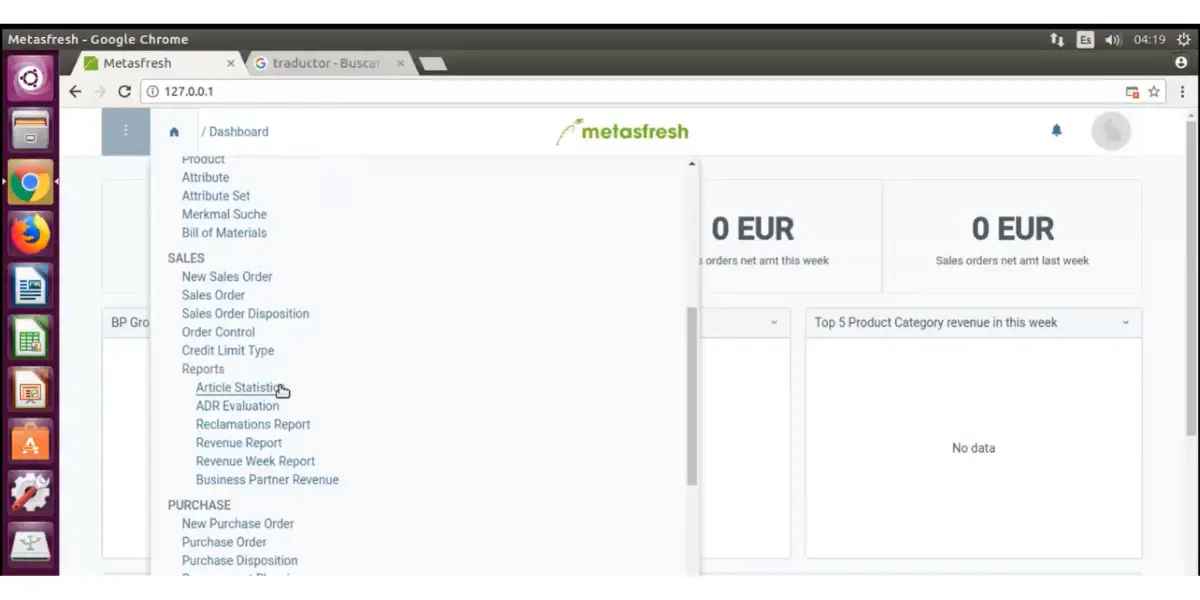
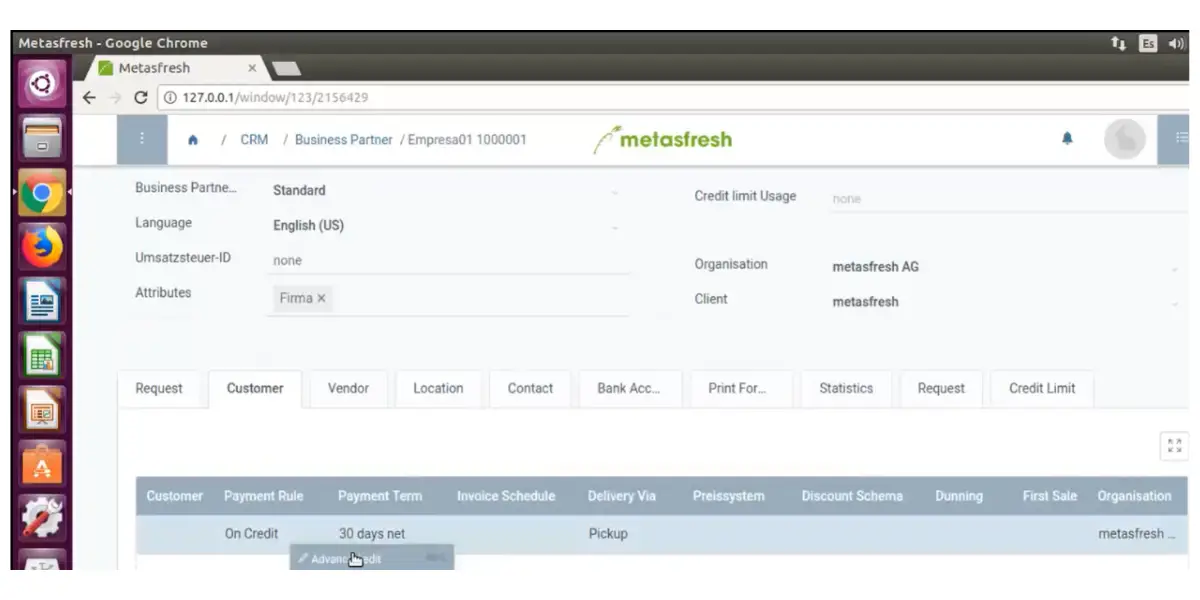
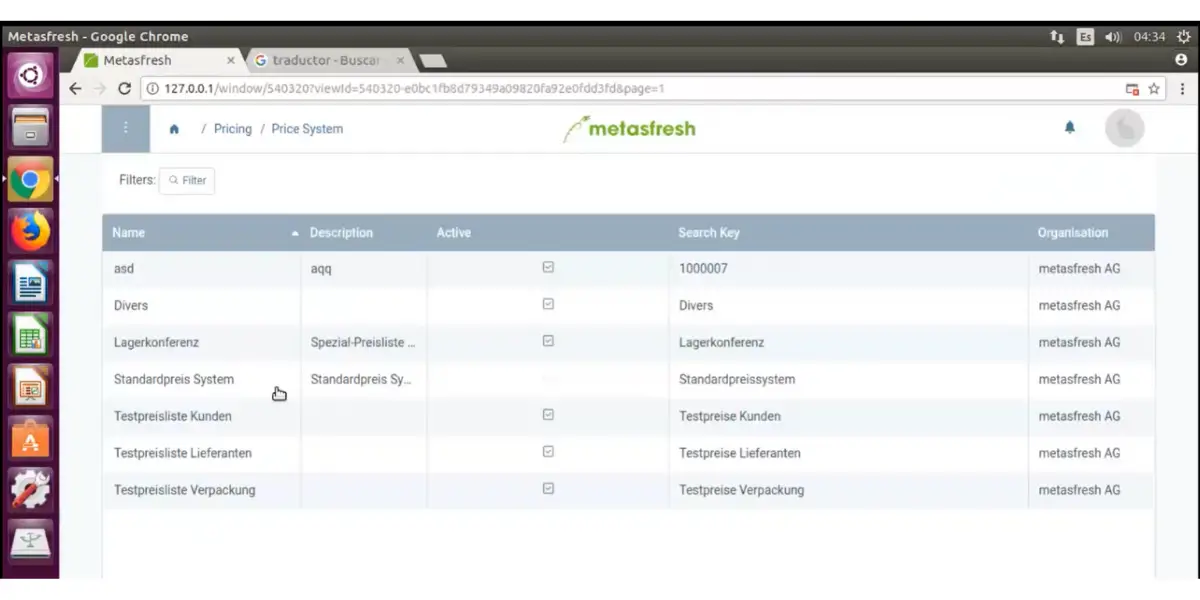
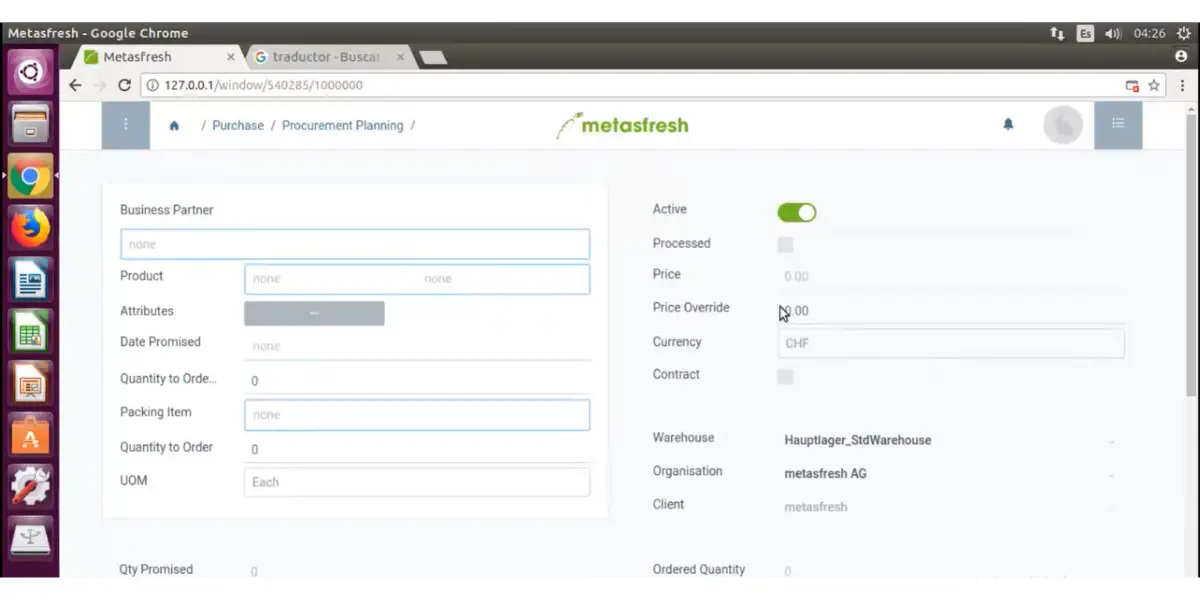
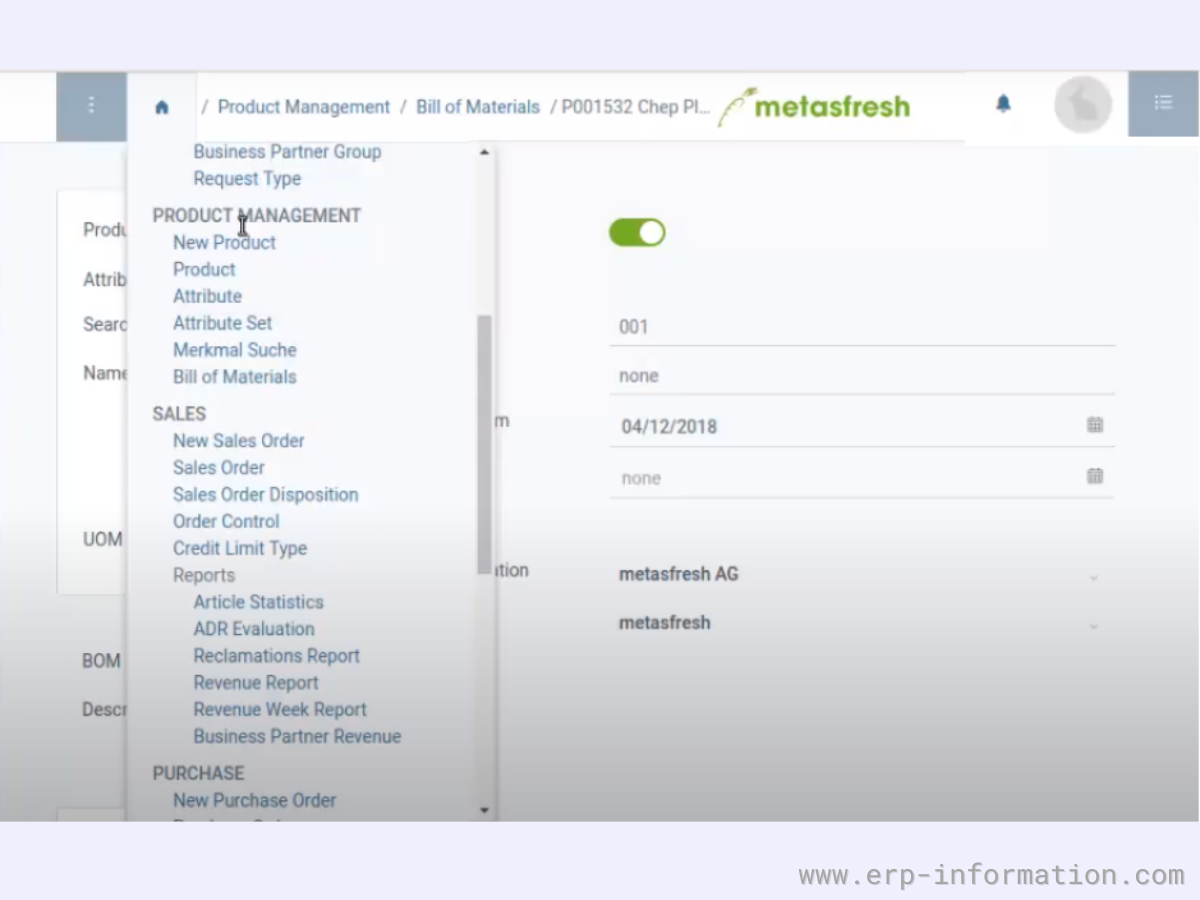
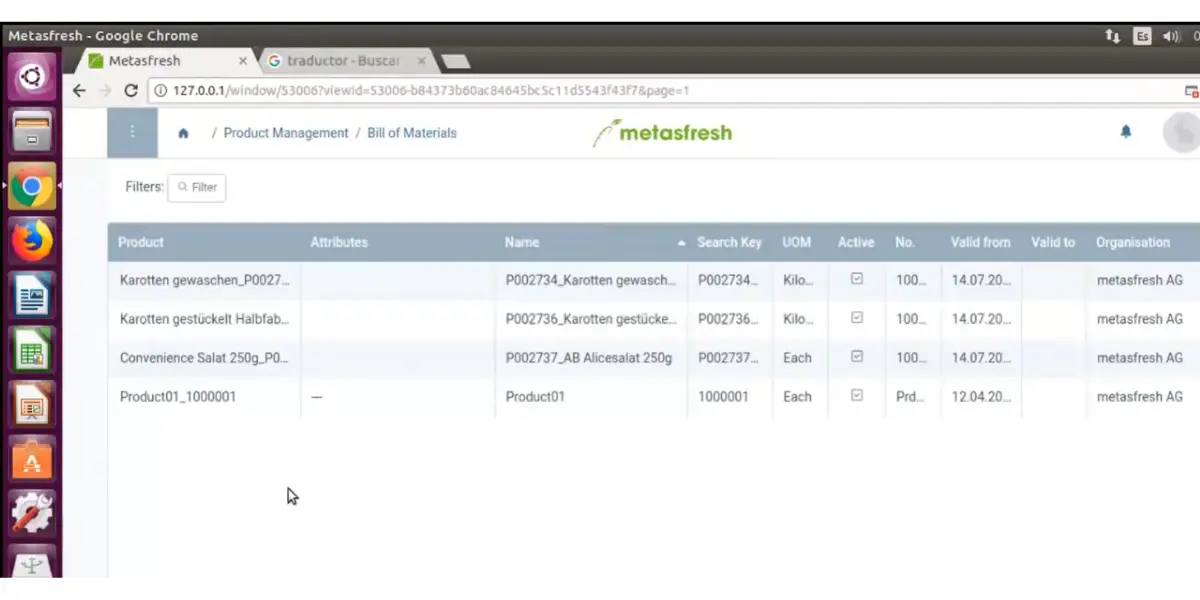
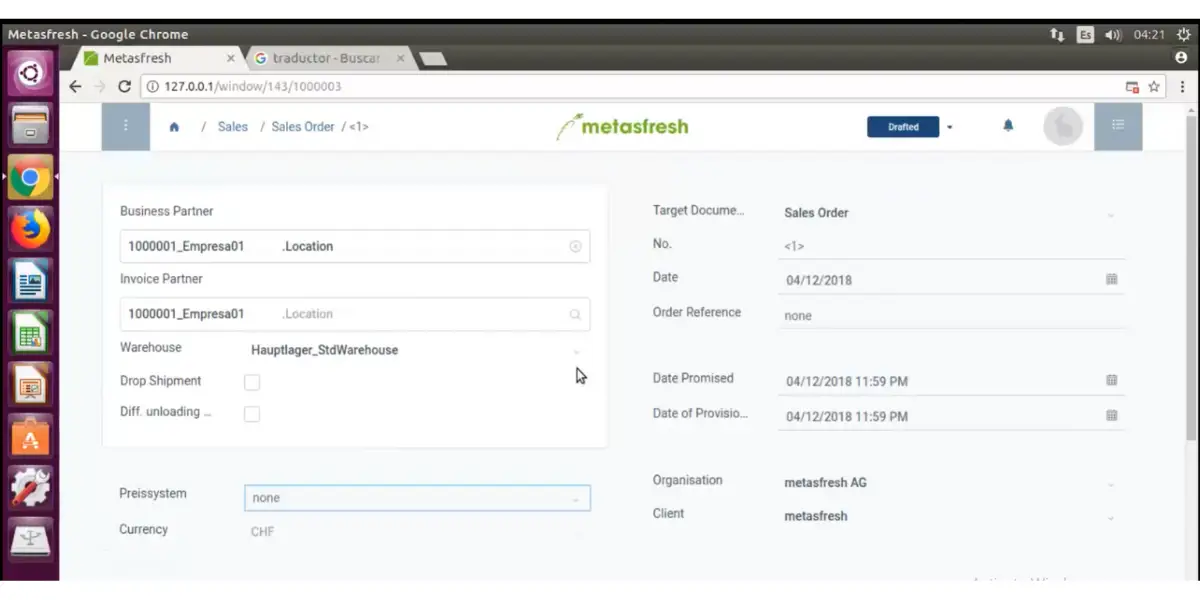
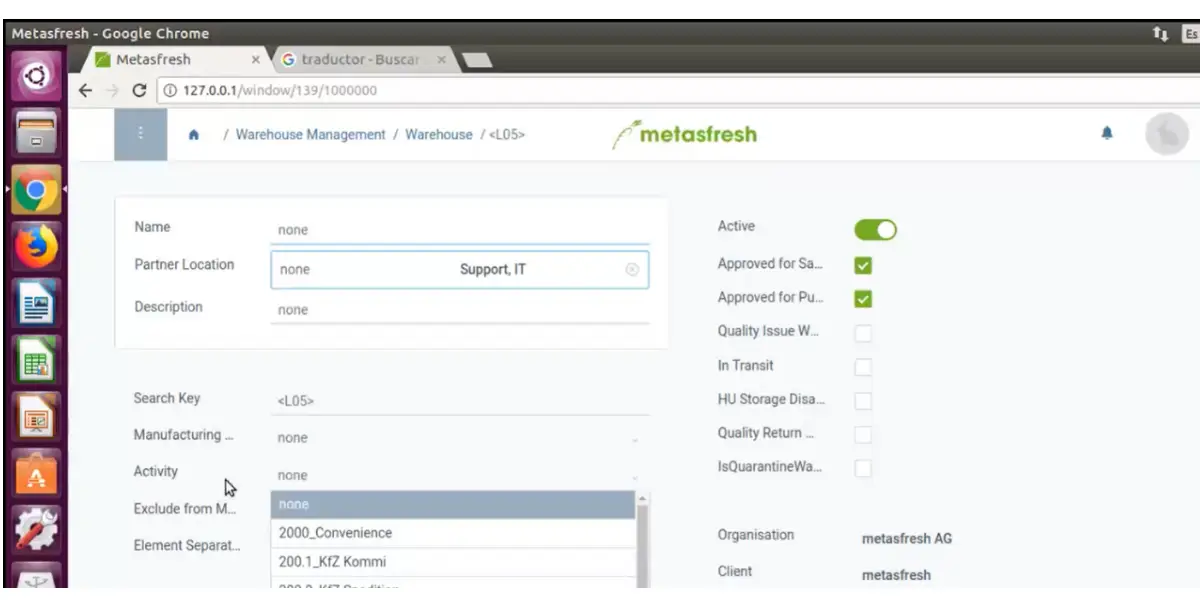
Some screenshots of Metasfresh features
Other information
| Programming languages | Java and Spring (backend); JavaScript and React (web UI) |
| Database | PostgreSQL |
| Interfaces | Web UI (metasfresh WebUI) and a REST API |
| Access | Web-based, usable from any modern browser; the server runs on Linux |
| License | GPLv2, fully open source |
| Developer | metas GmbH, Bonn, Germany |
| Languages | English and German (German documentation and support are the most complete) |
| Support | Community documentation and forums; paid support, training, and implementation from metas GmbH |
Reason to choose Metasfresh
- Fully open source under GPLv2, with no proprietary “enterprise” edition and no feature paywall.
- A continuous release model, with a new stable build almost every week.
- Strong in supply-chain and warehouse logistics, with batch and expiry tracking for regulated industries.
- A modern React web interface over a mature Java and PostgreSQL core.
- Built-in German-market compliance, including DATEV accounting integration, plus an optional managed cloud.
Advantages and disadvantages
Advantages
- Free to download and self-host, with all features and unlimited users.
- A modern, web-based interface over a mature accounting and logistics core.
- Fully open source, so you can customize it freely and avoid vendor lock-in.
- Continuous updates, plus an optional managed cloud hosted in Germany.
- Particularly strong for inventory, warehouse logistics, and batch-tracked distribution.
Disadvantages
- A smaller community and ecosystem than Odoo or ERPNext, with fewer third-party add-ons.
- German and DACH-centric: German documentation and support are the most complete, and English docs lag behind.
- Its ADempiere heritage means parts of the Java core are older and complex, so self-hosting and customization are developer-oriented.
- Weaker out-of-the-box coverage of HR, website, and e-commerce than broader suites, and a more basic CRM.
- No clean public version number, since releases are continuous rather than yearly.
What industries does Metasfresh ERP support?
Following are the metasfresh Users.
- Wholesale
- Manufacturing
- Pharmaceuticals
- Engineering
- E-commerce
- Associations
- Publishing sector
How metasfresh compares
Among open-source ERPs, metasfresh occupies a specific niche. Like Tryton and ERPNext, it is fully open source with no proprietary edition, unlike Odoo, whose Enterprise edition is paid. What sets metasfresh apart is its supply-chain and logistics focus, its German-market compliance, its continuous delivery, and a single vendor that offers a managed cloud. The trade-off is a smaller, more German-centric community and a heavier Java codebase than the Python-based Tryton or the Frappe-based ERPNext.
Metasfresh alternatives
Conclusion
metasfresh is a strong open-source choice for supply-chain-driven businesses, especially in wholesale, distribution, and food or pharma, and especially in the German-speaking market. It is fully open source with no feature paywall, and you can either self-host it for free or pay for the managed cloud.
The trade-offs are a smaller, German-centric community and a more technical setup than mainstream suites, so it suits teams with some technical capacity or a partner. If your business runs on inventory and logistics, metasfresh is well worth evaluating.
References:
Frequently asked questions
Is metasfresh free?
Yes. metasfresh is open source under the GPLv2 license, and the self-hosted community edition is free with every feature and unlimited users. There is no proprietary “enterprise” edition. The only paid option is the optional managed cloud from metas GmbH.
What is the latest version of metasfresh?
metasfresh no longer publishes numbered releases on GitHub; the last one, 5.175, came out in June 2023. Since then the product ships as continuously rebuilt Docker images, so there is no single yearly version, and the code is actively maintained into 2026.
Who develops metasfresh?
metasfresh is developed by metas GmbH, a company based in Bonn, Germany. It began in 2015 as a fork of ADempiere, which itself came from Compiere, one of the earliest open-source ERPs.
What is metasfresh built on?
metasfresh has a Java and Spring backend, a PostgreSQL database, and a modern React web interface (the metasfresh WebUI), with a REST API. The server runs on Linux and users work in a web browser.
How much does metasfresh Cloud cost?
Self-hosting is free. The managed metasfresh Cloud is a paid service: as of 2026 the published rates are roughly €79 to €99 per user per month plus a separate hosting fee of about €249 to €299 per month, in euros and excluding German VAT, with a minimum number of users. Check the metasfresh pricing page for current figures.
Using Google Search? Add erp-information.com as a preferred source.