Epicor Kinetic is the ERP that most people still search for as “Epicor ERP.” It is the same product Epicor once sold as Epicor ERP 10 (E10), rebranded to Kinetic in 2020 and rebuilt around a browser-based, cloud-first design. Epicor aims it primarily at manufacturers and distributors, with deep industry-specific functionality rather than one generic template.
This review covers what Epicor Kinetic is (and how it relates to the old “Epicor ERP” name), its 2026 release and deployment model, realistic pricing, strengths and weaknesses, and the alternatives worth shortlisting.
Everything you need on Epicor Kinetic (formerly Epicor ERP) in one place: the 2026 release, pricing, capabilities, deployment, pros and cons, and alternatives.
Latest release: Kinetic 2026.100 (May 2026), the first release under Epicor’s new monthly cloud update cadence, replacing the previous twice-a-year model.
Note: “Epicor ERP” (E10) was renamed Epicor Kinetic in 2020. From 2026.100, Kinetic is browser-only, the classic desktop client has been retired.
What is Epicor ERP?
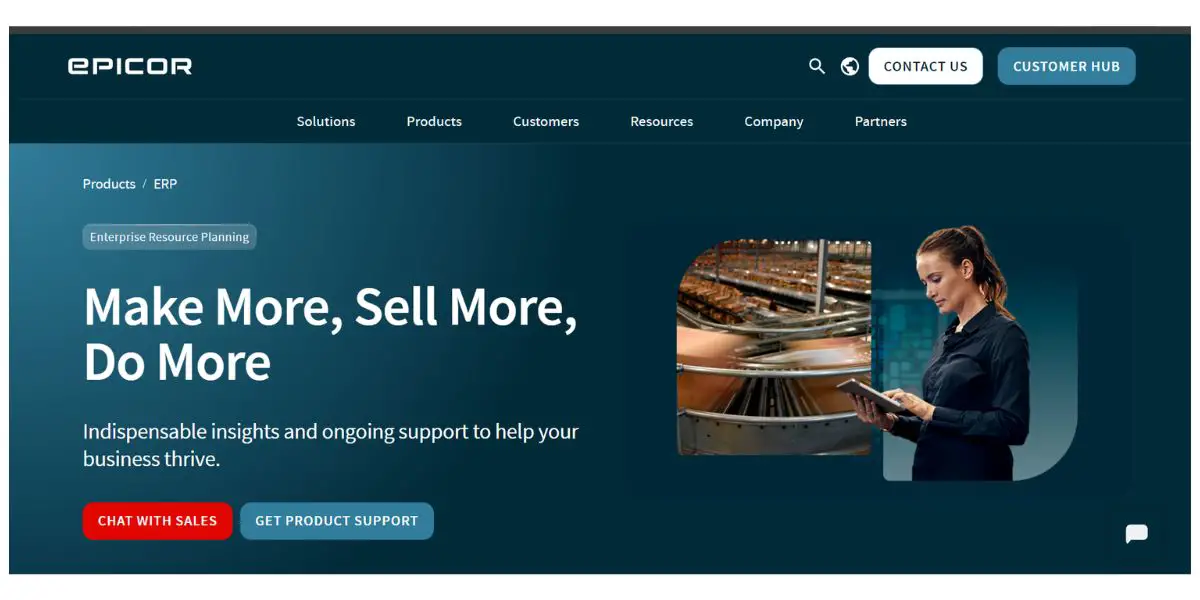
Epicor is a manufacturing- and distribution-focused ERP vendor. Its flagship product is Epicor Kinetic, the system formerly named Epicor ERP, which unifies finance, production, supply chain, and CRM in one platform with industry-specific depth rather than a one-size-fits-all core.
Epicor has leaned heavily into embedded AI. Its current stack includes Epicor Grow AI for analytics and dashboards and Epicor Prism, an agentic ERP AI layer that automates workflows through a growing library of task-specific agents introduced across 2026. These add predictive insight and automation on top of the core ERP rather than replacing it.
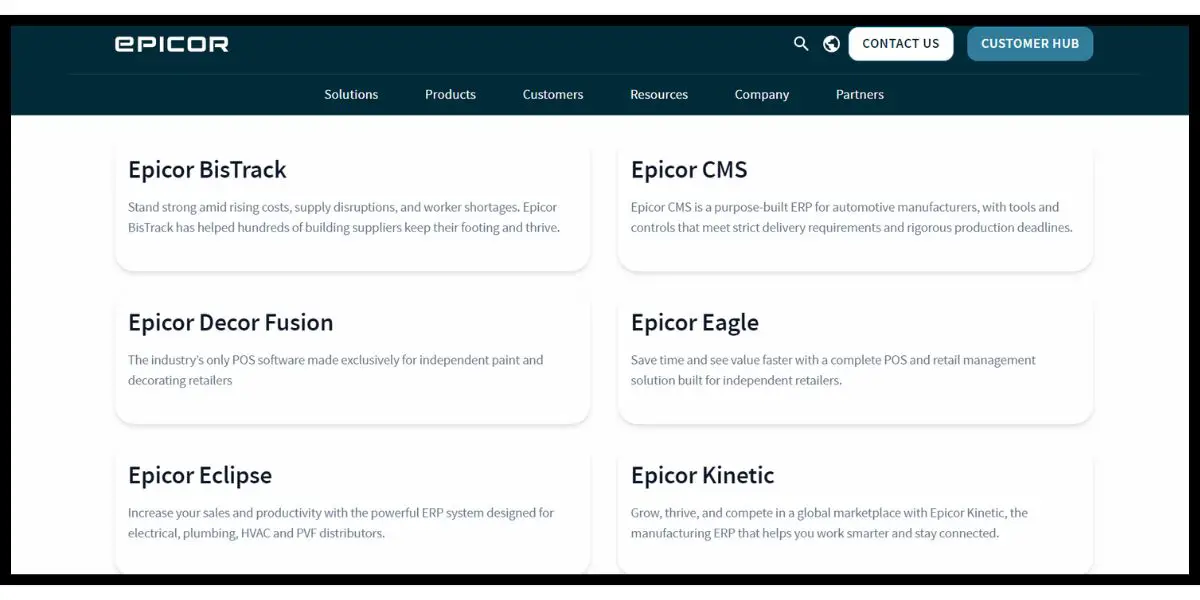
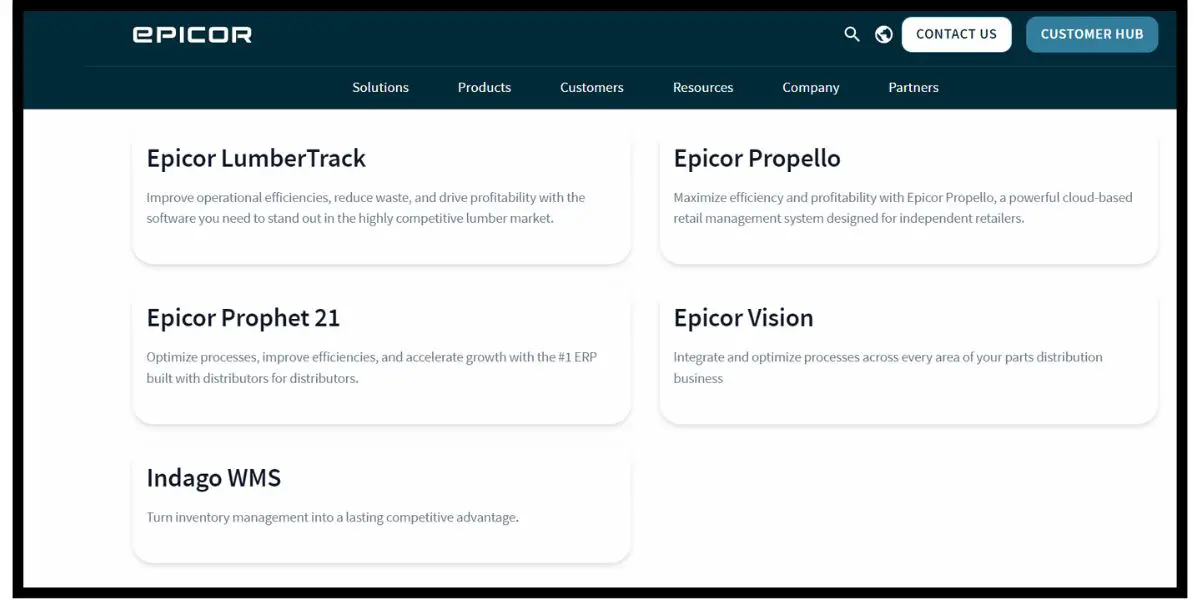
Beyond Kinetic, Epicor sells a family of industry-specific products for retailers, manufacturers, and distributors:
- Epicor BisTrack: For building suppliers
- Epicor CMS: For automotive manufacturers
- Epicor Decor Fusion: for Independent paint and decorating retailers
- Epicor Eagle: For independent retailers
- Epicor Eclipse: For electrical, plumbing, HVAC, and PVF distributors
- Epicor Kinetic: For the manufacturing industry
- Epicor LumberTrack: For the lumber market
- Epicor Propello: A cloud-based retail management system
- Epicor Prophet21: For distributors
- Epicor Vision: For the distribution business
Epicor Kinetic Pricing
Here is what Epicor Kinetic, the system many still call Epicor ERP, actually costs. Epicor does not publish official list prices; every quote is configured to your user count, modules, and deployment. The figures below are indicative ranges compiled from independent ERP pricing research (ERP Research, Top10ERP, ERP Pilot). Treat them as ballpark planning numbers, not a quote.
| Cloud subscription (per user) | ~$100 to $200 per user / month (commonly around $150), typically with a ~10-user minimum |
| Base platform fee | ~$1,500 to $2,500 / month on top of per-user pricing (cloud) |
| Perpetual license | One-time license fee by users and modules, plus annual maintenance, still offered alongside the cloud subscription |
| Implementation | ~$75K to $400K for a typical mid-market rollout; complex multi-site or heavily customized projects can reach $750K to $1M+ |
| 3-year TCO (≈100 users) | ~$435K to $1.0M including licenses, implementation, and training |
Two things move the total more than the sticker price: how many modules you switch on, and how much customization your processes need. A near-standard cloud deployment sits at the low end; multi-site manufacturers with heavy customization land at the high end. Always get a written quote and a fixed-scope implementation estimate before committing.
What is Epicor Kinetic?
It is a global cloud ERP solution meticulously crafted to meet the unique demands of manufacturers. Designed by industry experts at Epicor, Kinetic empowers businesses to achieve maximum profitability through real-time business intelligence and advanced collaboration tools.
Whether you specialize in discrete or make-to-order manufacturing, Kinetic’s robust functionality ensures your operations are future-ready and poised for seamless digital transformation.
Deployment: Kinetic runs primarily as a cloud SaaS product on Microsoft Azure, with a self-service cloud management portal for updates and database refreshes. An on-premises edition still exists, but Epicor is shifting investment to the cloud and has published a schedule for its final on-premises feature releases, so new deployments and long-term roadmaps increasingly assume the cloud version. From the 2026.100 release onward, everyone works through the browser; the classic desktop client has been retired.
Capabilities of Epicor Kinetic
Below are Epicor Kinetic’s core capabilities, grouped by function.
Financials
- It helps to have control and better financial visibility.
- Manages accounts payable, accounts receivable, and general ledger.
- Provides multi-site, multi-currency options.
Business Intelligence and Analytics
- Tracks production processes and receives immediate alerts to prevent issues.
- Enhances decision-making with reliable, real-time reporting and tracking.
- Transforms manufacturing data into financial goals with real-time reports and dashboards.
Supply Chain Management
- It is developed specifically for manufacturers, by industry experts.
- Provides end-to-end visibility from sourcing raw materials to delivering finished products.Results-Driven
- Converts your supply chain into a value chain focused on results.
- Offers a complete set of enterprise application tools to manage all aspects of supply chain operations.
Planning and Scheduling
- Suitable for both global, multi-site enterprises and single-site manufacturers or distributors.
- Enhances performance with precise and flexible planning and scheduling.
- Utilizes comprehensive MRP solutions to meet material needs efficiently.
- Implements advanced planning and scheduling to optimize operations.
Production Management
- Adaptable to make-to-order, configure-to-order, engineer-to-order, and make-to-stock operations.
- Includes modules for Job Management, Advanced Production, Lean Manufacturing, Quality Assurance, and more.
- Enhance both efficiency and responsiveness across simple and complex manufacturing processes.
- Designed for manufacturers balancing complex and repetitive production demands.
Services and Assets
- Effectively maintains and optimizes the performance of company and customer assets.
- Improves customer service by keeping all technicians and support personnel informed and coordinated.
- Maintains clear visibility into service-level agreements for better compliance and performance tracking.
- Utilizes the right tools to monitor and manage asset deployment and performance.
Risk and Compliance
- It is designed to align with published international standards and industry best practices.
- Ensures operational readiness with advanced user roles and robust cloud security from Microsoft Azure.
- Reduces compliance costs with deep industry capabilities supporting traceability requirements.
- Enhances governance to achieve and deliver on sustainability objectives.
Omnichannel Sales
- Streamlines labor-intensive processes and boosts sales productivity by automating administrative tasks.
- Helps sales teams efficiently manage opportunities, allowing them to concentrate on building lasting, profitable relationships.
- Enables your sales team to produce precise estimates swiftly.
Customer Relationship Management
- Manages customer interactions efficiently by integrating task management capabilities.
- Allows you to empower your sales force with synchronized and essential CRM data to strengthen customer relationships.
- Connects employees, departments, and supply chain partners seamlessly, fostering responsiveness across the organization.
Product Management
- Collaborative product lifecycle management (PLM) is a process that helps companies manage the development of products from start to finish.
- Makes product data management processes digital and stores product data in one central location.
- Creates three-dimensional models, images, and drawings that you can share with others.
Project Management
- Provides a high-level overview of key processes of the project from planning to execution to reporting with ease.
- Automates manufacturing jobs triggered by sales orders for streamlined operations.
- Utilizes WBS to organize and manage project tasks effectively.
- Enables time and expense entry through mobile apps for convenient on-the-go updates.
- Streamlines project billing, accounting, and revenue recognition processes.
Global Supply Chain Management
- It helps to see multiple sites simultaneously, and more than one company can use this capability.
- Scale globally with extensive country-specific functionality.
- Use the advanced EDI software to make transactions faster and easier to see.
Cloud Business Platform
- Reduces operational and compliance risks through comprehensive ERP solutions designed to handle industry challenges.
- Enhances cybersecurity measures tailored for industry-specific needs to strengthen your business’s defenses
- Reduces operational and compliance risks through comprehensive ERP solutions designed to handle industry challenges.
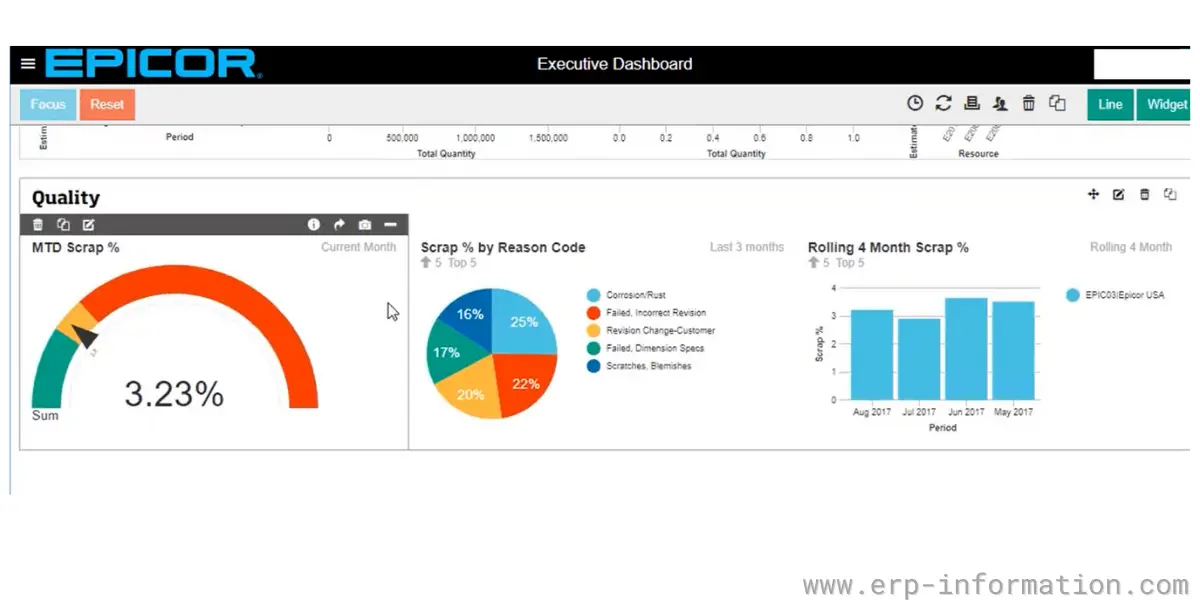
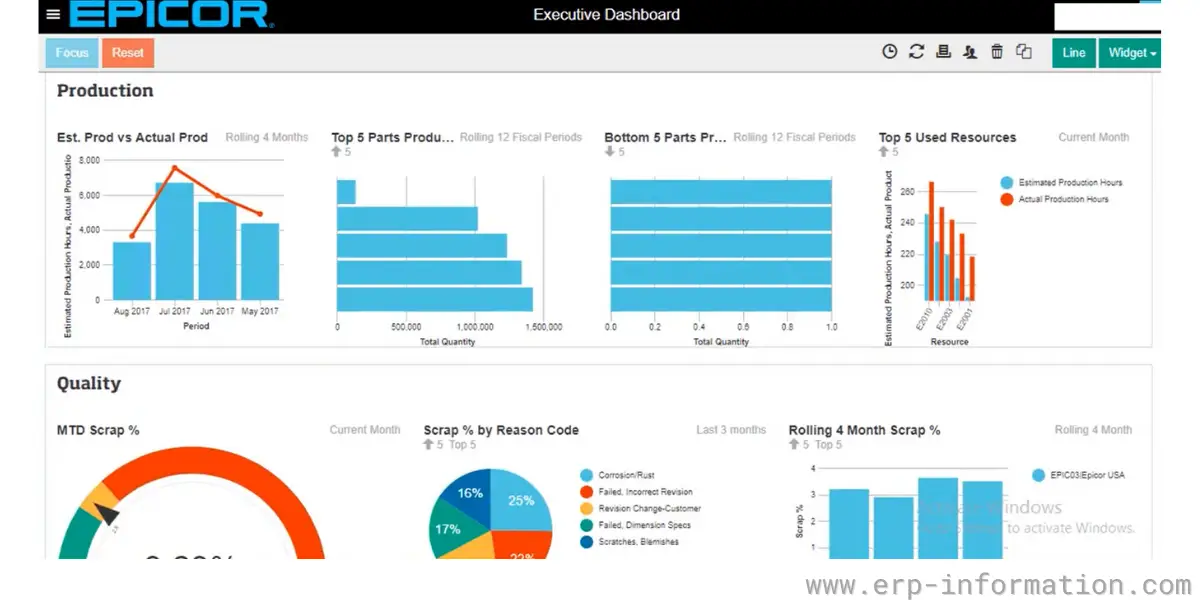
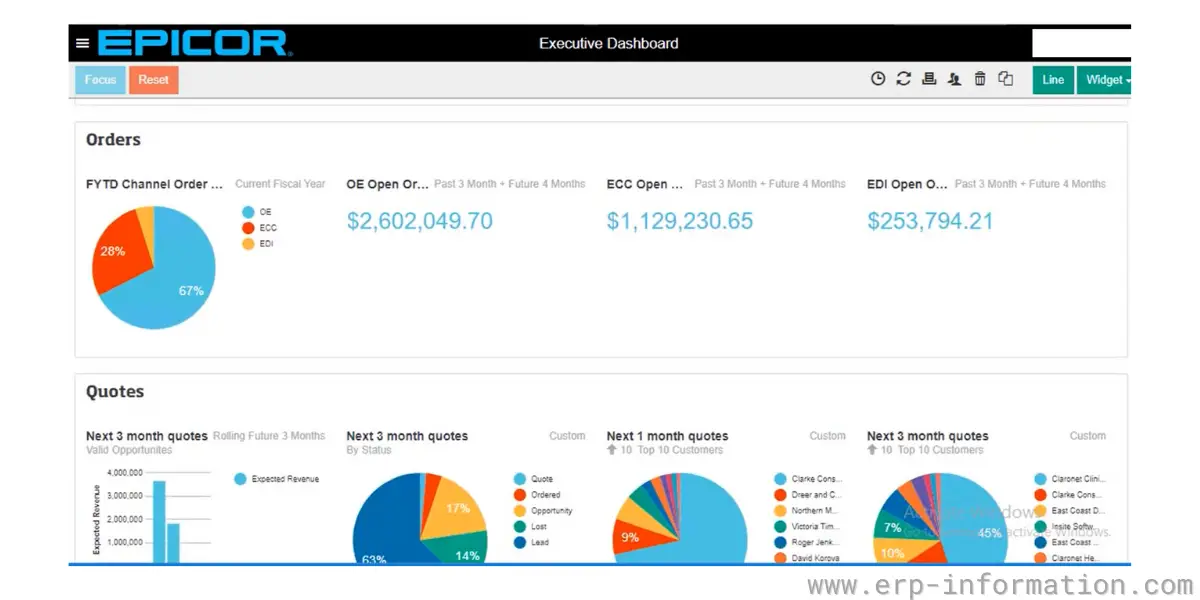
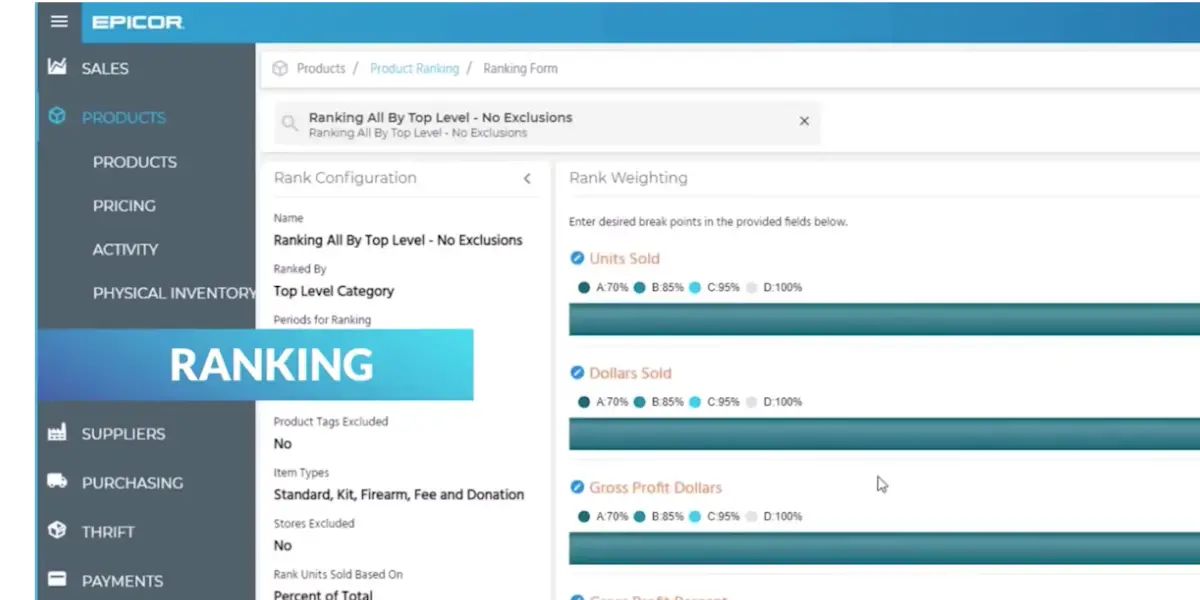
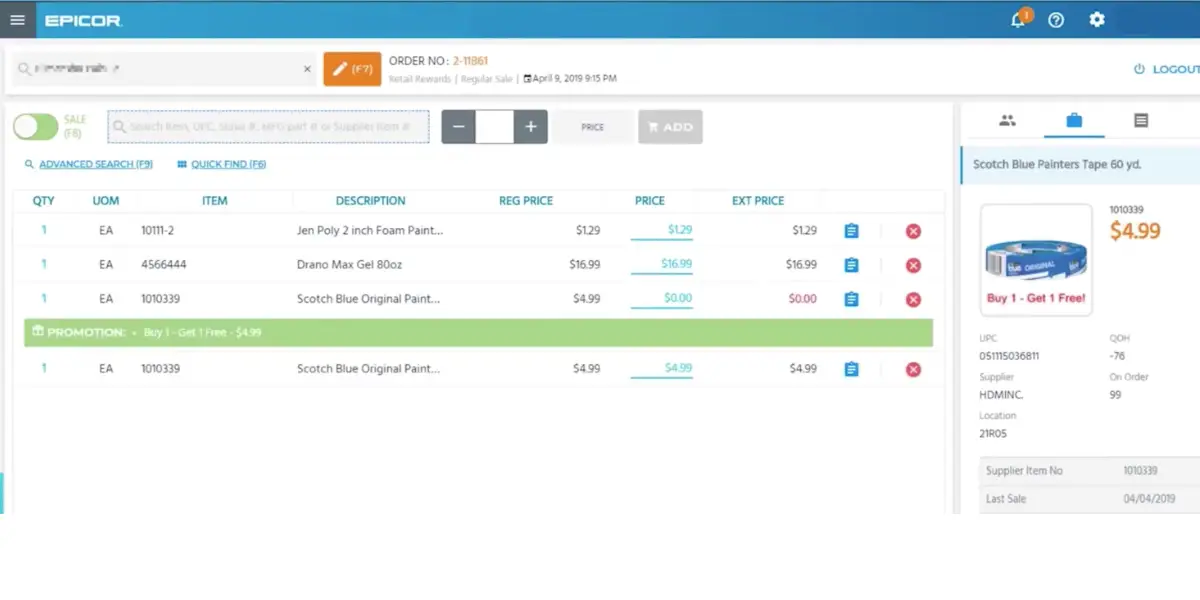
Some Screenshots of Epicor
Implementation
The Epicor ERP implementation process is divided into five sections.
| Prepare | In this beginning stage, the consultant team of Epicor lines up the implementation plan expectations with the software suite of the customer company. |
| Plan | In this stage, the team establishes the project foundation by creating a blueprint that includes resource, system, and time requirements per the customer company’s budget and needs. |
| Design | In this stage, the company’s project team starts using the software and documents to check whether the system meets its business needs and goals or not. |
| Validate | In this stage, validation of the system takes place. The customer company ensures that all its business procedures are documented accurately and business processes flow correctly through the system. |
| Deploy | In this stage, the Epicor consultant team trains end-users and helps the customer company develop its plans. |
While moving from one stage to another, a series of inputs, tools, and techniques will be used.
Supports and Services
Epicor Software provides support through service centers that are located all around the world. These service centers offer support for both On-premise and Cloud deployment.
It offers additional support through an online support portal, EpicCare, and Epicor University.
Epicor Software is a cloud-hosted customer support portal. It provides support as per customer feedback.
Epicor University supports the customer by providing complete training tools.
Advantages of Kinetic
- It provides modules to handle your business processes, from accounting to customer relationship management and project management to HR. In addition, this software allows you to choose the module you want.
- It provides a fully-featured accounting and financial management module. With its help, you can take various reports and statements.
- The built-in tools are good for alerts, business process management, dashboards, and screen customization.
- The sales team guides you in transitioning from legacy systems to Kinetic, ensuring you understand the process thoroughly.
Disadvantages
- Its implementation and customization are complex
- It needs an expert team/user to maintain the software
- You may not get support on time
- Users expect better UI for cloud-solution
- It’s hard to find traces in the new Epicor ERP
- Reporting runs slowly
- The shop floor data collection screen is not intuitive
- HRM should be improved and integrated with financial and HR application
- Little expensive for small businesses
- The wide array of functionalities and specialized requirements can make it difficult to identify the right expert who can seamlessly integrate all necessary components into your implementation.
- Excessive processes Basic interface It’s difficult to locate your page
What Industries Does It Support?
Epicor is mainly dedicated to manufacturing, Retail, Automotive, Building supply, and Distribution.
| Epicor for manufacturing | Epicor for distribution | Epicor for retailer |
| Aerospace and Defense | Building Materials | Building Supply |
| Automotive | Electrical | Auto Parts |
| Construction and Engineering | Fasteners | Farm and Home |
| Electronics and High tech | HVAC | Hardware Stores |
| Fabricated Metals | Fluid Power | Lawn and Garden Centers |
| Furniture and Fixtures | Janitorial | Pain and decorating |
| Industrial Machinery | Medical Supply | Pets |
| Medical Devices | Paper and Packaging | Pharmacy |
| Metal Service Centers | Plumbing business | Sporting Goods |
| Rubber and Plastics | Tiles | Thrift |
| Pipes, Valves and Fittings |
Epicor ERP Alternatives
Following are a few top Alternatives for Epicor ERP.
- Oracle NetSuite
- Microsoft Dynamics 365 Business Central
- Infor CloudSuite Industrial (SyteLine)
- IFS Cloud
- Acumatica
- SAP Business One
- E2 Shop System
Epicor Kinetic Customers
- PhRMA
- BHP Groups
- Reece Group
- Syneos Health
- Boral Roofing Pvt. Ltd
- Hallmark Building Supplies Inc.
- Omega Plastics
- AIM Aerospace
FAQS
Is Epicor ERP the same as Epicor Kinetic?
Yes. Epicor ERP 10 (E10) was renamed Epicor Kinetic in 2020 and rebuilt as a browser-based, cloud-first system. Epicor ERP is simply the older name for the same flagship product, so a search for Epicor ERP today points to Kinetic.
How much does Epicor Kinetic (Epicor ERP) cost?
Epicor does not publish list prices. Independent research puts Kinetic cloud at roughly $100 to $200 per user per month (often about $150) plus a base platform fee of around $1,500 to $2,500 per month, with a typical 10-user minimum. Implementation usually runs $75,000 to $400,000 for mid-market projects. Always request a written quote.
Is Epicor Kinetic cloud or on-premises?
Primarily cloud. Kinetic runs as a SaaS product on Microsoft Azure, and Epicor has scheduled its final on-premises feature releases as it moves to a cloud-first, monthly-update model. An on-premises edition still exists, but from the 2026.100 release Kinetic is browser-only and the classic desktop client is retired.
Epicor Kinetic vs Microsoft Dynamics 365 Business Central: which is better?
They target different buyers. Kinetic is a deep manufacturing and distribution ERP built for complex make-to-order, configure-to-order, and engineer-to-order operations. Business Central is a broader small-to-midsize ERP with tight Microsoft 365 integration and a lower entry cost. Choose Kinetic for manufacturing depth and Business Central for a lighter, general-purpose fit.
What is the difference between SAP and Epicor?
The SAP software allows only certain named users to access it, while the Epicor software allows anyone to use it at any given time. That means SAP offers a named user-based license, but Epicor offers support based on the system’s number of users.
Conclusion
Epicor Kinetic is a strong fit if you are a manufacturer or distributor that needs deep, industry-specific ERP, especially for complex make-to-order or engineer-to-order operations, and you are ready to invest in a proper implementation. Its capability depth, embedded AI (Grow AI and Prism), and Azure cloud model are genuine strengths.
The trade-offs are equally real: it is priced and scoped for mid-market and larger businesses, implementation is involved, and the interface still divides opinion. If your needs are simpler or your budget is tighter, a lighter cloud ERP such as Business Central, Acumatica, or NetSuite may suit you better. Match the shortlist to your industry and process complexity, and insist on a fixed-scope quote before you commit.
References: