
In inventory management and logistics, “planned order receipt” is crucial for businesses. This key concept ensures that when a company orders materials or products, they arrive precisely when needed.
This article will help you understand the planned order receipt, its real-life examples, and calculations. All to help businesses stay organized and keep their supply chains running smoothly.
Definition
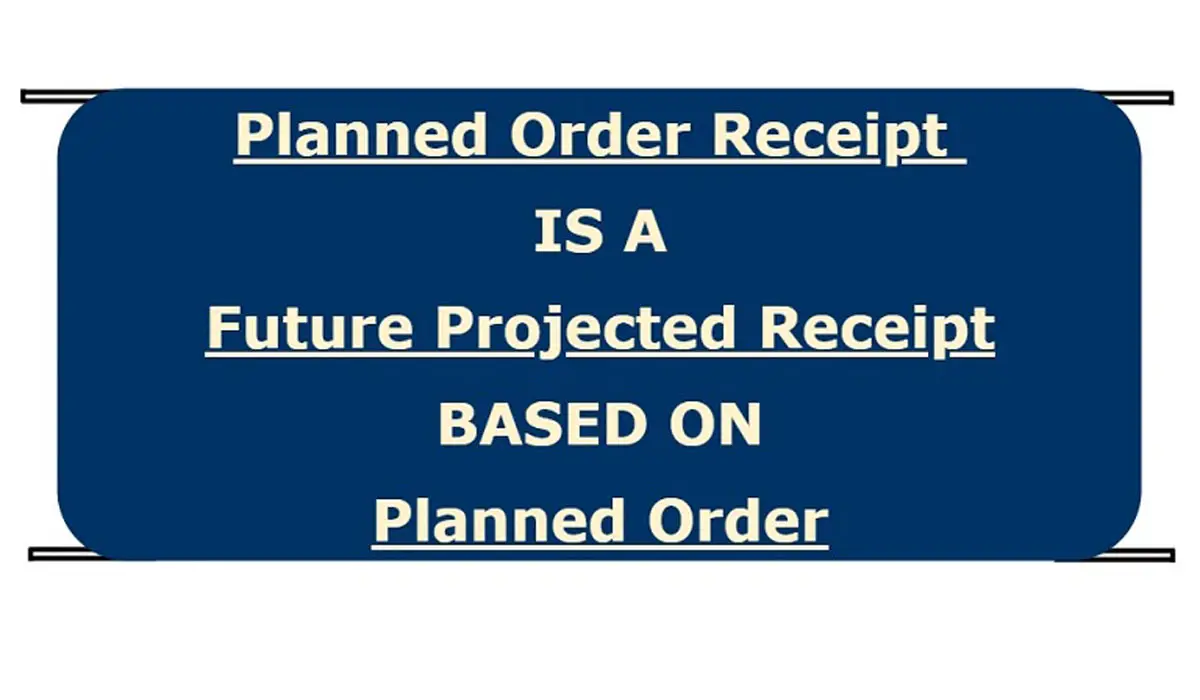
A planned order receipt is a future projected receipt based on the generation of a planned order that has not yet been firmed into a scheduled receipt.
In businesses, “planned order receipt” refers to the strategic scheduling and control of when materials or products are expected to arrive. It’s a critical aspect of inventory management and supply chain logistics, ensuring that items are received precisely when needed.
By planning the receipt of orders carefully, businesses can optimize their operations, minimize inventory costs, and maintain a smooth and efficient supply chain.
This practice involves calculating the right quantity, lead times, and order points to keep the flow of materials or products consistent and avoid shortages or overstocking.
A planned order receipt is not a released order. ASCM’s Supply Chain Dictionary is explicit: “Planned order receipts differ from scheduled receipts in that they have not been released.”
What is a planned receipt?
Planned receipts are a part of Material Requirements Planning (MRP) and help determine the amount that needs to be ordered at any given time.
In addition, they consider what’s left in stock and those items scheduled for arrival later on during certain transitory phases, so you’ll know when your order will arrive!
Orders already released (scheduled receipts) are counted as supply in the period they are due, before any new order is planned. For end items, the demand being covered comes from the MPS (Master Production Schedule).
The available inventory stock added to the scheduled receipts of materials due and then netted from the gross requirements gives us the value for net requirements.
The projected available balance is, in ASCM’s words, “the running sum of on-hand inventory minus requirements plus scheduled receipts and planned orders”. Planned order receipts are what keep it from falling below zero, or below safety stock if one is held.
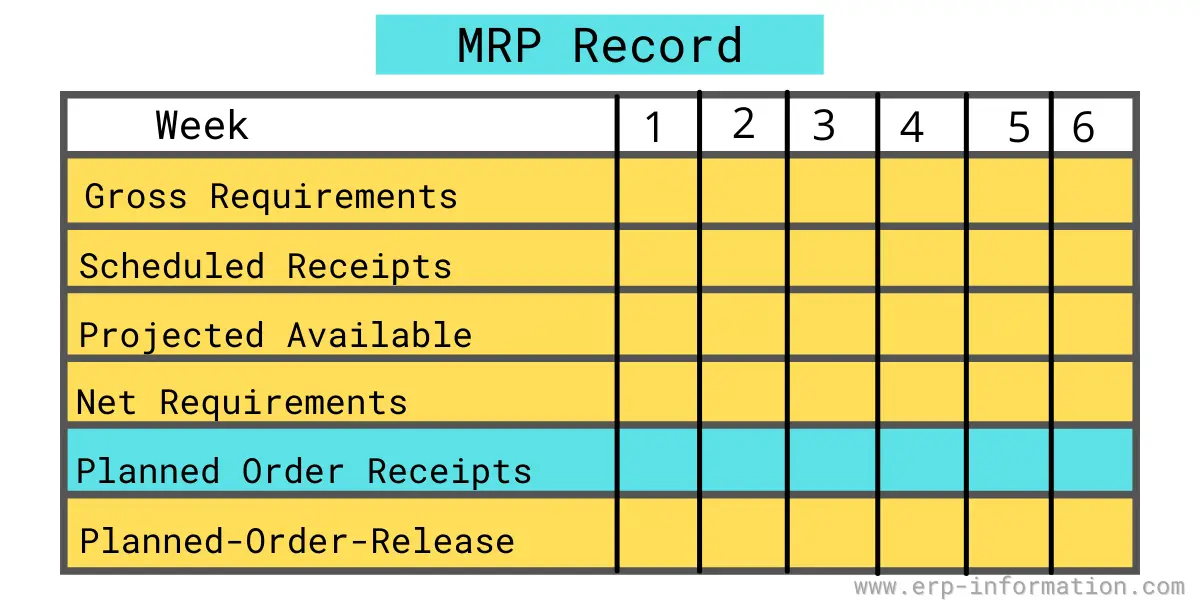
Planned order receipt calculation
Planned order releases are mainly based on whether the projected available is negative or below zero, which means all the inventory has been used up, and more needs to be ordered.
A planned order receipt gives a date on which to expect an order. If the projected available balance stays at or above zero, or at or above safety stock when one is held, no planned order is needed.
Once a planned order is released, it becomes an open order: a released purchase or manufacturing order with a due date, which MRP then counts as a scheduled receipt.
Until it is released, a planned order is only a suggestion. In a regenerative MRP run, ASCM notes, new requirements and planned orders are completely recalculated.
MRP creates a planned order receipt only when there is a net requirement: when the projected available balance would fall below zero, or below safety stock if one is held. A balance of exactly zero with no safety stock needs no order.
Planned order receipt example
Let us take an example of a scenario of creating a planned order receipt in a factory that needs a certain kind of material.
The on-hand inventory present at a given moment is 40, and the demand for the first week is 45. Now, as the demand is more than the projected balance, the entire balance is used up with five more units.
Without an order, the projected available balance would fall to minus 5: a net requirement of 5. With a fixed order quantity of 60, MRP plans an order of 60 to arrive in week 1, making the balance 55. That arrival is the planned order receipt; the same order’s release is planned one lead time earlier.
In week 2 the demand is 40 units against the 55 carried in, so the balance closes at 15 and no new order is needed.
The planned order receipt is the quantity and date the order is due to arrive (60 in week 1); the planned order release is the same order offset back by the lead time. The two quantities are usually equal, but not always: when a yield loss is expected, more is released than will be received. Gardner’s University of Houston text releases 306 units to receive 300 good ones at a 98% yield.
FAQs
What is the difference between planned order receipts and scheduled receipts?
The difference is that the planned order receipt is a receipt for a planned order that has not yet been released. The scheduled receipt is a receipt for a released order.
What is the difference between planned order receipts and planned order releases?
The difference is that the planned order receipt indicates the date on which the order needs to be received, whereas the planned order release indicates the date on which the order needs to be placed to receive the goods on time.
In other words, The planned order receipt signifies the arrival of materials, while the planned order release represents the commencement or approval of the process.
Conclusion
Planned order receipt is a fundamental component of effective inventory management and supply chain logistics. It ensures that businesses receive materials or products exactly when they are needed, preventing shortages and excess inventory.
By carefully planning and calculating order quantities, lead times, and order points, businesses can operate more efficiently and cost-effectively. Real-world examples demonstrate how this concept works in practice.
Understanding planned order receipt empowers businesses to maintain a well-organized and efficient supply chain, ultimately contributing to their success in the competitive marketplace.
Using Google Search? Add erp-information.com as a preferred source.