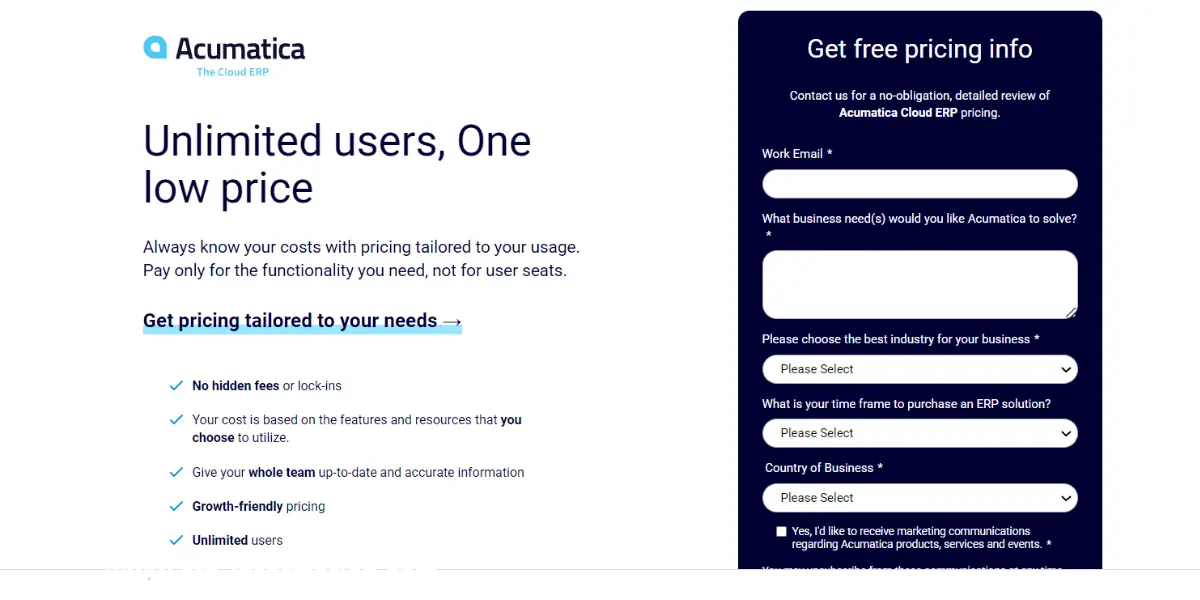
Acumatica is the cloud ERP that does not charge per user. That single decision shapes everything else about it, including who it suits, how you have to budget for it, and the one way the pricing can still catch you out.
Instead of counting seats, Acumatica prices on the applications you license and how much business you actually put through the system. For a distributor with forty warehouse staff who each touch the system twice a day, that is a materially different proposition from a per-seat competitor. For a company with few users and very high transaction volume, it can work the other way.
This review covers how the licensing genuinely works, real pricing figures, the three deployment models and how they differ, the industry editions, what shipped in the current release, honest limitations, and how it compares to the alternatives.
Current release: Acumatica 2026 R1, generally available 23 March 2026
Release cadence: two major releases a year, R1 in the first half and R2 in the second
What is Acumatica?
Acumatica is a browser-based cloud ERP aimed at small and mid-sized businesses. It covers financials, distribution, manufacturing, construction, retail and field service, built on an open platform called xRP with published APIs and low-code customisation, so it integrates and extends more readily than most systems in its class.
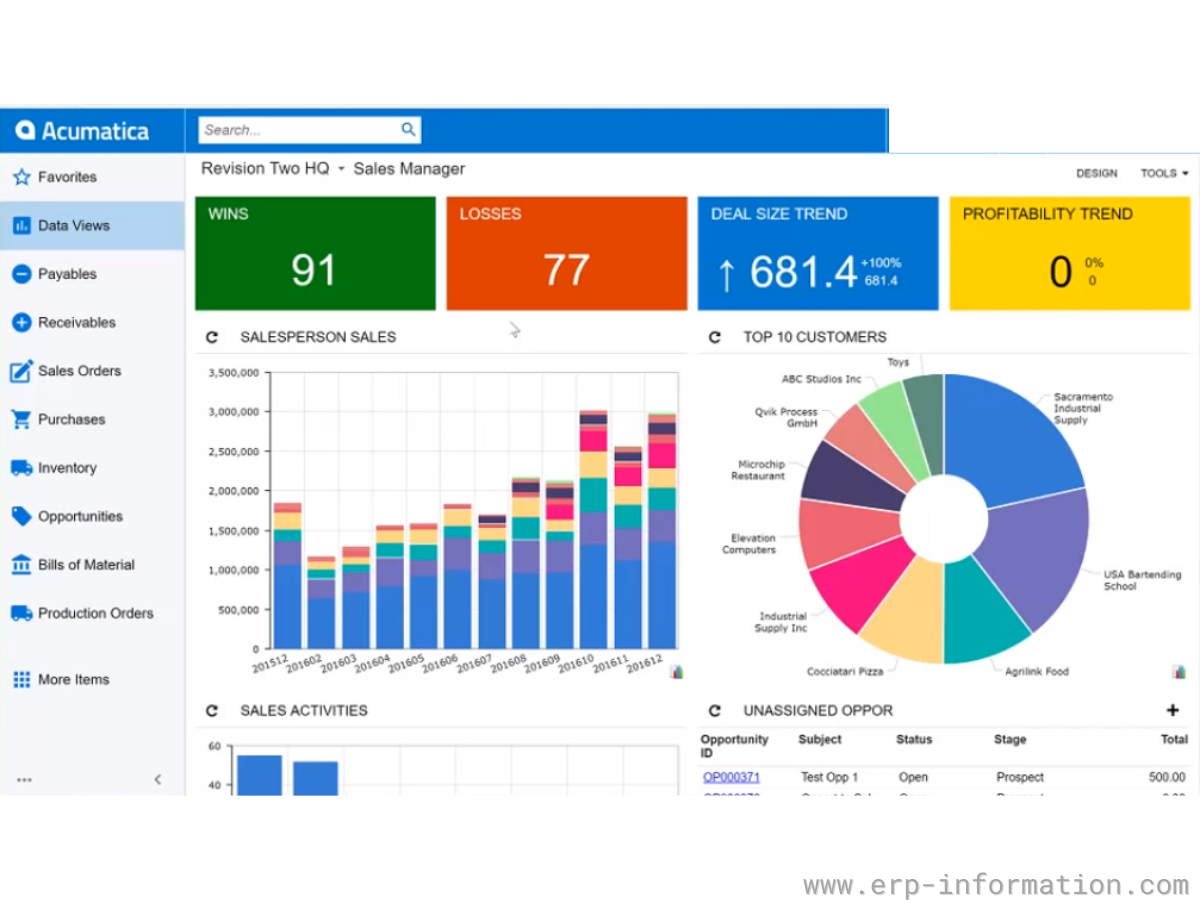
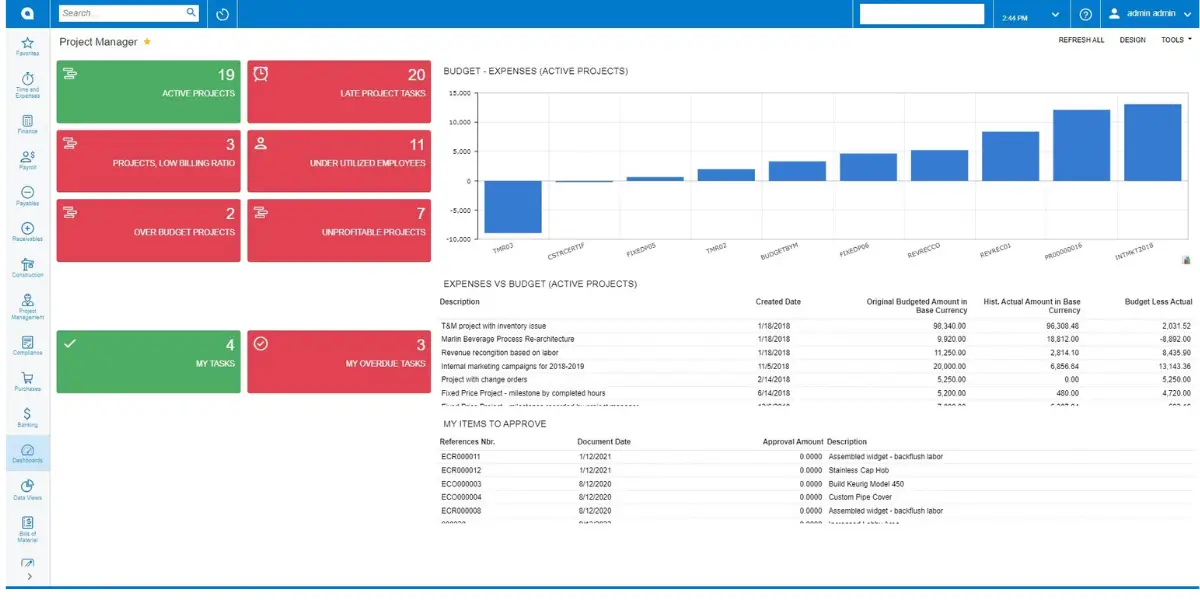
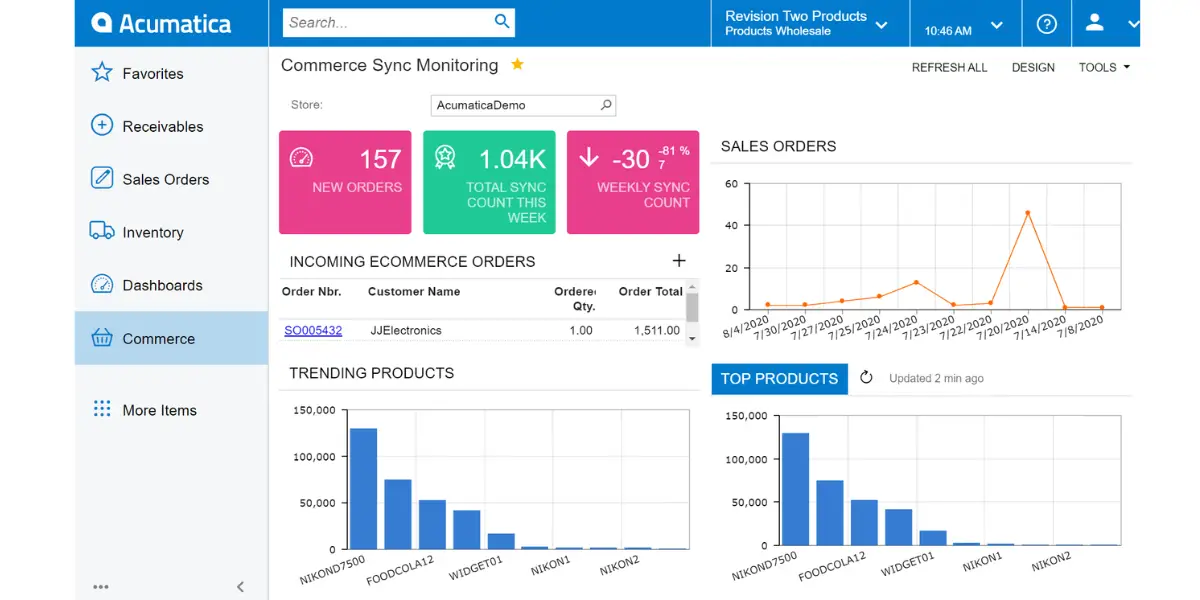
Embedded reporting and analytics come through Acumatica Reporting, Generic Inquiries, Dashboards and embedded business intelligence via Microsoft Power BI.
Company background, and why the ownership matters
Acumatica was founded in 2008 by Serguei Beloussov, Mike Shchelkonogov and John Howell, and is headquartered in Bellevue, Washington. The xRP platform arrived in 2014.
Ownership has changed twice recently and it is worth knowing where things stand. The private equity firm EQT acquired Acumatica in 2019. In May 2025 EQT agreed to sell the company to Vista Equity Partners in a deal valued at roughly $2 billion including debt, and that acquisition has since completed. John Case, a former Microsoft corporate vice president, has been chief executive since 2022.
For a buyer this is neither good news nor bad news by itself, but it is a question worth asking your partner directly. Successive private-equity ownership usually means continued investment paired with pressure on pricing and renewals, so pin down your renewal terms and any uplift caps at the point of signing rather than assuming today’s rates persist.
How Acumatica licensing actually works
This is the part most reviews get vague about, and it is the thing you actually need to understand before taking a quote.
Your price is set by two things: which applications you license, and a transaction volume tier that stands in for how busy your business is. Tiers run from small through medium and large to extra large. At the mid-market and enterprise end this comes with an unlimited-user model, so you can give logins to occasional approvers, warehouse staff, suppliers and customers without buying more seats.
What Acumatica counts as a transaction
Buyers routinely get this wrong by adding everything up. Acumatica defines your monthly transaction volume as the single highest count among these categories, not their total:
- Sales orders, of any order type
- Shipments
- AR invoices
- Customer payments
- Purchase orders
- Purchase receipts
- AP bills
- AP payments
So a business processing 3,000 sales orders, 3,000 shipments and 3,000 invoices a month is a 3,000-transaction business, not a 9,000-transaction one. Work out which single category is your peak before any pricing conversation, because that number, not your headcount, is what you are buying.
It also tells you where the model bites. Growth in transaction volume moves you up a tier, and that is the renewal surprise to plan for. Model your volume three years out, not today’s.
One important caveat about the unlimited-user claim: the entry-level General Business edition is not unlimited. It is sold with a defined user allowance and a low transaction ceiling. The unlimited-user model is the mid-market and enterprise proposition. If a salesperson leads with “unlimited users”, confirm which edition and tier that applies to.
Acumatica pricing
Acumatica publishes no list price and sells through its partner channel, so every figure below comes from partner and advisory published guidance rather than a vendor price list. Treat them as calibration for whether your quote is sane, not as a promise.
| Cost line | Typical figure |
| General Business edition, entry point | From about $6,396 a year, including a defined user allowance and roughly 1,000 monthly transactions |
| Typical mid-sized business | $25,000 or more a year in subscription |
| Broad annual licensing range | Roughly $10,000 to $80,000 a year |
| Implementation | Commonly $60,000 to $100,000 and upward |
| Priced on | Applications licensed plus transaction volume tier, not seats |
The four levers your partner will adjust are deployment model, business size, support level and which industry edition you take. Note how large implementation is relative to subscription: on a typical mid-market deal the first-year services bill can exceed the software. Budget them as one number.
Deployment options
Acumatica offers three commercial and hosting arrangements, and they are genuinely different rather than three names for the cloud.
| Model | Who hosts it | How you pay |
| SaaS subscription | Acumatica, on its own cloud infrastructure. Installation, maintenance, upgrades and availability are the vendor’s responsibility. | Annual subscription covering software and hosting together |
| Private cloud subscription | You choose. Your own data centre, or a cloud host such as AWS or Azure. You or your partner run the infrastructure and control upgrade timing. | Annual subscription for the software; you pay hosting separately |
| Private perpetual licence | You choose, same as private cloud. Full control of the environment. | Licence bought outright up front, plus an annual maintenance fee |
The practical distinction between the two private options is purely commercial: subscription spreads the cost and stops if you stop paying, while perpetual is capital up front and you keep the licence. Both leave the hosting and upgrade responsibility with you, which is the real trade against SaaS. Choose private only if you have a concrete reason such as data residency, a bespoke integration, or a need to control exactly when upgrades land.
Industry editions
Alongside the General Business edition, Acumatica sells five industry editions. These are not marketing labels over one product; each adds genuinely different functionality, and picking the right one matters more than most module-level decisions.
1. Construction Management
- Construction and project management
- Project accounting
- Service and equipment management
- Financial management and payroll
- CRM, business intelligence and analytics
- WorkWave route optimisation
2. Distribution Management
- Inventory management and warehouse management
- Sales order, purchase order and requisition management
- Order and service management
- Financial management and CRM
- POS and commerce connectors
3. Manufacturing Management
- Bill of materials and routing
- Material requirements planning and advanced planning and scheduling
- Product configurator and estimating
- Engineering change control and manufacturing data collection
- Native connector for Arena PLM
- Inventory, order, purchase order, warehouse and equipment management
- Project accounting and advanced financials
4. Retail Management
- Commerce connectors and sales order management
- Inventory and warehouse management
- Customer self-service portal and CRM
- Financial management, reporting and dashboards
5. Professional Services and Field Service
- Appointment and resource scheduling
- Route optimisation
- Warranty management
- Equipment management and inventory planning
- Self-service portal and enterprise-wide integrations
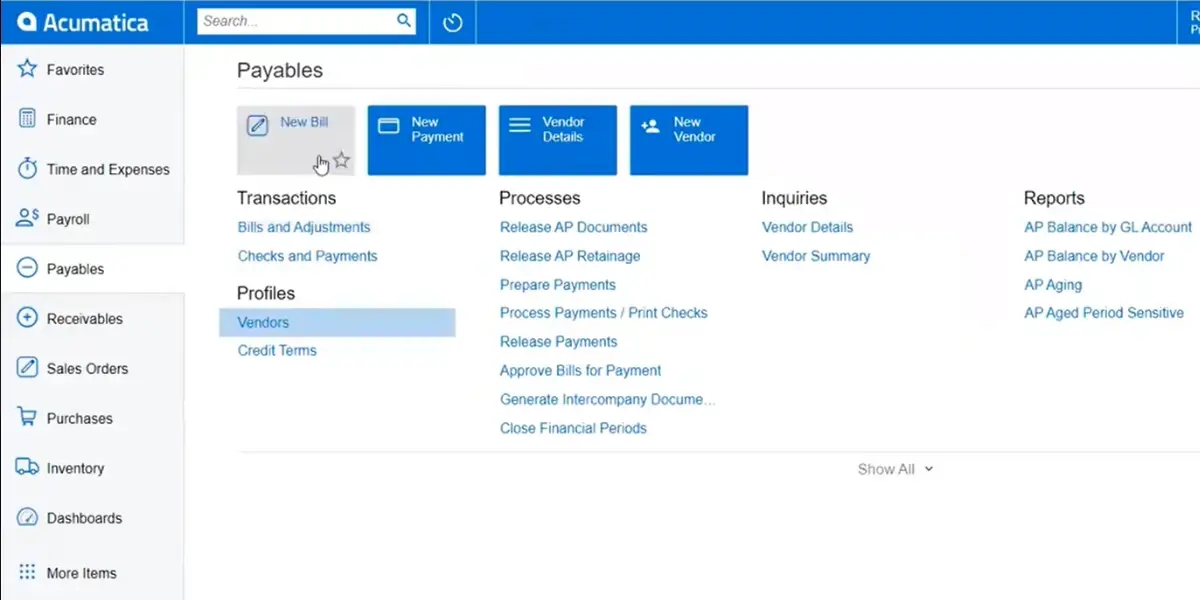
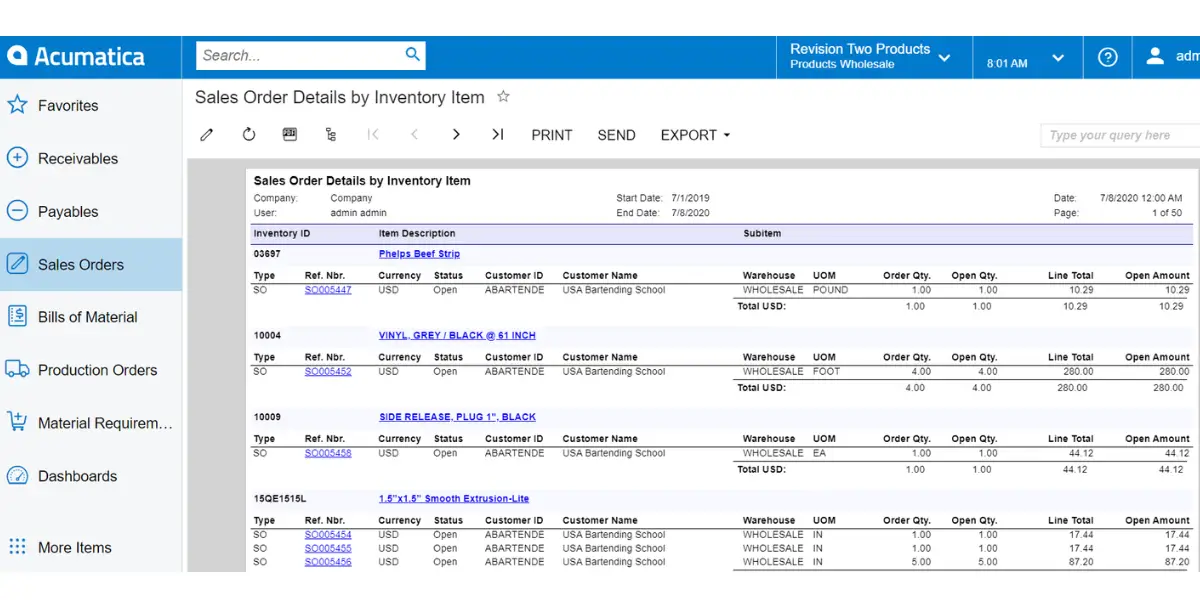
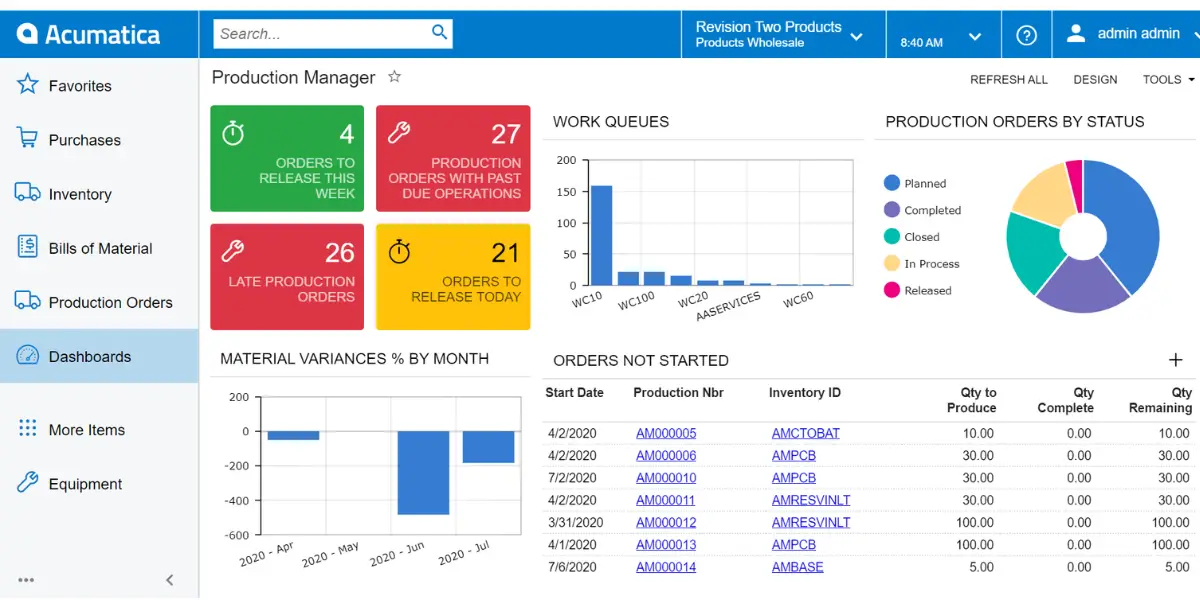
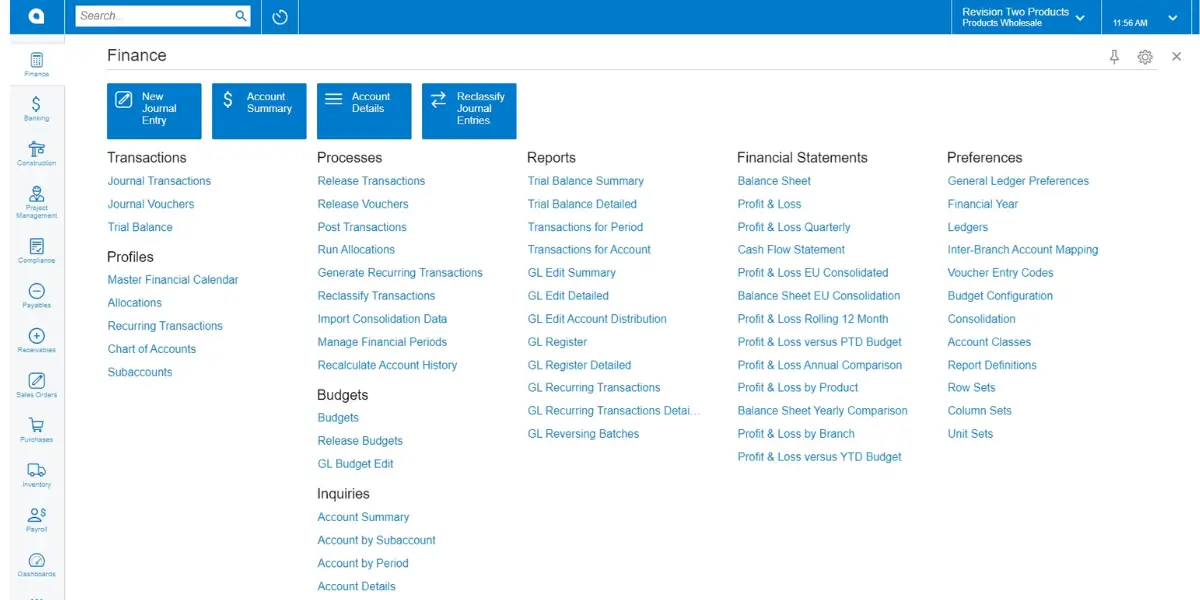
Some screenshots of Acumatica
What is new in Acumatica 2026 R1
The 2026 R1 release reached general availability on 23 March 2026 and is built around AI that sits inside existing workflows rather than in a separate tool.
- AI Studio lets customers build and deploy their own AI-powered workflows.
- AI Assistant shipped with experimental access ahead of general availability later in the year.
- AI-powered reporting and insights, including anomaly detection on your data.
- A new digital assistant with AI agents and workflow automation.
- Interface modernisation and expanded capability across every industry edition.
Acumatica has paired this with an explicit commitment on customer data ownership and control, which is a reasonable thing to hold them to in writing if you are evaluating the AI features seriously.
Support, services and the partner channel
Acumatica provides live chat, community forums, an online knowledge base, webinar recordings and published documentation. But the fact that matters most is structural: Acumatica sells and implements through its partner channel rather than direct.
Your experience of the product will therefore depend heavily on which value-added reseller you choose, and quality across that channel varies more than the software does. Two companies buying identical licences can have entirely different outcomes. When you evaluate, evaluate the partner as hard as the ERP: ask for references from customers in your industry and at your size, find out who specifically will be on your project, and confirm what support looks like after go-live.
Advantages
Unlimited users changes who can touch the system
Where seat cost normally forces you to ration access, Acumatica lets you put occasional approvers, shop-floor staff, field technicians, suppliers and customers into the system without a per-head charge. That is the single strongest argument for it, and it is worth real money to businesses with many light-touch users.
Genuinely open platform
Open APIs, low-code and no-code customisation and the xRP platform make integration and extension considerably less painful than on most mid-market ERPs. If you have a bespoke process you refuse to abandon, this is the system most likely to accommodate it.
Deployment is a real choice
SaaS, private cloud subscription and perpetual licence are all genuinely supported, so data residency requirements or a preference for owning your licence do not rule the product out.
Depth in specific verticals
Construction and distribution in particular have substantive functionality rather than a renamed general ledger, including project accounting, retainage, route optimisation and warehouse management.
International capability
Multi-entity, multi-currency, multi-language and multi-company support are present, which matters if you expect to trade across borders.
Acumatica limitations
- Transaction-tier growth is the budget risk. The flip side of not charging per user is that a good year in sales can push you into a higher tier at renewal. Model your volume forward and ask what tier movement costs before you sign.
- The pricing model takes explaining. Because it is neither per user nor per module in the way buyers expect, comparing an Acumatica quote against a per-seat competitor is genuinely difficult and easy to get wrong in either direction.
- Outcome depends on the partner. With no direct sales or implementation, your results ride on the VAR you pick. This is the most common source of unhappy Acumatica projects.
- Configuration breadth cuts both ways. The flexibility that makes it adaptable also makes it possible to over-customise, which complicates administration and upgrades later.
- Smaller ecosystem than the giants. The third-party ISV catalogue and the pool of experienced consultants are smaller than for NetSuite or the SAP and Microsoft lines, which can matter for niche requirements or when hiring.
- Document formatting is a common complaint. Users report limited rich text, spacing and descriptive formatting in customer-facing documents such as invoices and quotes.
- Implementation is not cheap. Services commonly run $60,000 to $100,000 and beyond, frequently exceeding first-year software cost.
What industries does it support?
Beyond the five packaged editions, Acumatica and its partners serve distribution, manufacturing, construction, retail and e-commerce, field and professional services, agriculture and farming, food and beverage, chemicals, energy and utilities, transportation, equipment rental, property management, healthcare, education, non-profit, telecommunications, travel and hospitality, and government contracting. Coverage outside the packaged editions typically comes from a partner-built vertical solution rather than from Acumatica directly, so ask who actually owns and supports that functionality.
Acumatica alternatives
- NetSuite: the most common head-to-head. Larger ecosystem and more mature, but priced per user, which is exactly the comparison Acumatica wants you to make.
- Microsoft Dynamics 365 Business Central: strong where you are already committed to Microsoft 365 and Power Platform.
- SAP Business One: small and lower-midmarket, strongest on financial rigour.
- Sage Intacct: financial management depth rather than full ERP breadth; often paired with something else for operations.
- Epicor Kinetic: deeper discrete manufacturing, at more implementation weight.
- Odoo: cheaper and modular, with more of the integration burden left to you.
- SYSPRO and Sage 100: established manufacturing and distribution options worth a look at the smaller end.
Two names to drop from older comparison lists. Microsoft Dynamics GP is closed to new customers and is not a candidate for a new evaluation. “Epicor ERP” has been Epicor Kinetic since 2020, and “Sage 100cloud” is now simply Sage 100.
FAQs
How does Acumatica pricing work?
Acumatica does not charge per user. Price is set by which applications you license and by a transaction volume tier representing how much business activity you put through the system, with tiers running from small to extra large. At mid-market and enterprise level this comes with an unlimited-user model. The entry-level General Business edition is the exception, sold with a defined user allowance and a low transaction ceiling.
What counts as a transaction for Acumatica licensing?
Acumatica measures your monthly transaction volume as the single highest count among sales orders of any type, shipments, AR invoices, customer payments, purchase orders, purchase receipts, AP bills and AP payments. It is the peak of those categories, not the sum. A business doing 3,000 sales orders, 3,000 shipments and 3,000 invoices a month is therefore a 3,000-transaction business, not a 9,000-transaction one.
How much does Acumatica cost per year?
Acumatica publishes no list price. Partner and advisory guidance puts the General Business edition entry point at around 6,396 dollars a year with a defined user allowance and roughly 1,000 monthly transactions, most mid-sized businesses at 25,000 dollars a year or more, and the broad range at roughly 10,000 to 80,000 dollars a year. Implementation commonly runs 60,000 to 100,000 dollars and upward, which often exceeds first-year software cost.
Who owns Acumatica?
Vista Equity Partners. The private equity firm EQT acquired Acumatica in 2019, and in May 2025 agreed to sell it to Vista Equity Partners in a deal valued at approximately 2 billion dollars including debt, which has since completed. Acumatica was founded in 2008 by Serguei Beloussov, Mike Shchelkonogov and John Howell, is headquartered in Bellevue, Washington, and has been led by chief executive John Case since 2022.
What is the latest version of Acumatica?
Acumatica 2026 R1, which reached general availability on 23 March 2026. Acumatica ships two major releases a year, R1 in the first half and R2 in the second. The 2026 R1 release centres on AI Studio for building custom AI workflows, an AI Assistant available on an experimental basis ahead of general availability, AI-powered reporting with anomaly detection, and a new digital assistant with AI agents.
Can Acumatica be deployed on premises?
Yes. Alongside the SaaS subscription hosted by Acumatica, there is a private cloud subscription and a private perpetual licence. Both private options let you host in your own data centre or with a provider such as AWS or Azure, and both leave infrastructure and upgrade timing under your control. The difference between them is commercial: subscription spreads the cost, while perpetual is bought outright with an annual maintenance fee.
Conclusion
Acumatica is the right answer when a lot of people need to touch the system and per-seat pricing would either bankrupt the business case or push you into rationing access. Distributors, construction firms and field service businesses fit that shape often, which is why the vertical editions there have real depth behind them.
It is the wrong answer if you have few users and very high transaction volume, because the model then prices you as though you were much larger. Two things decide whether the project succeeds: work out your peak transaction category before you take a quote and model it three years forward, and vet the implementation partner at least as hard as the software, because with no direct sales channel they are the ones who determine what you actually get.
Also worth comparing: other cloud ERP software.
References: